

Maddy summaryLD 161 is a procedural resolution directing Maine's Department of Agriculture, Conservation and Forestry to form a stakeholder group to review and recommend updates to the state's subdivision laws (specifically in Title 12, Chapter 206-A; Title 30-A, Chapter 187; and Title 38, Chapter 3). The group must address promoting growth in designated areas, reducing development pressure in rural zones, protecting public health/safety, advancing affordable housing, and streamlining review processes. The department must submit a report with recommendations to legislative committees by December 3, 2025, which could inform future legislation. This affects developers, local governments, property owners, and rural communities governed by current subdivision regulations.
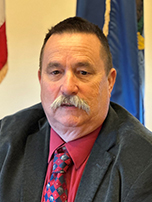
Rep. Dean Cray
Sponsored bills
Maddy summaryThis bill designates the week of September 20 to September 26, 2026, as Frontotemporal Degeneration Awareness Week in Maine. The resolution aims to increase public awareness of this neurodegenerative disease, which primarily affects people between 45 and 64 years old and impacts speech, behavior, and motor skills. By formally recognizing this specific time period, the legislature intends to encourage local, state, and national efforts to educate the public about the condition and its challenges. The measure does not allocate funding or change laws but serves as a symbolic gesture to highlight the need for greater understanding of the disease.
Maddy summaryLD 893 exempts eligible nonprofit agricultural membership organizations from Maine's health insurance regulations. Specifically, it amends Maine law to exclude these organizations - defined as tax-exempt groups operating since 1951 and providing health benefits to members and dependents - from the legal definition of "health insurance." The bill requires these organizations to provide written notices to members stating their coverage is not insurance, is not regulated like insurance, and may leave members liable for unpaid medical expenses. This change applies only to organizations meeting all specified criteria, including annual public audits.
Maddy summaryLD 1699 creates a refundable tax credit allowing investors to receive 40% of their cash investment in eligible Maine agricultural enterprises as a tax credit, effective April 1, 2025. It directly affects investors who fund Maine farms or agricultural businesses that certify the investment is necessary for expansion. The credit is limited to $3.5 million per agricultural enterprise over the credit's lifetime and $2 million per calendar year. To qualify, the agricultural enterprise must sell products primarily outside Maine (though sales inside are permitted) and meet specific expansion criteria. This replaces previous rates for agricultural investments and modifies existing tax credit rules under Maine law.
Maddy summaryLD 1201 exempts certain pesticides approved by the U.S. Environmental Protection Agency (EPA) under federal law from Maine's pesticide regulations. It specifically applies to EPA-registered pesticides used for aerial or land application by licensed pesticide applicators in Maine, including agricultural basic, private, or commercial applicators. The bill removes state regulatory requirements for these specific pesticides, aligning Maine's rules with federal approval under the Federal Insecticide, Fungicide, and Rodenticide Act (FIFRA). This directly affects Maine farmers and agricultural businesses using these exempt pesticides. The policy change streamlines regulatory compliance for approved agricultural pesticides without altering federal standards.
Maddy summaryLD 1702 amends Maine election law to restrict candidate activities near polling places on election day. It prohibits candidates and one representative per candidate from asking voters to sign campaign petitions or request campaign donations within 250 feet of a polling place entrance or inside the polling location. The bill also clarifies that existing rules preventing voter influence apply to all candidates on the ballot - including write-in candidates - regardless of whether their name appears on the ballot. These changes directly affect candidates and their representatives by limiting campaign solicitation in close proximity to voting sites.
Maddy summaryLD 1188 allows harness racing to be included in Maine's sports wagering system. It modifies existing law to permit licensed harness racing venues (operating under the Maine State Harness Racing Commission) to sell betting pools for harness races at facilities also licensed by the Department of Public Safety for sports wagering. This removes a current restriction that prevented harness racing from being offered at physical sports wagering locations. The change directly affects harness racing tracks and sports wagering facilities, aiming to support the harness racing industry by expanding betting opportunities before the 2025 racing season. The bill repeals a temporary restriction set to expire in 2026.
Maddy summaryThis bill amends Maine law to clarify landowner authority regarding abandoned ladders and observation stands on private property. It specifies that landowners or their representatives may take ownership of such abandoned equipment after consulting the Bureau of Warden Service, and may remove, destroy, sell, or keep it. The law directly affects landowners, their representatives, and individuals using ladders or observation stands on private land without permission. Key provisions require clear labeling of authorized equipment and define "abandoned" as property left without the landowner's consent. The bill focuses on clarifying existing property rights rather than creating new restrictions.
Maddy summaryLD 1478 amends Maine's regulations for baitfish wholesaler licenses. It allows license holders to use up to two unlicensed workers for baitfish harvesting operations (like setting traps or transporting fish) under direct supervision. The bill removes a restriction prohibiting the sale of suckers (a type of fish) over 10 inches long between April 1 and September 30. Additionally, it requires baitfish wholesalers using drop nets through ice to mark holes with evergreen boughs or fluorescent biodegradable tape. These changes directly affect licensed baitfish wholesalers operating in Maine's inland waters.
Maddy summaryThis bill allows food vendors with a valid health department license (e.g., from Maine’s Department of Health and Human Services) to operate inside restaurants or bars that hold a liquor license. Vendors can sell food and alcohol, but the alcohol must be supplied exclusively by the host establishment (the restaurant or bar), and all alcohol service must follow state responsible beverage training requirements. The host must keep a written schedule of vendor operations, and vendors must comply with health and safety rules while collecting and paying sales taxes on all sales. This directly affects food vendors seeking to partner with liquor-licensed venues and the venues themselves.