

Maddy summaryLD 449 amends Maine law to formally authorize courts to issue conditional discharges for certain criminal defendants, allowing them to avoid a conviction by meeting court-imposed conditions (like probation or community service) without a formal guilty verdict. The bill updates the legal definition of "Disposition" to explicitly include conditional discharge, ensuring it is treated like other outcomes (such as convictions) for license-related decisions. Specifically, a conditional discharge could trigger a license suspension or refusal for up to 5 years (or at least 5 years for offenses involving killing or wounding a person), as outlined in amended sections of the law governing license suspensions. This change creates a consistent legal framework for handling conditional discharges in criminal cases and their impact on licensing.
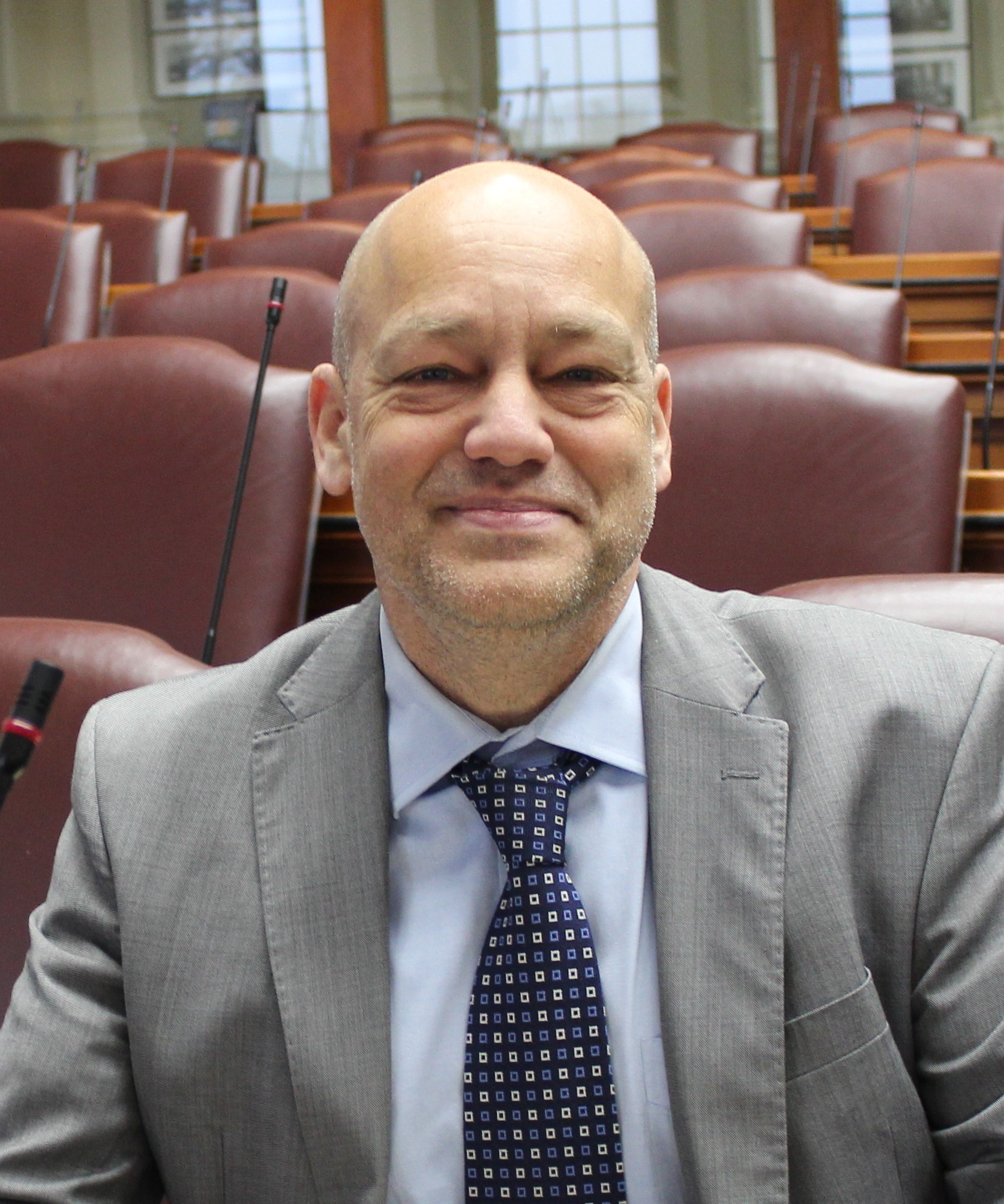
Rep. David Sinclair
Sponsored bills
Maddy summaryLD 1336 establishes the Maine-Aomori Sister-State Advisory Council to promote cooperation between Maine and Aomori Prefecture, Japan. The council, composed of 15 appointed members with diverse expertise (including education, business, arts, and international exchanges), advises the Governor on cultural, educational, and commercial opportunities between the two regions. It must meet at least three times yearly, operate without member compensation, and identify funding sources for its work. The bill allocates $20,000 annually from the General Fund for fiscal years 2025-26 and 2026-27 to support the council’s operations. This procedural bill formalizes an existing relationship without creating new substantive policy.
Maddy summaryLD 109 directs Maine's Arts Commission to study federal and national efforts protecting artists from copyright infringement by AI companies and monitoring educational use of copyrighted works. The commission must consult with the Attorney General and examine relevant laws, including the proposed No Fakes Act and Tennessee's likeness protection law, as well as past legal cases. It will report findings - including potential legislative recommendations - to the Education and Cultural Affairs Committee by December 3, 2025. This study specifically affects artists whose work may be used without permission by AI developers and educational institutions using copyrighted materials. The resolution does not enact new law but sets a process for future legislative action based on the commission's findings.
Maddy summaryLD 1691 creates the Access to Justice Loan Program to address attorney shortages in rural Maine. It offers eligible Maine law students and recent graduates up to $25,000 per year for up to 4 years to cover law school debt, with loan forgiveness tied to practicing in designated underserved areas. To qualify, applicants must be Maine residents, meet financial or educational criteria, and commit to providing legal services in areas identified by the Finance Authority of Maine as having insufficient attorneys. Participants who fulfill this commitment receive 25% forgiveness of their original debt for each year they practice in these underserved regions.
Maddy summaryThis bill allows victims of sex trafficking or sexual exploitation to have their criminal history records sealed. It requires business screening services (like background check companies) to delete any sealed records from their databases and stop sharing inaccurate or sealed information. Specifically, if a victim's record is sealed through legal process, the screening service must remove it and notify the individual within 30 days. The law ensures these services update records within 30 days and verify accuracy every 90 days. It applies directly to trafficking victims seeking to limit how their sealed records are used by private background check providers.
Maddy summaryThis bill prohibits arresting or detaining people for civil violations, such as minor offenses like traffic tickets or code violations. It requires state attorneys to decide whether to charge certain minor criminal offenses (Class E crimes ineligible for probation) as civil violations instead, considering factors like the offense severity, victim impact, and prior records. If charged as a civil violation, penalties are limited to $1,000, and this decision cannot be challenged in court. The bill directly affects individuals facing minor charges and state attorneys who will make these charging decisions.
Maddy summaryMaine's LD 1844 requires the Commissioner of Corrections to establish a reentry services program for people leaving state correctional facilities. The program must provide five specific support areas: health/wellness services (including MaineCare access), financial literacy training, employment preparation (resumes, job search, licenses), community integration (voter registration, 2-1-1 services), and technology training (computer skills, avoiding scams). This directly affects individuals transitioning from incarceration to community life in Maine. The bill aims to improve post-release employment outcomes by addressing key barriers to workforce reentry.
Maddy summaryThis bill establishes 11 as the minimum age for Maine juvenile court jurisdiction for most offenses. It defines "juvenile" as a person aged 11-18 for crimes like drug possession, underage drinking, or traffic violations involving intoxicants (as specified in sections 3103 and 3303), but excludes serious crimes like murder, felony murder, or manslaughter (which remain subject to adult prosecution regardless of age). The bill also modifies time limits for prosecuting certain juvenile offenses and clarifies that some crimes (e.g., driving under the influence) may be handled as juvenile cases only if specific conditions are met. It directly affects minors aged 11-17 who commit non-violent offenses under Maine law.
Maddy summaryThis bill prohibits life imprisonment without the possibility of supervised community confinement after 15 years for individuals convicted of crimes while under 26 years old. It directly affects people sentenced to life without parole for offenses committed before their 26th birthday. The key provision requires automatic review after 15 years of incarceration, allowing eligible individuals to transition to supervised community confinement. This applies to all crimes, including aggravated attempted murder under existing sentencing rules. The law creates a clear pathway for potential release after 15 years for this specific age group.
Maddy summaryLD 1266 requires Maine's Attorney General to form a working group to create a plan expanding access to adult drug, family, and veterans treatment courts statewide. The group must include stakeholders like courts, corrections, health departments, prosecutors, and advocacy organizations to ensure every county has access to these specialty courts for defendants whose criminal involvement relates to substance use disorders. The working group must submit its recommendations and suggested legislation to the Judiciary Committee by January 1, 2026. This resolve does not change current law but directs a study to improve access to treatment-based court options.