Issue · Environment

Environment

Every environment bill, vote, and legislator stance in Maine, automatically classified by Maddy, our AI policy reader.

Total bills
150
132nd Legislature (2025-2026)
Top supporter
David Sinclair
88% support rate
Top opponent
Abigail Griffin
6% support rate
Ranked legislators
10
5 support · 5 oppose
Key legislators

Who's moving environment in Maine

Legislators moving environment in Maine
Legislator Party Stance Support rate Votes
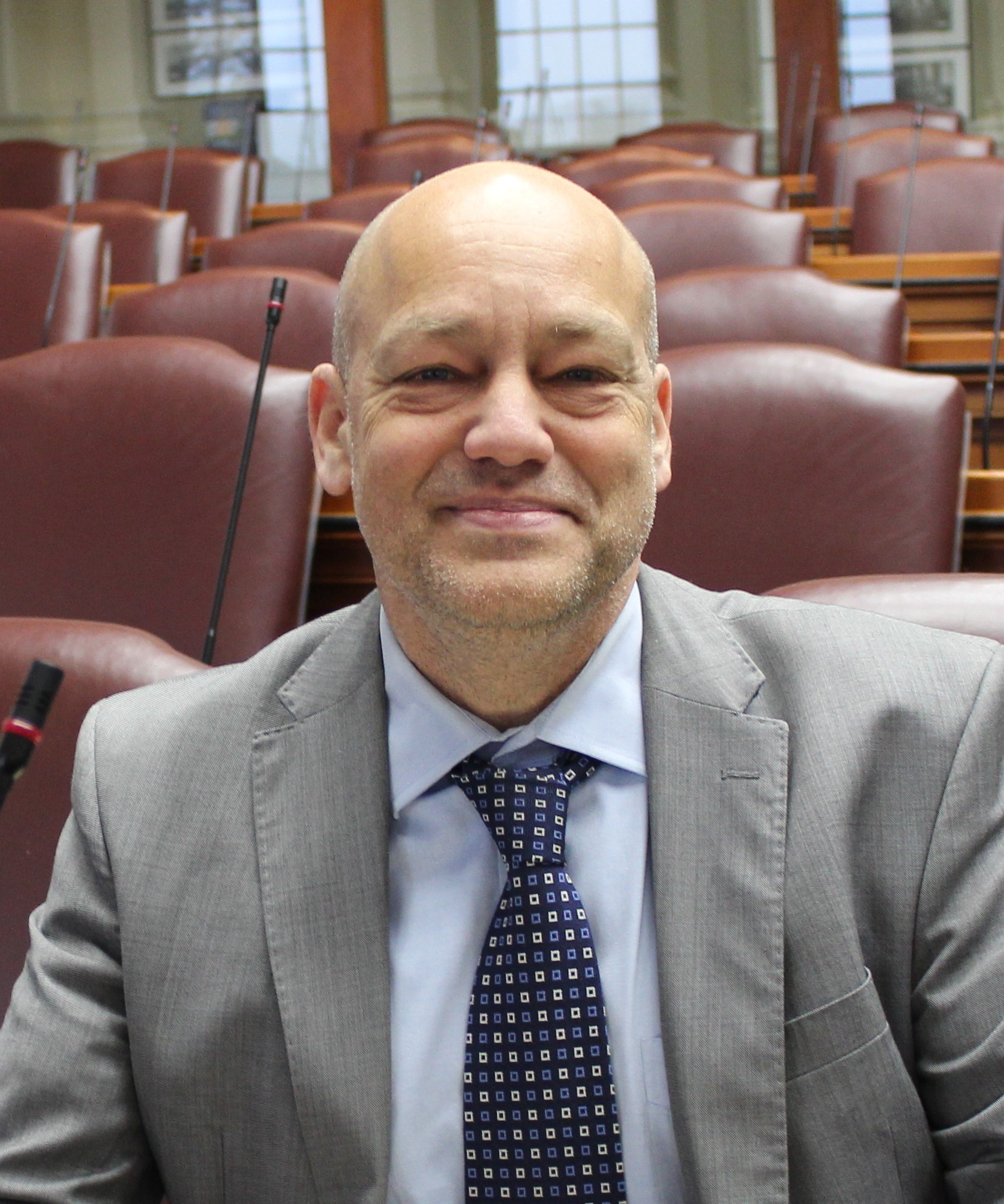
David Sinclair
David Sinclair House · District 50
D
Strong +
88% 90
Holly Eaton
Holly Eaton House · District 15
D
Strong +
87% 51
Lydia Crafts
Lydia Crafts House · District 46
D
Strong +
86% 89
Holly Stover
Holly Stover House · District 48
D
Strong +
86% 85
Michele Meyer
Michele Meyer House · District 150
D
Strong +
85% 92
Abigail Griffin
Abigail Griffin House · District 34
R
Strong −
6% 24
Jeff Adams
Jeff Adams House · District 144
R
Strong −
13% 69
Sheila Lyman
Sheila Lyman House · District 76
R
Strong −
15% 81
Joseph Underwood
Joseph Underwood House · District 5
R
Strong −
16% 50
Irene Gifford
Irene Gifford House · District 28
R
Strong −
19% 87
Showing 11–20 of 150 bills

All environment bills

failed · Maine · House Apr 6, 2026

LD 2036: An Act To Clarify The Approval Process For And The Operation Of The Commingling Program For The Management Of Beverage Containers

This bill clarifies the rules for Maine's beverage container recycling program, requiring the managing cooperative to transition from sorting containers by brand to sorting by material type by October 1, 2026, provided that 90% of participating deposit initiators submit sales data by June 30, 2026. The legislation also specifies that the state department must review and approve the cooperative's operation plan within 120 days after holding a public meeting, while clarifying that this review is not treated as a formal permit decision. Additionally, the bill sets a January 15, 2026 deadline for implementing the approved plan and establishes penalties for non-compliance, with all provisions applying retroactively to January 1, 2025.
Sub-Topics Recycling
signed · Maine · House Mar 9, 2026

LD 2037: An Act To Update The Regional Greenhouse Gas Initiative Allowances

LD 2037 updates Maine's annual carbon dioxide emissions limits under the Regional Greenhouse Gas Initiative (RGGI) for 2027-2037, setting specific caps that decline from 2,065,595 tons in 2027 to 221,314 tons by 2037. The bill removes Maine's ability to withdraw from RGGI by repealing related provisions, ensuring continued state participation in the regional program. These changes directly affect power plants and large industrial facilities in Maine that must comply with the state's emissions cap under RGGI. The policy establishes a fixed annual reduction schedule without new regulatory mechanisms beyond the updated caps.
Sub-Topics Climate Change
signed · Maine · House Mar 19, 2026

LD 2055: An Act To Amend Or Correct Certain Inland Fisheries And Wildlife Laws

This bill amends Maine's inland fisheries and wildlife laws primarily to strengthen regulations around fish imports and moose permits. It extends the waiting period for individuals who transfer a moose permit from three to four years before they can obtain a new permit. For fish imports, it requires importers to provide health certificates from certified professionals confirming no viral diseases (like viral hemorrhagic septicemia) and mandates a minimum $1,000 fine for violations. The bill also clarifies that local governments can receive limited permits to stock fish in specific ponds, with courts ordering violators to pay for cleanup costs. These changes directly affect fish importers, moose permit holders, and local governments managing water bodies.
Sub-Topics Wildlife
died · Maine · House Apr 29, 2026

LD 2115: An Act To Protect Private Wells From Hazardous Substances

LD 2115 creates a Well Contamination Response Fund to address PFAS contamination in private drinking water wells in Maine. The fund, financed by a $1 million appropriation for 2026-2027, covers testing, investigation, and cleanup (like installing water filters or providing bottled water) for wells with PFAS levels exceeding 20 parts per trillion for six specific chemicals. It also pays for administrative costs and may support wells with lower contamination if funds remain available. The state environmental department must report on fund usage every two years starting in 2027.
signed · Maine · Senate May 9, 2025

LD 130: An Act To Establish The Pfas Response Program And To Modify The Fund To Address Pfas Contamination

LD 130 establishes Maine's PFAS Response Program to address contamination affecting commercial farms. The program provides testing for PFAS in soil, water, and farm products; technical assistance for mitigation efforts; and financial support for costs like water filtration, livestock depopulation, and clean feed. It modifies a fund to collect revenue from property sales and solar development to finance these services. The program directly assists agricultural producers impacted by PFAS contamination, helping them meet safety standards and maintain farm viability. The Department of Agriculture administers the program with oversight from a public advisory committee holding annual hearings.
Sub-Topics Drinking Water
failed · Maine · House May 13, 2025

LD 1885: An Act To Create A State Property Tax Directed Toward 2Nd Homes For The Purposes Of Funding Education, Early Childhood Programs And The Land For Maine'S Future Trust Fund

This bill creates a new property tax on second homes in Maine to generate revenue for specific public programs. The tax revenue will directly fund three established accounts: the Land for Maine's Future Trust Fund (for land conservation), early childhood education programs, and a new "Fund for Essential Programs and Services" (referenced in Section 41). The tax applies to real property classified as second homes under existing law, with all funds directed to these designated purposes without expiration. The bill specifies that unspent funds in these accounts must carry forward annually, and requires annual reports on fund usage to legislative committees.
failed · Maine · House May 20, 2025

LD 1721: An Act To Amend The Laws Governing Commingling Of Beverage Containers

This bill amends Maine's beverage container recycling laws to standardize how containers are mixed (commingled) for recycling. It updates the list of materials considered "like materials" (e.g., specific glass colors, plastic types) for commingling, ensuring containers are grouped by material, size, and deposit value. It clarifies that commingling groups cannot refuse containers sorted per approved agreements or processed by reverse vending machines if recycling value isn't reduced, and prohibits deposit initiators from requiring dealers to sort containers beyond current rules. The bill directly affects redemption centers, dealers, commingling groups, and the Department of Environmental Protection, which will set rules for container value and processing standards. It takes effect July 15, 2025.
Sub-Topics Recycling
signed · Maine · Senate Jun 9, 2025

LD 1450: An Act Regarding The Voluntary Municipal Farm Support Program

LD 1450 establishes the Voluntary Municipal Farm Support Program, enabling Maine municipalities to pay farm owners to keep land in agricultural use through conservation easements. Under the program, municipalities make annual payments covering up to 100% of property taxes on farmland (up to the easement's fair market value) for a minimum 10-year term, with easements preventing non-farm development. Municipalities are limited to including no more than 3% of their total taxable land valuation in the program (with a 1% annual cap without a two-thirds vote). The bill moves the program from agricultural law to taxation law and reduces the minimum easement term from 20 to 10 years.
Sub-Topics Conservation
failed · Maine · Senate May 14, 2025

LD 825: An Act To Prohibit Geoengineering, Including The Use Of Cloud Seeding, Weather Modification, Excessive Radio Waves And Microwave Radiation

Maine's LD 825 prohibits any "geoengineering" activity within the state, including cloud seeding, weather modification, and excessive radio/microwave radiation emissions. The law defines "geoengineering" broadly as intentional large-scale interventions in Earth's systems, such as stratospheric aerosol injection or harmful radiation levels exceeding specific technical thresholds (e.g., -85 decibel-milliwatt for radio signals). The Maine Department of Environmental Protection enforces the ban, with violators facing Class C crimes and daily fines up to $500,000. This law directly affects individuals, companies, or entities conducting such activities in Maine, including potential federal or out-of-state operations impacting the state's atmosphere.
failed · Maine · House May 29, 2025

LD 1095: An Act To Restrict Removal Of Common Loons For Relocation In Maine From Bodies Of Water Of 500 Acres Or Less

This bill prohibits wildlife relocation programs from moving common loons from bodies of water that are 500 acres or less in Maine. It directly affects wildlife management programs operating in smaller lakes and ponds, preventing them from removing loons for relocation purposes. The key provision amends state law to explicitly ban such removals, applying only to water bodies of 500 acres or smaller. The law does not restrict relocation efforts from larger bodies of water.
Sub-Topics Wildlife
Showing 11 to 20 of 150 bills