

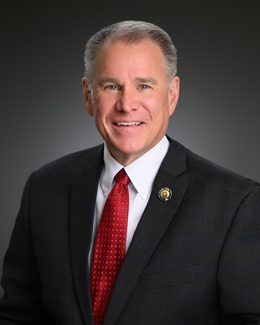
Maddy summaryThis bill is a concurrent resolution that formally commends Todd McClure for his induction into the 2026 class of the Louisiana Sports Hall of Fame. It highlights his athletic achievements, including his college career at LSU and his fourteen-year professional career with the Atlanta Falcons, where he played in 207 games. The resolution directs the Senate President to send a copy of the document to McClure as an official acknowledgment of his contributions to Louisiana sports.
Sponsored bills
Maddy summaryThis bill is a concurrent resolution that formally commends Pat Williams for his induction into the 2026 class of the Louisiana Sports Hall of Fame. It directly affects Pat Williams, a native of Monroe who is being recognized for his distinguished career as a professional football player. The resolution highlights his achievements, including his time as a standout athlete in Louisiana and his fourteen-year NFL career with the Buffalo Bills and Minnesota Vikings. By passing this measure, the Louisiana Legislature acknowledges his contributions to the state and sends a copy of the resolution to him.
Maddy summaryThis bill is a formal resolution that commends Kathy Holloway for receiving the 2026 Dave Dixon Louisiana Sports Leadership Award and for her induction into the 2026 Louisiana Sports Hall of Fame. The document highlights her extensive career as a basketball coach and administrator, noting her historic achievements as the first female president of both state and national high school athletic coaches associations. It also recognizes her ongoing contributions to youth sports through her work with the Louisiana High School Athletic Association and local community programs. Ultimately, the resolution serves to publicly acknowledge her significant impact on education-based athletics and inspire future generations of student-athletes.
Maddy summaryThis bill expands the state's expropriation laws to include large-scale aviation and aerospace facilities, such as airports, landing strips, and spaceflight sites. It specifically allows the government to take over private property used for these purposes if the land covers at least 20,000 contiguous acres and contains no residential buildings. The measure applies to a wide range of entities, including domestic and foreign corporations, limited liability companies, and other legal groups involved in building or operating these facilities. By adding these specific types of properties to the list of expropriatable assets, the bill changes how the state can acquire land for major aerospace projects.
Maddy summarySB 32 establishes the Perinatal Bereavement Care Initiative within Louisiana's Department of Health to improve support for families experiencing pregnancy loss or infant death. The bill requires hospitals providing maternity care to receive staff training on supporting grieving parents, access to bereavement resources (like counseling referrals), and perinatal bereavement devices. It prioritizes hospitals serving high-risk patients, delivering many babies, or lacking current bereavement resources. The initiative can fund these services using voluntary monies, including federal grants and donations, without imposing new taxes.
Maddy summarySB 199 imposes mandatory minimum prison sentences for second and subsequent offenses related to prostitution in Louisiana. For a second conviction of purchasing commercial sexual activity, offenders face at least six months in prison (with no parole eligibility for that period), plus fines of $1,500-$2,000. Similarly, second or subsequent solicitation offenses require a minimum six-month prison term (with no parole eligibility) and the same fines. The bill directly affects individuals convicted of these specific repeat offenses, with half of collected fines directed to a state fund under R.S. 15:539.4.
Maddy summarySB 306 creates a new criminal offense in Louisiana for obstructing freedom of worship at churches or other places of worship. It prohibits specific actions including using force to intimidate attendees, damaging church property, blocking lawful access to the building, or engaging in disruptive activities during scheduled worship services. Violations carry fines up to $25,000 and imprisonment up to 18 months for repeat offenses, with enhanced penalties if bodily injury occurs. The law directly affects individuals who interfere with religious gatherings on private religious property, aiming to protect the orderly conduct of worship as defined by the bill.
Maddy summaryHB 636, the "Caleb Wilson Hazing Prevention Act," requires Louisiana public colleges and universities to prevent, report, and respond to hazing involving student organizations. It defines hazing broadly (including physical brutality, dangerous activities, or substance consumption) and mandates annual hazing education for all students starting fall 2027, plus specific orientation education for new students. The bill also requires student organizations to report hazing incidents to both law enforcement and their institution, and institutions must document all actions and share full details with law enforcement. These provisions directly affect public postsecondary institutions, their students, and all student organizations, including fraternities, sororities, and clubs.
Maddy summaryHB 39 requires all Louisiana peace officers seeking certification to be U.S. citizens, directly affecting law enforcement applicants and current officers needing certification. The bill adds a citizenship requirement to existing certification standards under Louisiana law (§2404.4), specifying that applicants must be U.S. citizens as defined in federal law (42 USC §9102(18)). It does not alter training or other existing qualifications but mandates citizenship as a new baseline for certification. This policy change applies to all law enforcement peace officers in Louisiana, including those employed by local police departments and sheriff's offices.
Maddy summaryHB 102 creates a new criminal offense for "second degree cruelty to elderly and persons with infirmities," targeting intentional or negligent mistreatment causing serious injury to vulnerable individuals. It directly affects caregivers - including family members, neighbors, nursing homes, and care facilities - and applies to elderly people (60+), those with disabilities, or individuals in residential care settings. Key provisions define the crime, set penalties of up to 40 years in prison (with a mandatory minimum of 5 years if death occurs), and include an affirmative defense for spiritual healing methods. The bill also designates this offense as a "crime of violence" under Louisiana law, impacting sentencing in related cases.