

died Mar 9, 2026
0 co-sponsors
Total votes
10,688
all sessions
Attendance
93%
763 missed
Near the chamber average
With party
98%
of cast votes
Near the chamber average
Bipartisan score
1%
crosses aisle rarely
Lower than 79% of chamber peers
Sponsored
421
bills & resolutions
Near the chamber average
Committees
6
assignments
421 bills and resolutions
Sponsored bills
Total
421
Primary
86
Co-sponsor
335
This page
421
matching current filters
SECURITIES: Provides relative to administration of transfer on death accounts. (8/1/26)
Maddy summarySB 262 establishes clear rules for "transfer on death" (TOD) accounts in Louisiana, directly affecting account owners, financial institutions (like banks and credit unions), and named beneficiaries. The bill requires that beneficiaries be designated **in person at a financial institution's office** (not electronically or via power of attorney) to ensure validity, and states that TOD accounts override wills or estate claims regarding the funds. It also protects financial institutions from liability when transferring funds to the named beneficiary, provided the designation followed these rules. The bill repeals outdated sections of law to align with these new provisions.
In committee Mar 9, 2026
0 co-sponsors
WORKERS' COMPENSATION: Provides for Occupational Accident Insurance for independent contractors. (gov sig)
Maddy summarySB 358 creates a new insurance requirement for independent contractors in Louisiana, specifically providing occupational accident coverage to protect them if injured on the job. It defines "independent contractor" (excluding most manual labor) and mandates that contractors obtain private insurance meeting minimum standards: $1 million in medical benefits per injury, temporary disability payments, and death/disfigurement coverage. Principals (businesses hiring contractors) avoid liability as "statutory employers" if contractors maintain this coverage, have a written agreement, and retain control over work methods. The law directly affects independent contractors in construction, commercial driving, and equipment operation who currently lack workers' compensation protections.
HealthcareSupports HealthcareMandates occupational accident insurance with $1M medical benefits per injury for contractors, expanding healthcare coverage access for a vulnerable worker group.
Labor & EmploymentSupports Labor & EmploymentMandates occupational accident insurance for independent contractors with $1M medical coverage per injury, expanding protections for a group typically excluded from workers' comp.
In committee Mar 9, 2026
0 co-sponsors
EDUCATION ACCOUNTABILITY: Provides with respect to the Louisiana Competency-Based Education Program. (gov sig) (EN -$2,224,183 GF EX See Note)
Maddy summarySB 246 amends Louisiana's education assessment requirements, directly affecting public school students in grades 3-11 and their schools. It mandates annual standards-based tests in English language arts, math, science, and social studies, requiring fourth and eighth graders to demonstrate proficiency in English and math to advance to fifth and ninth grades. The bill sets national benchmarking for proficiency levels and directs the State Board of Education to investigate assessment options by February 2026 to meet federal accountability standards. It also specifies that science and social studies tests must be administered in no more than four grade levels each by 2027-2028, without overlapping grade levels.
Signed into law Jul 1, 2025
0 co-sponsors
FEES/LICENSES/PERMITS: Provides relative to massage therapy. (8/1/25) (EN +$82,200 SG RV See Note)
Maddy summarySB 221 amends Louisiana's massage therapy licensing laws to affect licensed therapists and massage establishments. Key provisions include requiring annual license renewals with proof of continuing education, mandating state/federal background checks for certain licensees (prior to April 2022 and August 2025), and prohibiting massage establishments from being used as residential housing unless zoned for it. The bill also adds board authority to adopt rules preventing fraud, abuse, or human trafficking related to the industry. These changes aim to strengthen licensing oversight and safety standards within the massage therapy profession.
Signed into law Jun 20, 2025
1 co-sponsor
SCHOOLS: Provides for school mapping data of public school buildings and facilities. (8/1/25) (EN +$2,400,000 GF EX See Note)
Maddy summarySB 126 adds a specific exemption for charter schools from reporting school mapping data requirements under Louisiana law (R.S. 17:416.16.1). The bill directly affects charter schools operating under Louisiana's Chapter 3996, exempting them from this data collection mandate unless otherwise required by their approved charter. Key provisions clarify that charter schools are exempt from "all statutory mandates" applicable to public schools, with this mapping data requirement explicitly listed as one of the exempted provisions. This change modifies existing law to remove a specific reporting obligation for charter schools, while public schools remain subject to the mapping data requirement. The bill focuses on administrative clarity for charter schools within existing legal frameworks.
Signed into law Jun 20, 2025
1 co-sponsor
ECONOMIC DEVELOP DEPT: Provides relative to Louisiana Economic Development. (8/1/25) (EN SEE FISC NOTE SD EX See Note)
Maddy summarySB 161 clarifies the management of Louisiana's Bond Security and Redemption Fund for economic development purposes. It specifies that funds must be used solely for economic development initiatives and defines their sources as legislative appropriations, grants, or donations. The bill also requires the Louisiana Economic Development Department's board to coordinate with state agencies (like Transportation, Agriculture, and Tourism) and develop strategies to attract foreign investment and international business. This affects state agencies managing economic development funds and their coordination efforts, without creating new spending. The changes focus on streamlining fund usage and interagency collaboration.
Signed into law Jun 20, 2025
1 co-sponsor
CONTRACTORS: Provides relative to the Louisiana State Licensing Board for Contractors. (8/1/25)
Maddy summarySB 122 is a technical amendment to Louisiana's contractor licensing law, making minor corrections to existing statute language. It changes "of" to "for" in one section, corrects "judgments" to "judgment" in another, and updates a section header from "V. Electrical" to "V. Electrical." The bill does not alter licensing requirements, fees, or procedures for contractors or the Louisiana State Licensing Board for Contractors. These changes solely address typographical and formatting errors in the current law.
Signed into law Jun 20, 2025
0 co-sponsors
CONDOLENCES: Expresses sincere and heartfelt condolences upon the passing of Oscar Earl Carter III.
Maddy summarySR 208 is a Louisiana Senate resolution expressing heartfelt condolences for the passing of Oscar Earl Carter III, recognizing his 35-year leadership as executive director of the Dr. O.E. Carter, Jr. Memorial Foundation (a nationally accredited opioid treatment center in New Orleans) and his service as a legislative aide for Senator Joe Bouie. The resolution commemorates his life of compassion, community advocacy, and dedication to underserved populations through his work with organizations like VERTCART, Inc. and the Knights of St. Peter Claver. It was unanimously adopted by the Senate on June 12, 2025, and transmitted to his family. As a commemorative resolution, it has no binding policy impact but formally honors his legacy.
Introduced Jun 12, 2025
1 co-sponsor
PHARMACISTS: Requests the Louisiana Department of Health to study the impacts of a prohibition on PBM ownership of pharmacies.
Maddy summarySR 209 is a resolution requesting the Louisiana Department of Health to study the effects of banning pharmacy benefit managers (PBMs) from owning pharmacies. It directs the department to analyze how such a prohibition would impact costs for health plans, patient access to medications (including specialty drugs), employment in the pharmacy sector, and other key areas like Medicare network adequacy. The study must produce a report by March 2026, covering eight specific points including cost estimates, employment changes, and access to limited-distribution medications. This resolution does not change current law but seeks factual analysis to inform future legislative decisions on vertical integration in healthcare.
Introduced Jun 12, 2025
1 co-sponsor
Ask Maddy
·
AI policy assistant
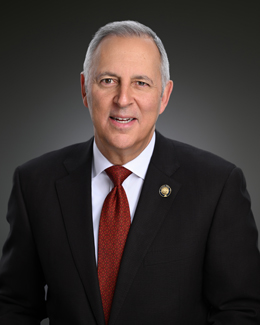
Ask Maddy about Mark Abraham
Scope: louisiana
Hi! I can help you understand Mark Abraham's legislative record. What would you like to know?
Try one of these
i
Maddy answers using official bill text and legislative records. Always verify before sharing.
Sources cited inline