

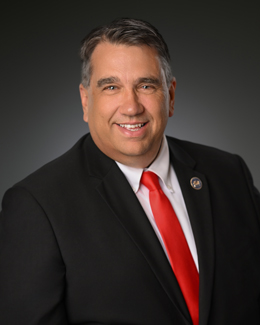
Maddy summaryThis resolution formally commends Paul Hollis, the director of the United States Mint, for his return visit to the Louisiana House of Representatives. The measure expresses gratitude for his past service as a state representative and his current role as the first Louisianian to lead the Mint. It does not create any new laws or change existing policies, but rather serves as an official statement of appreciation for his contributions.
Sponsored bills
Maddy summaryThis bill is a concurrent resolution that expresses the Louisiana Legislature's support for the continued operations of the National Guard at Camp Beauregard in Pineville and commends the Youth Challenge Program. The resolution recognizes Camp Beauregard's long history of supporting military training and emergency operations, noting its role as a primary training platform for the Louisiana National Guard. It also highlights the Youth Challenge Program, which provides an alternative educational opportunity for youth aged sixteen to eighteen, offering residential and post-residential phases focused on life skills, academics, and personal development. The bill does not create new laws or funding but serves as a formal statement of legislative appreciation for these military and youth programs.
Maddy summaryThis resolution expresses support for federal efforts to eliminate the U.S. Department of Education and asks Congress to cooperate with those efforts. It directly affects the Louisiana Legislature by formally recording its position on a federal policy change. The bill cites the Tenth Amendment to argue that education powers should remain with states rather than the federal government. It does not create new laws or change state education policy, but rather sends a message to the federal government about Louisiana's stance on the issue.
Maddy summaryThis bill asks the Louisiana State Law Institute to study how to speed up the sale of tax-delinquent property that has been held for a long time. The study would focus on finding ways to sell this property to buyers who plan to fix it up and add value, rather than letting it sit idle. The Louisiana State Law Institute must complete its research and send recommendations to the state legislature by January 1, 2027. This request comes after recent changes to how tax liens are handled, which still allow some properties to remain unsold for extended periods. The bill does not change any laws itself but instead seeks expert advice on potential improvements to the current tax sale system.
Maddy summaryHB 660 increases the state-paid annual salary for assistant district attorneys in Louisiana to $50,500 starting July 1, 2026. It directly affects all assistant district attorneys whose salaries are funded by the state (not local parishes), including those in Orleans Parish. The bill specifies exact salary amounts on set dates (e.g., $50,000 effective 2021, $50,500 effective 2026) and requires separate state appropriations to fund these increases. This is a concrete salary adjustment with no new program or policy beyond the specified pay rates.
Maddy summaryHB 175 creates a new instant lottery game in Louisiana, with all proceeds dedicated to veteran programs. It establishes the Veterans Game Board (comprising state agency leaders and veteran organization representatives) to manage the "Veterans Game Fund," which receives all revenue from this specific game. The board distributes one-time grants of up to $50,000 to eligible applicants like 501(c)(3) veteran service organizations, colleges, JROTC programs, or veterans courts that improve veterans' lives. Unused funds are returned to the state treasury annually. This bill directly affects Louisiana veterans by channeling new lottery revenue into targeted support programs.
Maddy summarySB 28 lowers the minimum age requirement for associate teachers in Louisiana from 25 to 21 years old. This change directly affects individuals seeking to join Louisiana's associate educator program as new participants. The bill amends existing law (R.S. 17:7.8(B)(3)) to update this age requirement, with no other substantive policy changes described in the text. The bill is currently in early stages, having been prefilled and referred to the Education Committee.
Maddy summaryThis bill requires Louisiana's Department of Public Safety to establish a formal reciprocity agreement with Ireland for recognizing driver's licenses. It directly affects Louisiana residents holding valid Irish driver's licenses (such as expats or students) and Irish visitors driving in Louisiana. The key provision mandates the state to enter this agreement, allowing Irish license holders to drive in Louisiana without needing a new Louisiana license. The bill does not change current licensing requirements for new applicants but creates a legal framework for mutual recognition. It is a procedural measure awaiting committee review before potential enactment.
Maddy summaryHB 102 creates a new criminal offense for "second degree cruelty to elderly and persons with infirmities," targeting intentional or negligent mistreatment causing serious injury to vulnerable individuals. It directly affects caregivers - including family members, neighbors, nursing homes, and care facilities - and applies to elderly people (60+), those with disabilities, or individuals in residential care settings. Key provisions define the crime, set penalties of up to 40 years in prison (with a mandatory minimum of 5 years if death occurs), and include an affirmative defense for spiritual healing methods. The bill also designates this offense as a "crime of violence" under Louisiana law, impacting sentencing in related cases.
Maddy summaryHB 294 allows houses of worship (like churches, mosques, and synagogues) to request that disruptive or trespassing individuals leave their premises. If such individuals refuse, authorized staff or security may use reasonable force to remove them, consistent with existing self-defense laws. The law protects these individuals and the religious organization from legal liability when using force that is necessary and proportional to the disruption. This directly affects places of worship and their staff by clarifying their legal authority to maintain order during services or religious activities.