

Maddy summaryHB 1092 renames the Office for Citizens with Developmental Disabilities within the Louisiana Department of Health to the Office of Intellectual and Developmental Disability Supports. This change updates the official name of the agency across multiple state laws and statutes to reflect its current focus on intellectual and developmental disabilities. The bill also makes technical adjustments to ensure the new name is consistently used in legal documents related to disability benefits, voting assistance, and service administration. Directly affected parties include the Louisiana Department of Health, state agencies, and individuals who receive services through this office. The legislation does not alter existing programs or funding but primarily updates terminology to align with modern naming conventions.
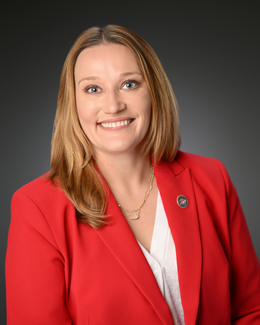
Sponsored bills
Maddy summaryHB 126 allows courts in Louisiana to permit facility dogs to accompany specific witnesses during testimony. It directly affects minors under 18, individuals with developmental disabilities (as defined by law), and victims of sex offenses (as defined in state law). The bill requires courts to permit a facility dog if available while these witnesses testify, aiming to help reduce anxiety. The provision applies during court proceedings and does not change existing legal standards or outcomes.
Maddy summaryHB 726 increases penalties for abandoning boats or vessels in Louisiana by doubling the fines for this specific violation. The bill directly affects boat owners who intentionally leave vessels on public property, private land without permission, or in state waters. It amends existing law to explicitly double the criminal penalties for abandoning boats or boating accessories, as outlined in Section 2531.1(A)(2). This change applies to all vessels covered under the littering statute, including boats and related equipment. The law focuses on strengthening enforcement against vessel abandonment as a form of illegal disposal.
Maddy summaryThis bill extends surviving spouse benefits to reserve and auxiliary law enforcement officers in Louisiana who die while on duty. It modifies existing law to include these officers under the same eligibility rules as commissioned officers, specifically when they die while: (1) traveling to or from a public safety emergency, or (2) commuting between their residence and work area in a law enforcement vehicle provided by their agency. The policy change directly affects the spouses of reserve and auxiliary officers who qualify under these two scenarios. It expands access to financial security payments previously limited to commissioned officers.
Maddy summaryHB 1253, known as the Gracey Claire Rushing Act, updates Louisiana laws to improve how coroners document and handle human remains and internal organs. The bill requires detailed autopsy reports that include specific personal information, medical findings, and a record of any retained organs, while keeping these reports private except for law enforcement or court orders. Family members and the decedent's physician are granted the right to receive a copy of the report upon request. The legislation is named in memory of a child whose death in 2009 prompted calls for better safeguards in the treatment of remains.
Maddy summaryThis resolution expresses the condolences of the Louisiana House of Representatives on the death of Charles Joseph 'CJ' Christ, who passed away on May 20, 2026. The text honors his life as a World War II veteran, aviation enthusiast, historian, and founder of the Regional Military Museum. It serves as a formal acknowledgment of his contributions and extends sympathy to his surviving family and friends.
Maddy summaryHB 741 requires Louisiana local housing authorities to give priority for housing vouchers to human trafficking survivors. It mandates verification of survivor status through healthcare professionals, law enforcement reports, protective orders, or other official sources. The bill also prohibits public disclosure of addresses linked to these vouchers to protect survivors' privacy. This policy directly affects trafficking survivors seeking stable housing and housing authorities administering voucher programs. The law aims to provide immediate housing support while safeguarding survivors' safety through confidential address handling.
Maddy summaryHB 892 creates the West End Economic Development District in Jefferson and Orleans parishes, specifically covering three defined parcels: a parking lot area in New Orleans, adjacent state-owned land in Jefferson Parish, and related water bottom leases. The district, established as a local government entity, aims to boost economic development, tourism, and job creation through commercial projects and infrastructure. It will be governed by a five-member board appointed by Jefferson Parish's District 5 representative, New Orleans' District A representative, and two others. The bill outlines the district’s boundaries, purpose, governance structure, and funding mechanisms without proposing new taxes or regulations.
Maddy summaryHB 555 defines financial exploitation of vulnerable adults (such as elderly individuals) as scams, fraud, impersonation of officials, or deceptive schemes that cause them to transfer money to strangers. It requires banks to delay suspicious transactions for up to 15 business days, extendable to 25 days if a covered agency requests an extension. This gives time to investigate potential scams before funds are transferred, directly affecting banks and vulnerable adults targeted by financial fraud.
Maddy summaryHB 392 requires all Louisiana public and nonpublic secondary schools to post suicide prevention hotline information on their websites and print it on student ID cards. Specifically, schools must display the National Suicide Prevention Lifeline number "988" (with instructions to call or text) and, if available, local and state suicide prevention hotline numbers. This bill updates existing requirements by broadening the scope to all secondary schools and standardizing the required information. The policy directly affects schools and students by ensuring immediate access to crisis resources through everyday school materials.