

Maddy summaryThe Easy Enrollment in Health Care Act (HR 3947) would streamline enrollment in health insurance programs by allowing taxpayers to use their federal tax return information to determine eligibility for coverage. Individuals filing tax returns would be able to consent to share relevant tax data (like income and family size) with health insurance exchanges, enabling automatic enrollment in zero-net-premium plans without additional paperwork. The bill establishes a "single, streamlined application" process that minimizes redundant information requests while maintaining privacy protections. It also modernizes eligibility criteria for Medicaid and CHIP programs by allowing states to use tax return data for income determinations, making it easier for eligible individuals to access coverage. This would directly affect millions of Americans who qualify for health insurance assistance through federal or state programs.
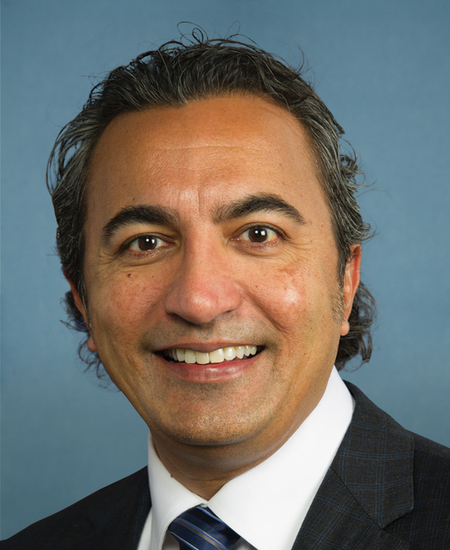
Rep. Ami Bera
Sponsored bills
Maddy summaryThis bill codifies existing protections for designated roadless areas within the National Forest System by prohibiting new road construction, road reconstruction, and logging in these areas. It directly affects National Forest lands already identified as "inventoried roadless areas" under the current Roadless Rule, which covers roughly 58 million acres. The key mechanism requires the Secretary of Agriculture to enforce these prohibitions, maintaining current protections without expanding restrictions to other lands or altering existing multiple-use management. The bill does not create new protected areas but legally solidifies the existing regulatory framework to preserve ecological and recreational values.
Maddy summaryThis bill requires private firearm transfers between individuals to go through a licensed dealer who must conduct a background check. It applies to most private sales but includes exceptions for transfers between family members (like parents and children), law enforcement, emergencies preventing harm, and temporary loans at shooting ranges or for hunting. Dealers must provide background check notices in both English and Spanish. The law aims to prevent prohibited individuals from obtaining firearms through private transactions while maintaining existing state authority on firearm laws.
Maddy summaryHR 3868, the Enhanced Background Checks Act of 2025, modifies federal firearm background check procedures to address delays. It requires federal firearms licensees to wait 10 business days after a background check query if the system doesn’t immediately flag a transfer, unless the buyer submits an electronic petition confirming they aren’t prohibited from owning firearms. The petition process includes a 10-day response deadline from the Attorney General, with licensees allowed to proceed if the system remains silent after 10 days. The bill also mandates detailed annual reports from the FBI on petition delays and GAO reports on implementation, focusing on how these changes affect firearm transfers to prohibited individuals.
Maddy summaryThe Apprenticeship Infrastructure Tax Credit Act of 2025 creates a tax credit for employers hiring apprentices in infrastructure-related occupations, offering $3,000 per apprentice annually (or $6,000 for veterans, National Guard/reserve members, or military spouses). The credit applies for two consecutive tax years for apprentices enrolled in registered programs meeting federal standards, with a total cap of $5 billion. It specifies infrastructure occupations including construction, installation/maintenance, production, and IT roles, requiring employers to verify apprentices are new hires reported via W-2, not 1099 contractors. The Department of Labor will issue eligibility certificates to employers based on program data, and credits will be tracked and reported annually to ensure the $5 billion cap is not exceeded.
Maddy summaryThis bill establishes U.S. policy that sea level rise driven by climate change should not cause Pacific island nations to lose UN membership or their maritime rights under international law. It requires the State Department to submit a report within 120 days detailing U.S. diplomatic efforts to encourage other countries and international organizations to preserve maritime boundaries affected by rising seas. The report must assess cooperation with nations like the Pacific Islands Forum, identify barriers to policy adoption, and list countries supporting this approach. The bill directly supports small island nations' economic security by aiming to protect their existing ocean resource rights under the U.N. Convention on the Law of the Sea.
Maddy summaryHR 3774, the HUD Accountability Act of 2025, requires the Secretary of Housing and Urban Development (HUD) to provide annual testimony before specific congressional committees. This bill mandates the Secretary testify each year on seven key topics, including public housing conditions, FHA mortgage fund health, oversight of grantees to prevent fraud, progress on homelessness, and HUD's overall mission delivery. The testimony must cover HUD's current programs, physical housing conditions, financial health of insurance funds, and other ongoing activities. This procedural bill directly affects HUD leadership by establishing a formal requirement for annual congressional reporting on department operations.
Maddy summaryHRES 470 is a non-binding House resolution commemorating the events of June 4, 1989, in Beijing and condemning the Chinese government's ongoing human rights practices. It expresses support for victims' families, calls for an independent UN investigation into the 1989 events, and urges China to cease censorship, uphold Hong Kong's autonomy under the Joint Declaration, and allow peaceful remembrance of the anniversary. The resolution has no legal force but serves as a symbolic expression of congressional concern regarding human rights in China and Hong Kong.
Maddy summaryHR 3694, the VALID Act of 2025, requires lenders to include specific information about VA loans in mortgage disclosures. It amends the National Housing Act to mandate that disclosures state the loan-to-value ratio and clarify that VA loans are available under Chapter 37 of Title 38 (veterans' benefits law), assuming prevailing interest rates. The bill also requires the Federal Housing Finance Agency to add a military service question to the Uniform Residential Loan Application form, placing it above the signature line within six months of enactment. This directly affects veterans and active-duty service members applying for VA-guaranteed mortgages, as well as the lenders processing those applications.
Maddy summaryThis bill updates federal housing law to explicitly prohibit discrimination based on sexual orientation and gender identity. It amends the Fair Housing Act to include these characteristics as protected classes alongside race, color, religion, sex, and other existing categories. The law now covers discrimination against individuals due to their own sexual orientation or gender identity, or because of their association with someone who has these characteristics. This applies to all housing providers, including landlords, real estate agents, and mortgage lenders, making it illegal to deny housing or services based on these factors.