

Maddy summaryThis bill would require Medicare to cover early detection screening tests for Alzheimer's disease and related dementias starting January 1, 2028. It defines eligible tests as FDA-cleared genomic blood tests, blood product analyses, or equivalent medical imaging methods (like protein expression or whole genome sequencing) that detect pre-symptomatic or early-stage conditions. Medicare beneficiaries would receive this coverage without cost-sharing for these specific screenings. The bill amends Medicare coverage rules to explicitly include these tests under Section 1861(nnn) of the Social Security Act.
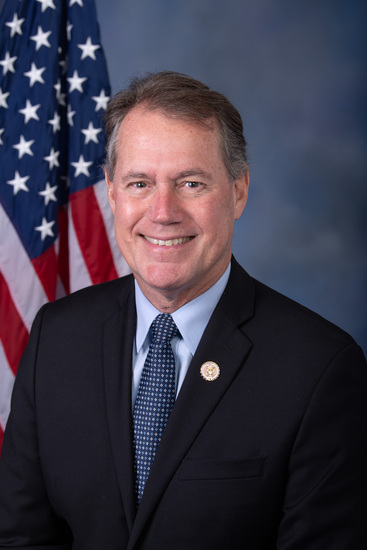
Rep. Ed Case
Sponsored bills
Maddy summaryThe Housing Financial Literacy Act of 2025 modifies mortgage insurance premiums for first-time homebuyers who complete approved financial literacy counseling programs. It requires that such counseling be completed before signing a mortgage application or sales agreement. The bill reduces the mortgage insurance premium by 25 basis points (0.25%) below the standard rate established by the Secretary of Housing and Urban Development. This change directly affects first-time homebuyers who participate in qualifying housing counseling programs.
Maddy summaryThe VISIT USA Act directs the Treasury to transfer $160 million from unused tourism promotion funds to Brand USA (the Corporation for Travel Promotion) within 30 days of the bill's enactment. This funding is exempt from standard transfer limits and requires Brand USA to follow existing matching rules for these funds. The bill directly affects Brand USA, providing it with dedicated resources to support international tourism marketing and promotion efforts. It makes a concrete policy change by reallocating specific unobligated funds to boost the U.S. tourism marketing program.
Maddy summaryThe Global Respect Act (HR 6151) requires the U.S. President to publicly list foreign officials responsible for severe human rights violations against LGBTQI individuals, including torture, prolonged detention, or violence based on sexual orientation or gender identity. It mandates denying visas and entry to listed individuals and requires annual reports on the list's updates and impacts. The bill also directs the State Department to track global violence against LGBTQI people and update annual human rights reports to include discrimination based on sexual orientation or gender identity. These provisions directly affect foreign government officials and entities implicated in such abuses, aiming to increase accountability through U.S. visa restrictions.
Maddy summaryThe Water Infrastructure Modernization Act of 2025 amends federal water law to define and support "intelligent water infrastructure technology," including real-time monitoring systems, AI-driven wastewater optimization tools, leak detection sensors, and advanced metering for conservation. It directly affects municipal water systems and utilities by expanding eligible uses for federal grants - allowing funds for implementing these technologies (like predictive aquifer recharge systems) while prohibiting grants for planning or maintenance. The bill increases annual grant funding from $25 million to $50 million (starting in 2028) and requires annual reports to Congress on funded projects and their resiliency improvements. This creates a clear pathway for communities, especially disadvantaged ones, to access federal support for modernizing aging water infrastructure through data-driven solutions.
Maddy summaryHR 4276 amends the Native American Tourism and Improving Visitor Experience Act to create a new grant program supporting tourism development for Native communities. The bill authorizes the Bureau of Indian Affairs, the Office of Native Hawaiian Relations, and other federal agencies (including Commerce, Transportation, Agriculture, Health and Human Services, and Labor) to provide grants to Indian tribes, tribal organizations, and Native Hawaiian organizations. It allocates $35 million in funding for fiscal years 2025 through 2029 to support these tourism projects. The program aims to enhance visitor experiences and economic opportunities within these communities.
Maddy summaryHRES 880 is a symbolic House resolution recognizing the strategic U.S.-India partnership, not a bill with new policy or funding. It reaffirms longstanding cooperation on defense, counterterrorism, technology, and people-to-people ties, citing historical milestones like the 2008 nuclear agreement and recent Quad collaboration. The resolution has no binding effect but formally supports continued partnership through existing mechanisms like the U.S.-India Transforming Relationship Utilizing Strategic Technology initiative. It highlights shared priorities including Indo-Pacific stability and counterterrorism efforts, with no new legislative requirements or changes to law.
Maddy summaryHR 6056, the International Human Rights Defense Act of 2025, establishes a permanent Special Envoy at the State Department to lead U.S. foreign policy efforts addressing discrimination and violence against LGBTQI+ people globally. The bill requires the U.S. government to develop and update a biannual global strategy to prevent criminalization and violence against LGBTQI+ individuals, mandate detailed reporting on such abuses in annual country reports, and ensure all U.S. foreign assistance programs include inclusive nondiscrimination policies. This legislation directly affects U.S. foreign policy implementation, federal agencies receiving funding, and LGBTQI+ communities facing persecution worldwide. The bill aims to coordinate U.S. government efforts across departments and with international partners to advance LGBTQI+ rights globally through concrete policy mechanisms.
Maddy summaryThis bill expands veterans' benefits for Filipino veterans who served in the Philippine forces or Philippine Scouts during World War II. It updates eligibility rules to allow the VA to accept alternative documentation (beyond standard records) when verifying service, addressing historical barriers to claiming benefits. The law also requires the VA to annually report to Congress on the number of applications received and approvals granted under this provision. These changes directly affect Filipino veterans and their families seeking recognition and benefits for their military service. The bill takes effect 270 days after enactment, with no retroactive benefits.
Maddy summaryThis bill requires all new passenger vehicles manufactured for sale in the U.S. to include AM radio as standard equipment (not an optional add-on) by 2027-2028, depending on manufacturer size. It mandates that AM radio receivers must be easily accessible to drivers and allows compliance through digital AM broadcast technology. During a transition period, manufacturers must clearly label vehicles without AM radio but cannot charge extra for this feature. The bill also mandates a GAO study on AM radio's role in emergency alerts and includes a 10-year sunset provision for the rule. It preempts state laws regarding AM radio access in vehicles.