

Maddy summaryThis bill modifies grants for rural water systems under the Consolidated Farm and Rural Development Act. It directs the Secretary to provide grants to nonprofits that offer subgrants (for households earning under 60% of median rural income) and loans (for households earning 60-100% of median rural income) to help rural residents install or repair individual household water wells and wastewater systems. Key changes include increasing the maximum subgrant/loan amount from $15,000 to $20,000 and requiring subgrants for wastewater systems to include funding for a 5-year performance warranty. The bill also extends the program’s deadline from 2023 to 2028.
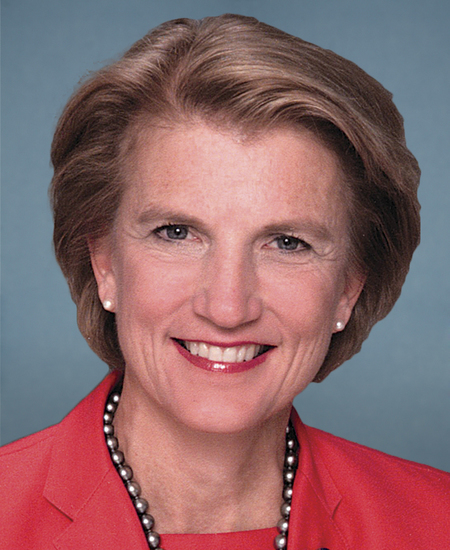
Sen. Shelley Moore Capito
Sponsored bills
Maddy summaryThis bill permanently extends a tax deduction for business interest expenses that was set to expire after 2021. It directly affects businesses that calculate their taxable income using this deduction, primarily larger corporations with significant interest payments. The key provision removes the expiration date from the tax code (Section 163(j)(8)(A)(v)), making the deduction available indefinitely for taxable years beginning after December 31, 2021. The bill does not change the deduction amount or create new requirements, only ensures the existing provision remains in effect permanently.
Maddy summaryThe Combating Violent and Dangerous Crime Act amends federal criminal statutes to clarify legal standards and increase penalties for specific violent crimes. It clarifies that assaults on federal officers are general intent crimes (removing the need to prove defendants specifically intended to harm officers), increases carjacking penalties to 20 years for first offenses (up from 15) and up to 40 years when weapons are used, and creates a new offense for distributing candy-flavored controlled substances to minors with penalties of up to 20 years for repeat violations. The bill also updates sentencing guidelines to require a 2-level enhancement for the new candy-flavored drug offense. These changes apply to existing federal criminal codes without creating new crime categories beyond the specified provisions.
Maddy summaryS 1212 establishes federal standards for remote and electronic notarizations, enabling notaries to perform these services across state lines for individuals not physically present. Key provisions require identity verification (using two methods or a credible witness), mandatory audio/video recording of remote notarizations (retained for 5-10 years), and secure attachment of electronic signatures to documents. The bill ensures courts and states recognize these notarizations as valid regardless of whether the notary used electronic records or served a remotely located individual. It does not require notaries to offer these services but creates a uniform baseline for interstate recognition, while allowing states to maintain stricter rules.
Maddy summarySRES 162 designates April 17-23, 2023, as "National Osteopathic Medicine Week" in recognition of osteopathic physicians and medical students. The resolution formally acknowledges their contributions to U.S. healthcare, including their whole-person approach, role in the COVID-19 response, and training in rural communities. It directly affects osteopathic physicians (over 141,500 in the U.S.) and medical students (36,500), celebrating their work and the colleges training future physicians. As a ceremonial resolution, it has no binding legal effect and does not create new policy or funding.
Maddy summarySRES 161 is a symbolic Senate resolution designating April 22-30, 2023, as "National Park Week." It does not create new laws or affect specific groups, but formally recognizes the National Park System's significance. The resolution highlights the parks' historical value, visitor impact (312 million visits in 2022), and economic contributions ($42.5 billion in 2021). It encourages public engagement with national parks but contains no funding, regulatory changes, or policy mechanisms. As a procedural resolution, it serves purely to honor the parks' legacy.
Maddy summaryThis bill prohibits federal agencies from banning lead ammunition or tackle for hunting and fishing on federal lands and waters managed by the Interior Department or Agriculture Department. It directly affects hunters and anglers using these public areas by preventing federal restrictions on lead products, except in limited cases. The exception allows restrictions only on specific federal sites where state wildlife data shows lead use is harming wildlife, and only if approved by the state's fish and wildlife agency. The bill requires federal agencies to explain in public notices how any exception meets these state approval and wildlife harm criteria.
Maddy summaryS 1165, the Reentry Act of 2023, allows Medicaid coverage for incarcerated individuals during the 30 days preceding their release from prison or jail. This directly affects people transitioning from correctional facilities back into communities by connecting them to healthcare immediately after release. The bill amends Medicaid law to remove a barrier preventing coverage during this critical period. It also requires a report within 18 months analyzing correctional healthcare standards, the number of eligible individuals, and discharge processes to support better health transitions.
Maddy summarySRES 120 is a ceremonial Senate resolution designating March 23, 2023, as "National Women in Agriculture Day." It recognizes the significant contributions of women in U.S. agriculture, citing that they represent over one-third of agricultural producers and generated $148 billion in sales in 2017. The resolution encourages citizens to acknowledge women in the field and supports their roles as producers, educators, mentors, and leaders. As a symbolic gesture, it does not create new laws or funding but aims to highlight their impact on the agricultural workforce and food systems.
Maddy summaryThis bill restricts federal funding for state and local governments that qualify as "sanctuary jurisdictions" under its definition. A sanctuary jurisdiction is defined as any state or local area that prohibits sharing immigration status information or refusing to comply with federal immigration detainers (with an exception for crime victims/witnesses). The bill blocks funding for Economic Development Administration grants and Community Development Block Grants if projects are located in such jurisdictions or if recipients become sanctuary jurisdictions during the grant period. Recipients must return funds if they become sanctuary jurisdictions, and the U.S. government will reallocate those funds to non-sanctuary areas.