

Maddy summarySRES 386 designates October 4, 2023, as National Energy Appreciation Day to honor energy workers and highlight the sector's contributions to reducing poverty, strengthening national security, and improving global quality of life. The resolution encourages federal, state, local, and community organizations - including schools, businesses, and nonprofits - to observe the day with educational events. It does not create new laws or alter existing policies, serving solely as a symbolic recognition of the energy industry's role in the U.S. economy and global impact.
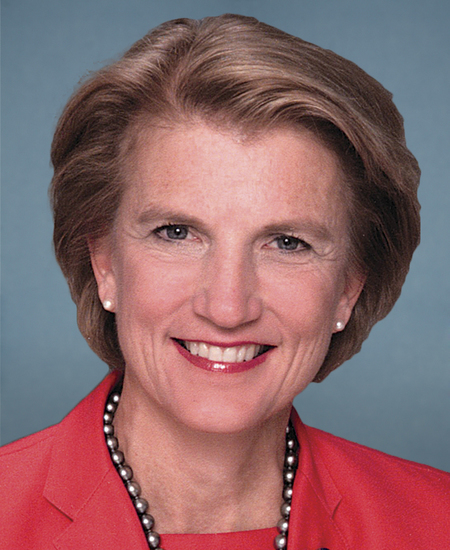
Sen. Shelley Moore Capito
Sponsored bills
Maddy summaryThis joint resolution seeks congressional disapproval of a U.S. Fish and Wildlife Service rule that designated the Northern Long-Eared Bat as an endangered species under the Endangered Species Act. The rule, published in November 2022 (87 Fed. Reg. 73488), would have provided federal protections for the bat and restricted activities impacting its habitat. If passed, this resolution would block those protections from taking effect, removing the bat’s endangered status. It uses a procedural mechanism under Title 5, U.S. Code, allowing Congress to reject agency regulations.
Maddy summarySenate Joint Resolution 9 seeks to disapprove a U.S. Fish and Wildlife Service rule that would have classified the Lesser Prairie-Chicken as "threatened" (for the northern population) and "endangered" (for the southern population). If passed, this resolution would block the rule from taking effect, preventing new federal protections and restrictions on land use, development, and conservation activities in the bird's habitat across states like Texas, Oklahoma, and Kansas. The bill uses a procedural disapproval process under federal law to halt the rule without altering the species' actual status.
Maddy summarySRES 380 is a non-binding Senate resolution designating October 1-7, 2023, as "Religious Education Week" to recognize the role of religious education in U.S. schools. It calls on all 50 states, territories, and the District of Columbia to accommodate students attending religious classes during school hours through "released time" programs. The resolution affirms that religious education contributes to students' moral, ethical, and civic development, referencing existing programs where approximately 540,000 public school students participate annually. As a symbolic gesture, it does not create new laws or alter funding, focusing instead on celebrating current religious education practices.
Maddy summaryThis resolution designates September 17-23, 2023, as "Community School Coordinators Appreciation Week" to recognize the work of community school coordinators nationwide. It does not create new policies or funding but symbolically honors these coordinators for their role in connecting schools with community resources. The resolution highlights their contributions to improving student attendance, academic outcomes, and family engagement, as noted in supporting studies cited in the text. It urges participation in events celebrating these coordinators but has no binding effect on law or policy.
Maddy summarySenate Resolution 376 clarifies the existing requirement for business attire on the Senate floor, specifying that men must wear a coat, tie, and long pants. The resolution designates the Senate Sergeant at Arms to enforce this dress code and mandates that any future changes to the rule require a two-thirds vote of all senators. This procedural resolution formalizes current standards without altering them, ensuring consistency in Senate decorum.
Maddy summaryThis bill increases the import tariff on ferrosilicon from Russia and Belarus to 35% for products classified under HTS code 7202.21.50. It directly affects U.S. importers of these materials and aims to boost domestic ferrosilicon production by making foreign imports more expensive. The bill requires the U.S. Trade Representative to assess whether American producers can meet domestic demand before implementing such tariffs, including a 30-day public comment period on which products are made domestically and production capacity. It also extends the deadline for these tariff authorities from 2024 to 2025. The policy change focuses on altering trade duties to support U.S. manufacturing, not on direct subsidies or new programs.
Maddy summaryThis bill amends the Individuals with Disabilities Education Act to improve special education services for children who are deaf, hard of hearing, deafdisabled, blind, visually impaired, or deafblind. It requires states to identify and serve these students regardless of their disability classification, mandates specialized evaluations and instruction in their preferred communication method (including American Sign Language), and requires states to develop addendums to their education plans addressing these students' unique needs. The bill establishes the Anne Sullivan Macy Center on Visual Disability and Educational Excellence to support teachers and develop resources for students with visual disabilities. It directly affects students with sensory disabilities, their families, schools, and educators who work with these students.
Maddy summaryS 2933, the Safe Response Act, increases annual funding for a specific public health program. It amends Section 546(h) of the Public Health Service Act to raise the funding level from $36 million annually (fiscal years 2019-2023) to $57 million annually (fiscal years 2024-2028). This reauthorization directly affects the program funded under this section, providing higher financial support for its operations. The bill makes no changes to program requirements or eligibility, only adjusting the authorized funding amount. The change applies to the specified future funding period without altering existing program structure.
Maddy summarySRES 359 is a Senate resolution recognizing the week of September 17-23, 2023, as National Forensic Science Week. It supports the goals of this week and encourages forensic science service providers, local policymakers, the public, and media to participate in activities like community events, laboratory tours, and discussions about forensic science's role in criminal investigations. The resolution does not create new laws or funding but serves as a symbolic gesture to highlight how forensic science contributes to justice system accuracy and public safety.