

Maddy summaryThis bill establishes federal grant programs to help communities address vacant and abandoned properties through land banks. It provides $10,000 annual grants for mapping blighted properties (Section 3), $100,000-$250,000 planning grants to develop neighborhood revitalization plans (Section 4), and $2 million-$15 million implementation grants to fund property remediation like demolition, rehab, and title clearance (Section 4). Land banks, counties without land banks, and rural areas receive priority, with at least one-third of funds reserved for underresourced entities. The bill also creates technical assistance and a fellowship program to support applicants, all funded through annual appropriations totaling $20-$44 million per year.
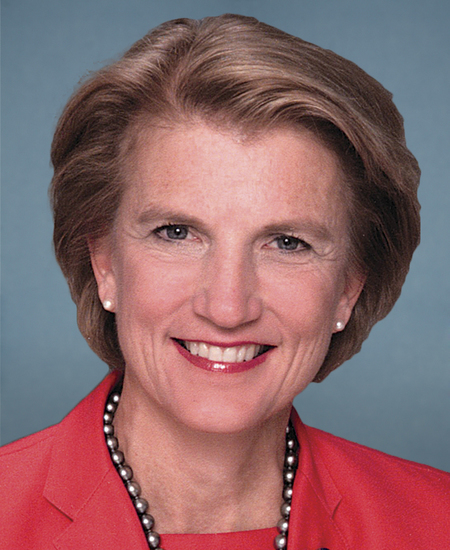
Sen. Shelley Moore Capito
Sponsored bills
Maddy summarySRES 645 is a ceremonial Senate resolution designating April 20-28, 2024, as "National Park Week." It does not create new laws or affect any group directly; instead, it formally recognizes this week to highlight the National Park System. The resolution encourages the public to responsibly visit, experience, and support national parks, referencing the system’s history, visitor statistics (325 million visits in 2023), and economic impact ($50.3 billion in 2022). As a non-binding resolution, it has no legal effect but serves to promote awareness of national parks.
Maddy summaryThis bill directs the Department of Education to consider the International Holocaust Remembrance Alliance (IHRA) definition of antisemitism when investigating potential violations of Title VI of the Civil Rights Act of 1964. It specifically applies to cases involving discrimination based on actual or perceived Jewish ancestry or ethnic characteristics in schools and federally funded programs. The bill clarifies that this guidance does not expand the Department's authority, alter existing discrimination standards, or affect First Amendment rights. It aims to ensure consistent enforcement against antisemitism under existing civil rights law, as previously adopted by the Department of Education.
Maddy summaryThe Affordable Housing Credit Improvement Act of 2023 updates the federal Low-Income Housing Tax Credit program to create more affordable housing options. Key provisions include increasing state funding allocations through revised per capita and minimum amount calculations, modifying tenant eligibility rules to better protect vulnerable populations (including domestic violence victims), and expanding the program's reach to Native American communities and rural areas. The bill also changes the program's name from "Low-income Housing Credit" to "Affordable Housing Credit" and makes administrative improvements to enhance transparency and accountability. These changes aim to make it easier for developers to create and maintain affordable housing units for low- and moderate-income households.
Maddy summaryThe Neighborhood Homes Investment Act creates a new tax credit to encourage rehabilitation and construction of affordable homes in distressed communities. The credit, calculated as the lesser of the rehabilitation cost difference or 35% of development costs, is designed to address the "value gap" preventing housing revitalization. It requires homes to be sold to qualified homeowners (earning no more than 140% of area median income) in designated census tracts with high poverty rates and low homeownership. Homeowners must keep the homes as their primary residence for five years, after which they may sell but must repay a portion of the credit if sold within that period. The bill aims to generate 500,000 new homes over 10 years while promoting fair housing practices and neighborhood revitalization.
Maddy summarySJRES 61 is a joint resolution seeking congressional disapproval of a Federal Highway Administration rule that established performance measures for the National Highway System, including a requirement to track greenhouse gas emissions from highway activities. The rule, published in December 2023, would have mandated that states and federal agencies assess highway performance using this emissions metric. If enacted, the resolution would block the rule from taking effect, preventing the implementation of the emissions tracking measure. This action is pursued under the Congressional Review Act, which allows Congress to reject federal regulations with a simple majority vote.
Maddy summaryThis resolution (SRES 638) calls on the Taliban to immediately release Ryan Corbett, a U.S. citizen wrongfully detained since August 2022 while visiting Afghanistan for business. It condemns the Taliban's detention of Corbett - held in a small cell under poor conditions without charges - and urges U.S. officials to prioritize his release. The resolution also demands the Taliban stop detaining Americans for political gain and calls for the release of other U.S. citizens wrongfully held in Afghanistan. As a symbolic congressional action, it does not create new law but expresses formal support for Corbett and his family.
Maddy summaryThe SEEK HELP Act provides legal protections for individuals who assist during opioid overdoses. It shields people from civil lawsuits if they administer an opioid reversal drug (like naloxone) in good faith and prevents criminal charges for drug possession when someone seeks medical help (e.g., by calling 911) for an overdose. The bill also mandates a public awareness campaign about these protections and allows federal funds to support training for law enforcement and the public. This law directly affects people experiencing or witnessing overdoses, as well as emergency responders and law enforcement who interact with them during such emergencies.
Maddy summaryThis bill (S 4101, PEAKS Act) modifies distance requirements for critical access hospitals (CAHs) in rural and mountainous areas. It deems hospitals already designated as CAHs to meet the 15-mile distance rule for mountainous terrain or secondary roads after January 1, 2026, if they demonstrated compliance at their last certification and have a new facility within 10-15 miles. It also adjusts ambulance service distance rules, changing the standard from 35 miles to 15 miles for CAHs serving mountainous or secondary road areas starting January 1, 2025. These changes directly affect rural hospitals and their ambulance services, aiming to maintain access in geographically challenging regions.
Maddy summaryThis bill expands Medicare coverage to include evidence-based diabetes prevention programs starting January 1, 2025. It covers eligible Medicare beneficiaries (without prior diabetes diagnosis, end-stage kidney disease, or gestational diabetes) who complete CDC-approved programs through certified providers. Medicare will pay 100% of the established rate for these services, with no lifetime limit on participation. The bill also establishes new rules for program providers, including certification requirements and data reporting, replacing the previous "Expanded Model" after 2024.