

Maddy summaryS 4973, the "No Kings Act," removes presidential and vice presidential immunity from federal criminal prosecution, requiring such cases to be handled in federal district courts with appeals limited to the D.C. Circuit. The bill specifically bars the Supreme Court from reviewing cases involving claims of presidential immunity for official acts, including dismissals of indictments or overturning convictions. It directly affects current and former presidents and vice presidents by subjecting them to the same federal criminal accountability as all other citizens. Key provisions prevent courts from considering whether alleged crimes were part of official duties unless Congress specifies otherwise, and clarify that state criminal laws remain applicable.
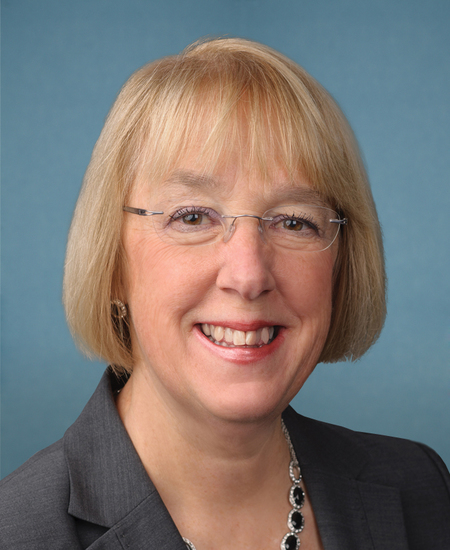
Sponsored bills
Maddy summaryThis bill proposes a constitutional amendment to affirm that no person, including the President and other federal officials, is above the law. It would require all officials holding authority under the U.S. government to be subject to ordinary criminal prosecution for both official and unofficial actions. The amendment mandates that general laws apply to the President unless specified otherwise and grants Congress power to enforce this by, for example, extending the statute of limitations for prosecuting a sitting President during their term. If ratified by three-fourths of states, this change would become part of the Constitution, altering how federal law applies to high-level government officials.
Maddy summarySRES 753 is a Senate resolution introduced by Senators Ossoff and Warnock calling for the immediate release of George Glezmann, a U.S. citizen wrongfully detained by the Taliban in Afghanistan since December 2022. The resolution demands the Taliban release Glezmann and all other Americans wrongfully detained, urges the Taliban to respect his human rights and provide medical access, and directs the U.S. President to press for his release. It also encourages Qatar (the U.S. protecting power in Afghanistan) to continue health checks and efforts to secure his freedom. The resolution condemns the Taliban’s practice of detaining U.S. citizens without charge and expresses support for Glezmann’s family.
Maddy summaryThis bill provides $12.5 billion in funding for energy and water development programs for fiscal year 2025. It allocates specific amounts for U.S. Army Corps of Engineers civil works projects (including flood control, river and harbor maintenance, and ecosystem restoration), Bureau of Reclamation water resource management, and Department of Energy programs covering energy efficiency, nuclear energy, clean energy demonstrations, and environmental cleanup. The bill specifies that certain funds must come from dedicated trust funds like the Harbor Maintenance Trust Fund and includes restrictions on how funds can be reprogrammed between programs. It directly affects federal agencies managing these programs and the states, local governments, and private entities that may receive funding for eligible projects meeting specific criteria.
Maddy summaryThe NO BAN Act (S 4961) expands federal anti-discrimination protections in immigration law to explicitly prohibit discrimination based on national origin or religion for nonimmigrant visa holders, refugees, and other temporary travelers. It reforms Section 212(f) of immigration law by requiring the President to provide specific, credible evidence to Congress within 48 hours before restricting entry, mandating narrow tailoring of such restrictions, and requiring waivers for family/humanitarian cases. The bill also creates detailed reporting requirements for all entry restrictions, including quarterly updates to Congress and public reports on visa denials, waivers, and refugee admissions. This directly affects travelers, visa applicants, and refugees impacted by presidential entry bans or restrictions, while adding new procedural checks on executive authority.
Maddy summaryThis concurrent resolution (SCONRES 39) expresses Congress's view that individuals wrongfully or unjustly deported after establishing long-term ties in the U.S. (e.g., raising families, working, or serving as veterans) should have a fair chance to return. It urges the Department of Homeland Security (DHS) to create a centralized, dedicated unit - modeled after DHS’s existing ImmVets program for veterans - to review requests for reentry. The resolution notes current pathways are fragmented, slow, and hard to access, disproportionately harming families and communities, and emphasizes this approach would align with existing DHS authority. (Note: As a concurrent resolution, it has no legal force but aims to guide DHS policy.)
Maddy summary# Summary of Proposed Employment Rights and Anti-Discrimination Legislation This comprehensive bill proposes significant reforms to address workplace discrimination and harassment, with several key provisions: ## Key Provisions 1. **Expanded Protections**: - Extends protections to independent contractors, interns, volunteers, and trainees (Section 301) - Explicitly prohibits discrimination based on sex, sexual orientation, gender identity, and other protected characteristics 2. **Nondisclosure and Nondisparagement Agreements**: - Prohibits employers from requiring nondisclosure or nondisparagement clauses that cover harassment or discrimination claims (Section 302) - Establishes specific requirements for valid settlement agreements (21-day consideration period, written advice to consult attorney, 7-day revocation period) - Requires enforcement against employers who attempt to enforce prohibited clauses 3. **Arbitration Restrictions**: - Bans mandatory pre-dispute arbitration agreements for work disputes (Section 303) - Requires specific disclosures and waiting periods for post-dispute agreements - Allows civil actions for violations with attorney's fees 4. **Federal Contractor Requirements**: - Requires federal contractors to disclose labor and civil rights violations (Section 304) - Mandates periodic updates on compliance status - Establishes Labor Compliance Advisors within executive agencies 5. **Grant Programs**: - Creates national grants for preventing and addressing discrimination (Section 411-413) - Establishes legal assistance grants for low-income workers (Section 421-423) - Funds state advocacy systems to protect workers' rights (Section 431-436) ## Significance This legislation would substantially increase protections for workers by: - Making it easier to report harassment and discrimination - Preventing employers from silencing victims through restrictive agreements - Creating stronger enforcement mechanisms - Expanding access to legal assistance for vulnerable workers - Holding federal contractors accountable for labor violations The bill represents a major shift in workplace rights law, with implications for nearly all employers in the United States and significant changes to how discrimination claims are handled through legal processes.
Maddy summaryThis Senate resolution (SRES 782) designates August 4-10, 2024, as "National Farmers Market Week" to symbolically recognize the role of farmers markets. It directly affects farmers markets across the U.S., which support local economies, connect urban and rural communities, and provide access to fresh food - particularly for low-income populations using nutrition benefits. The resolution highlights their economic impact ($1.7 billion in 2020), growth (8,771 markets in 2019), and contribution to sustainable farming and community health, without creating new laws or funding.
Maddy summaryThis bill adds Alpine, Texas, as an additional location for court sessions in the Pecos Division of the Western District of Texas, and adds Mount Vernon, Washington, as an additional location for the Western District of Washington. It amends existing federal law (28 U.S.C. § 124(d)(6) and § 128(b)) to formally include these locations. The change directly affects federal court scheduling for cases in those specific judicial divisions. It is a procedural adjustment to court locations with no new funding, policy changes, or substantive legal impacts.
Maddy summaryThis resolution recognizes the progress made by the Americans with Disabilities Act of 1990 in advancing independent living and economic self-sufficiency for people with disabilities, while highlighting persistent challenges like high poverty rates, employment barriers, and inaccessible services. It calls on multiple federal agencies - including the Department of Labor, Health and Human Services, and the Federal Communications Commission - to take specific actions, such as developing employment policies, improving accessibility in communications, and expanding home- and community-based services. The resolution urges bipartisan efforts to dismantle systemic barriers and strengthen opportunities for people with disabilities to fully participate in work and community life. As a non-binding resolution, it does not create new laws but serves as a formal statement of congressional intent and a framework for future policy action.