

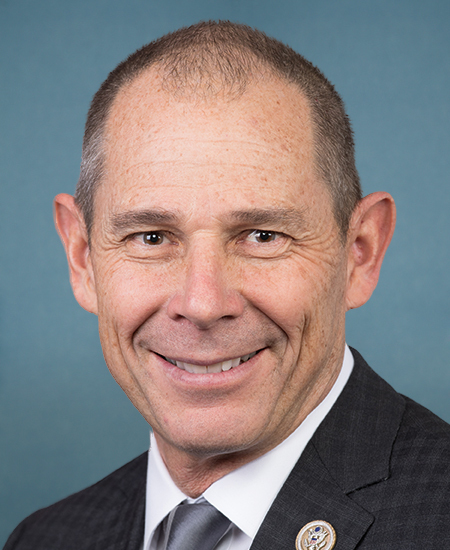
Photo of John R. Curtis
R United States Senate · Utah

Sen. John R. Curtis

Compare
Total votes
2,615
all sessions
Attendance
96%
94 missed
Near the chamber average
With party
94%
of cast votes
Near the chamber average
Bipartisan score
3%
crosses aisle rarely
Near the chamber average
Sponsored
762
bills & resolutions
Lower than 79% of chamber peers
Committees
13
assignments
762 bills and resolutions

Sponsored bills

Total
762
Primary
138
Co-sponsor
624
This page
762
matching current filters
Primary HR 7006
In committee · Indiana House · Lead sponsor
To prohibit natural asset companies from entering into any agreement with respect to land in the State of Utah or natural assets on or in such land.

Maddy summaryHR 7006 prohibits "natural asset companies" (defined by a 2023 SEC notice as entities focused on natural resources like water or minerals) from entering any agreements related to land in Utah or natural assets located there. The bill directly affects these specific companies operating within Utah, banning them from acquiring, developing, or managing land or natural resources through contracts. Key provisions include a clear ban on such agreements and a definition tied to SEC regulatory guidance. This is a targeted restriction focused solely on corporate activity in Utah, not a broader policy change.

In committee Mar 20, 2024 0 co-sponsors
Co-sponsor HR 5499
In committee · Indiana House · Co-sponsor
Congressional Oversight of the Antiquities Act

Maddy summaryHR 5499, titled "Congressional Oversight of the Antiquities Act," would amend the Antiquities Act to impose time limits on national monument designations. It requires that any national monument established by presidential proclamation under the law expires after six months unless Congress extends it, and if not extended, the land cannot be re-designated as a monument for 25 years. This directly affects federal land managers and future presidents, who would need congressional action to maintain or expand monument boundaries. The bill changes the current process by adding automatic expiration and a long-term moratorium on re-designation, shifting authority to Congress.

In committee Mar 20, 2024 1 co-sponsor
Co-sponsor HRES 1086
In committee · Indiana House · Co-sponsor
Expressing support for the designation of March 19, 2024, as "National Agriculture Day" and celebrating the importance of agriculture as one of the most impactful industries in the United States.

Maddy summaryThis resolution (HRES 1086) is a symbolic gesture expressing the House's support for designating March 19, 2024, as "National Agriculture Day." It does not create new laws or policies, but instead formally recognizes agriculture as a vital industry in the U.S. economy. The resolution celebrates agriculture's broad economic impact without imposing any requirements or changes on farmers, consumers, or government programs. It is a commemorative statement, not a substantive legislative action.

In committee Mar 19, 2024 1 co-sponsor
Co-sponsor HR 7521
Passed · Indiana House · Co-sponsor
Protecting Americans from Foreign Adversary Controlled Applications Act

Maddy summaryThis bill prohibits U.S. app stores, hosting services, and distributors from enabling foreign adversary-controlled applications (like TikTok, owned by ByteDance) to operate within U.S. borders. It requires companies to provide users with their data in a machine-readable format before a ban takes effect, and imposes civil penalties of up to $5,000 per affected user for violations. The law directly affects major app platforms, app stores, and internet hosting services, targeting applications owned by entities controlled by designated "foreign adversary" countries (e.g., China). It includes exemptions for companies that divest U.S. operations to non-adversary entities before the ban date.

Passed Mar 14, 2024 1 co-sponsor
Primary HR 7608
In committee · Indiana House · Lead sponsor
CCP IP Act

Maddy summaryHR 7608, the CCP IP Act, imposes U.S. sanctions on Chinese individuals and entities found to engage in or facilitate the theft of U.S. intellectual property. It requires the President to freeze assets and deny visas to Chinese nationals or entities (not U.S. persons) involved in significant IP theft patterns, including senior Chinese Communist Party officials, military members, and their families. The bill mandates a 180-day report to Congress listing sanctioned individuals and details visa screening efficacy, with sanctions terminable if China ceases IP theft efforts. It allows case-by-case waivers for national security reasons but does not affect U.S. citizens or entities.

In committee Mar 11, 2024 0 co-sponsors
Co-sponsor HR 7494
In committee · Indiana House · Co-sponsor
Protect America’s Lands Act

Maddy summaryHR 7494, the Protect America’s Lands Act, prohibits national securities exchanges from processing transactions involving stocks issued by companies primarily managing land for conservation. It defines "natural asset companies" as those holding rights to ecological performance of specific land areas, with their core purpose being to conserve, restore, or sustainably manage natural assets without causing material harm. The bill directly affects securities exchanges and these specific companies by banning exchange-based trading of their securities. This is a regulatory change to the Securities Exchange Act of 1934, focusing on financial market rules rather than direct land management policies.

In committee Feb 29, 2024 1 co-sponsor
Co-sponsor HR 7450
In committee · Indiana House · Co-sponsor
Protecting Privacy in Purchases Act

Maddy summaryHR 7450, the Protecting Privacy in Purchases Act, prohibits payment card networks and covered entities (like payment processors) from requiring or assigning merchant category codes that specifically identify firearms retailers as different from general stores or sporting goods retailers. This directly affects firearms retailers and payment networks by preventing them from using business classification codes that could flag firearm sales. The bill establishes an enforcement process where the Attorney General investigates complaints, issues remediation notices, and can seek court injunctions for non-compliance, while preempting state or local laws on this issue. It does not create private lawsuits for individuals.

In committee Feb 23, 2024 1 co-sponsor
Primary HR 7364
In committee · Indiana House · Lead sponsor
No Forced Labor on TV Act

Maddy summaryHR 7364, the "No Forced Labor on TV Act," bans the advertising for sale of products made with forced labor in China. It directly affects businesses that advertise products manufactured using forced labor, convict labor, or indentured labor under penal sanctions in the People’s Republic of China. The Federal Trade Commission (FTC) will enforce this prohibition under existing laws for unfair or deceptive advertising practices, treating violations as breaches of the FTC Act. The law takes effect 180 days after enactment, targeting advertising of specific China-made products rather than general TV content.

In committee Feb 16, 2024 0 co-sponsors
Primary HR 7363
In committee · Indiana House · Lead sponsor
HOUSES Act of 2024

Maddy summaryHR 7363, the HOUSES Act of 2024, allows states and local governments to purchase federal land for housing development to address shortages. It requires that at least 85% of the land sold must be used for residential buildings, open space, green space, or community facilities (like schools or clinics), with a minimum density of 4 homes per acre. The bill also limits commercial use to 15% of the land (with exceptions for mixed-use developments) and mandates that infrastructure like roads, utilities, and transit hubs must be developed without hindrance. The Secretary of the Interior must prioritize housing projects for approval and finalize decisions within one year, with strict compliance requirements for local governments to maintain eligibility for federal funding.

In committee Feb 16, 2024 0 co-sponsors
Primary HR 7243
In committee · Indiana House · Lead sponsor
Border Security State Reimbursement Act

Maddy summaryHR 7243, the Border Security State Reimbursement Act, requires the Secretary of Homeland Security to pay back states for costs they incur while securing the southern U.S. border. The bill directly affects states bordering Mexico (like Texas, Arizona, and California) that have already spent money on border security measures. It establishes a process for states to seek reimbursement for eligible expenses, but does not create new funding or change existing border security policies.

In committee Feb 6, 2024 0 co-sponsors
Showing 391 to 400 of 762 bills
Previous 1 … 39 40 41 … 77 Next