

Maddy summaryThe Kidney Care Access Protection Act (S 2730) improves access to innovative treatments for patients with end-stage renal disease (ESRD) who require dialysis. The bill extends Medicare's Transitional Drug Add-On Payment Adjustment (TDAPA) period for new renal dialysis drugs approved after 2020 and creates a permanent post-TDAPA payment adjustment starting in 2026. It clarifies that Medicare payments will cover only drugs specifically for kidney disease treatment, not for related conditions like diabetes or heart disease. The legislation also requires Medicare Advantage plans to cover innovative kidney care therapies and adjusts payment calculations to better reflect actual costs for providers. These changes will take effect on January 1, 2026, for treatments provided after that date.
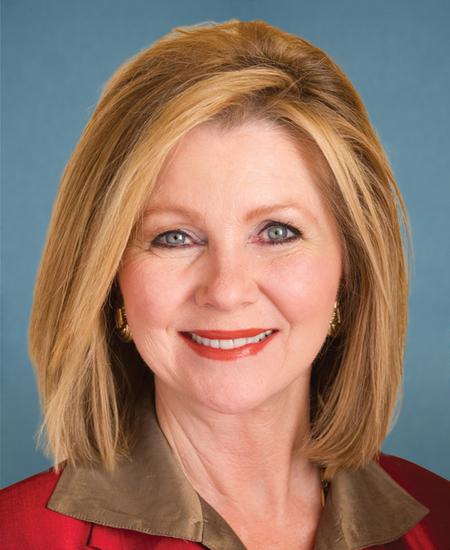
Sen. Marsha Blackburn
Sponsored bills
Maddy summaryThis bill prohibits the District of Columbia from implementing policies that prevent cash bail for defendants posing a clear threat to public safety. It specifically requires cash bail as a condition for pretrial release for defendants charged with offenses like violent crimes (e.g., assault, sexual abuse, robbery), repeat offenders, or those who failed to appear in court. The bill also bans automatic pretrial detention for all defendants charged with violent offenses such as murder, rape, or burglary. These provisions directly affect individuals in DC criminal cases who would otherwise face cashless release or automatic detention. The law aims to ensure public safety by mandating cash bail for specific high-risk cases while preventing blanket detention policies.
Maddy summaryThe Prevent Government Shutdowns Act of 2025 would prevent government shutdowns by automatically continuing funding for federal programs at previous year's levels if Congress fails to pass regular appropriations bills. If a lapse in appropriations occurs, the bill would provide automatic funding for 14 days, extendable for additional 14-day periods until a new appropriations bill is enacted, with funds charged to the appropriate account once legislation is passed. The bill also restricts official travel for certain government employees and congressional staff during a lapse, with limited exceptions for returning to Washington, D.C. or responding to national security events. It establishes procedures requiring Congress to prioritize appropriations legislation during a funding gap and would take effect on September 30, 2025.
Maddy summaryThe Telehealth Modernization Act extends Medicare telehealth flexibilities through 2027, allowing more patients to access care remotely without geographic restrictions. It expands who can provide telehealth services (including audio-only visits), extends telehealth use for hospice recertification, and updates coverage for in-home cardiopulmonary rehabilitation. The bill also extends "acute hospital care at home" program flexibilities through 2030 and requires a study on this program's effectiveness. Additionally, it includes provisions to improve telehealth access for patients with limited English proficiency and enhances Medicare coverage for virtual diabetes prevention programs. These changes primarily affect Medicare beneficiaries, healthcare providers, and telehealth service companies.
Maddy summaryThis bill prohibits federal grants for states or local governments that maintain policies limiting cash bail for individuals charged with specific violent or disorderly crimes. It defines "covered offenses" as violent acts (murder, rape, robbery) or crimes promoting public disorder (looting, rioting, fleeing police). Starting October 1 after enactment, the Attorney General cannot award or renew such grants to jurisdictions with bail policies that substantially limit cash bail for these offenses. The bill directly affects state and local governments whose bail laws for these crimes conflict with the federal grant eligibility rules.
Maddy summaryThis bill mandates that new or significantly renovated federal public buildings costing over $50 million (adjusted for inflation) prioritize classical or traditional architectural styles - such as Neoclassical, Georgian, or Greek Revival - over modern styles like Brutalist or Deconstructivist. It requires federal agencies, particularly the General Services Administration (GSA), to seek community input on designs, ensure architects reviewing projects have classical architecture expertise, and justify any deviation from preferred styles with detailed cost and aesthetic analyses. The law applies to courthouses, agency headquarters, and National Capital region buildings, excluding infrastructure projects. Annual reports to Congress will track compliance with these architectural standards.
Maddy summaryS 2702 requires K-12 schools receiving federal funds to obtain parental consent before accommodating students' gender identity expressions that differ from their biological sex. It prohibits schools from hiding such information from parents, encouraging students to conceal gender identity concerns, or facilitating referrals for gender transition procedures without consent. Schools must publicly post compliance policies and provide written policies to families, with violations allowing parents to sue for injunctive relief, attorney fees, and compensation for "harm" from gender transition treatments. The bill directly affects school districts, staff, and families of students under 18, mandating parental involvement in decisions about gender identity accommodations.
Maddy summaryThis bill (S 2685) simply renames the Department of Defense to the "Department of War" and updates all references to the department and its leader (Secretary of Defense to Secretary of War) in existing laws and documents. It does not change any policies, funding, or responsibilities of the department. The bill affects only the department's administrative name and official references, not any actual operations or affected individuals. It is purely a procedural renaming with no substantive policy changes.
Maddy summaryS 2067, the Rescissions Act of 2025, cancels over $7.6 billion in unobligated foreign aid funds that were previously allocated but not spent. It directly affects U.S. international programs by permanently rescinding unused balances across multiple categories, including contributions to international organizations, global health initiatives, refugee assistance, economic support, and disaster aid. The bill targets specific line items from the 2024 and 2025 appropriations acts, such as $2.5 billion for Development Assistance and $800 million for Migration and Refugee Assistance. These rescissions take effect immediately upon the bill’s enactment, reducing available funding for these programs without altering their underlying policy structure.
Maddy summaryThis bill requires online dating platforms to notify users when they've interacted with a member who has been banned for potential fraud. The notification must clearly state the banned member's identifier, warn about possible false identities or scams, and provide safety tips - delivered via email/text within 24 hours (or up to 3 days for law enforcement reasons). Platforms are shielded from liability for how they deliver these alerts. The law prevents states from creating conflicting notification rules and empowers the FTC to enforce violations as deceptive practices. It directly affects dating app users and platforms by mandating proactive scam warnings.