

Maddy summarySRES 391 is a symbolic Senate resolution condemning the assassination of Charlie Kirk, a conservative campus advocate and founder of Turning Point USA, who was killed on September 10, 2025, at Utah Valley University. The resolution expresses the Senate’s strongest condemnation of the killing, extends condolences to his family (including his wife Erika and two children), and honors his work promoting civil discourse on college campuses. As a non-binding resolution, it does not create policy changes or affect any individuals through legislative action.
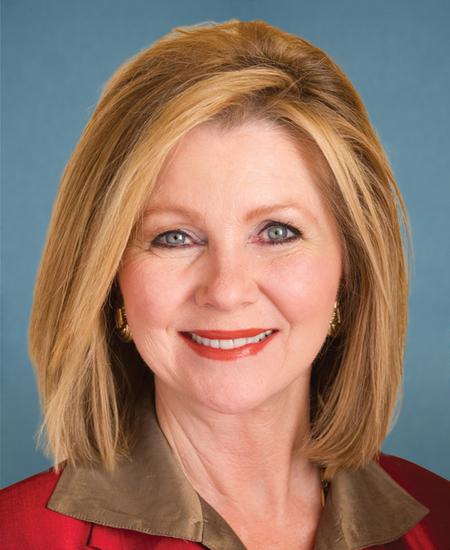
Sen. Marsha Blackburn
Sponsored bills
Maddy summarySRES 392 is a Senate resolution designating November 16, 2025, as "National Warrior Call Day." It encourages all U.S. citizens to reach out to active-duty service members and veterans through phone calls or conversations to reduce isolation and connect them with support resources. The resolution specifically highlights the importance of peer-to-peer connections in addressing mental health challenges, citing veteran suicide statistics as context. As a symbolic measure (not a law), it does not create new programs but urges public engagement to support military personnel transitioning from service.
Maddy summarySRES 394 designates September 2025 as "National Literacy Month" through a Senate resolution. It calls on federal, state, local, schools, libraries, nonprofits, businesses, and the public to observe the month with literacy-focused programs. The resolution does not create new laws, funding, or policy requirements. It references statistics on literacy challenges (e.g., adult illiteracy costs) but serves solely as a symbolic recognition of literacy's importance.
Maddy summaryThis bill repeals two previous D.C. criminal justice reforms: the Incarceration Reduction Amendment and the Second Look Amendment Acts. It creates a new program starting in 2026 where the Office of Victim Services issues annual grants of up to $200,000 per organization to support services for survivors of violent crimes, including advocacy, mental health care, and job assistance. The law directly affects D.C. organizations providing victim services and changes the District’s approach to criminal justice by reversing prior parole and sentencing policies while establishing new victim support funding. The key change is replacing prior sentencing reforms with this new grant program for crime survivors.
Maddy summaryThis bill restricts federal funding for states that issue driver licenses to people without proof of U.S. citizenship or lawful presence, or that block local officials from sharing immigration status information with federal authorities. States violating these rules must return unobligated Edward Byrne Justice Assistance Grant funds within 30 days and lose eligibility for future grants until they comply. The policy directly affects state governments that currently issue licenses to non-citizens or limit cooperation with immigration enforcement. It uses federal grant funding as a mechanism to enforce compliance with federal immigration law regarding driver licensing and information sharing.
Maddy summaryThe DECLINE Act requires federal agencies to immediately deactivate government payment cards (like purchase or travel cards) when employees leave their positions, including through separation, retirement, or discharge. Agencies must collect physical cards, remove them from digital wallets, and stop card usage within 30 days of an employee’s departure. This applies to all federal employees, including those in senior executive roles and policy-determining positions. Agencies must also report annually to Congress on compliance, card deactivations, and misuse prevention to prevent fraud or unauthorized spending.
Maddy summaryThe Enhancing First Response Act requires the Federal Communications Commission (FCC) to issue detailed reports after major disasters that activate the Disaster Information Reporting System for at least 7 days. These reports must track outages in broadband, mobile, and emergency communication services (including 911 systems), estimate affected users, and include public hearings with local officials, providers, and first responders within 8 months. The FCC must publish a final report within 12 months, containing outage data and recommendations to improve network resilience. This bill directly affects communication providers, public safety agencies, and disaster response systems by standardizing outage reporting and accountability.
Maddy summaryS 2755, the Protecting American Research and Talent Act, prohibits federal funding for fundamental research collaborations between U.S. universities and specific foreign entities deemed security risks (like certain Chinese institutions linked to military or defense programs). It allows limited waivers for universities with low international enrollment (under 15% overall, and under 5% from "foreign countries of concern"), requiring federal agencies to justify waivers and report detailed data on collaborations, enrollment, and intellectual property terms. The law mandates annual reports to Congress on compliance, including lists of institutions seeking waivers and specifics about any approved research partnerships. This directly affects universities seeking federal research grants involving international partners, particularly those with significant enrollment from designated high-risk countries.
Maddy summaryThe RESULTS Act (S 2761) changes how Medicare sets payment rates for clinical diagnostic laboratory tests by requiring the collection of final payment data from private payors through a qualifying comprehensive claims database. For widely available non-ADLT tests (non-Advanced Diagnostic Laboratory Tests), this new system will apply to data collection periods beginning January 1, 2027, with reporting for these periods starting January 1, 2028. If data isn't available for a test, the bill establishes a default payment rate equal to the previous year's rate adjusted for inflation. This affects Medicare, clinical laboratories, and private payors by creating more accurate, market-based payment rates that better reflect final payments made by private insurers.
Maddy summarySRES 381 designates September 9, 2025, as "National World War II Italian Campaign Remembrance Day" to honor American and Allied military personnel who liberated Italy from German occupation during World War II. The resolution recognizes the campaign's 602-day duration, the significant sacrifices (including over 150,000 U.S. casualties), and key events like the Salerno landings on September 9, 1943. It encourages the public to observe the day through ceremonies and education, supports preserving historical sites like American cemeteries in Italy, and asks the President to issue a commemorative proclamation. The bill directly affects veterans' legacy and public remembrance, without creating new laws or funding.