

Maddy summaryThis bill directs the U.S. Treasury Secretary to instruct U.S. representatives at major international financial institutions (like the World Bank and IMF) to oppose and reverse policies restricting financing for coal, oil, natural gas, and nuclear energy projects. It requires these institutions to eliminate such restrictions or face limits on U.S. funding (capping obligations at 50% until compliance). The bill also mandates annual reports detailing efforts to remove financing barriers for these energy sources and steps to promote international energy project financing. It directly affects how global development banks allocate capital for energy infrastructure in developing nations.
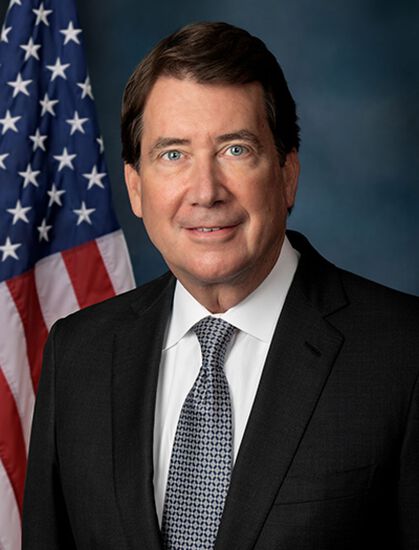
Sen. Bill Hagerty
Sponsored bills
Maddy summaryThe Building Chips in America Act of 2023 (S. 2228) amends federal law to streamline environmental reviews for semiconductor manufacturing projects receiving federal financial assistance. It clarifies that certain projects won't be considered "major Federal actions" under the National Environmental Policy Act (NEPA) if they meet specific criteria: the project must have begun by December 31, 2024; federal assistance must be in loan/guarantee form; or non-loan assistance must be 10% or less of total project costs. The bill establishes categorical exclusions for environmental reviews related to semiconductor projects and designates the Department of Commerce as lead agency for these reviews. This primarily affects semiconductor manufacturers receiving federal funding under the CHIPS Act, reducing regulatory barriers for facility construction and expansion.
Maddy summarySRES 888 is a ceremonial Senate resolution honoring the late James Ralph Sasser, a former U.S. Senator from Tennessee (served 1976-1993). It formally expresses the Senate’s "profound sorrow" over his death and requests the Secretary of the Senate transmit the resolution to his family. The resolution has no policy impact or direct effect on any individuals or entities - it is solely a commemorative gesture. As a procedural resolution, it does not create new laws or alter existing policies.
Maddy summaryThis bill awards a Congressional Gold Medal to the United States Army Dustoff crews who served during the Vietnam War, recognizing their life-saving medical evacuations. The medal, to be designed by the Secretary of the Treasury in consultation with the Secretary of Defense, will be displayed at the U.S. Army Medical Department Museum. The bill honors the approximately 900,000 wounded personnel these crews transported over the course of the Vietnam War, including U.S., South Vietnamese, and allied forces, who relied on their rapid medical evacuation services.
Maddy summaryThe SIREN Reauthorization Act (S. 265) reauthorizes the rural emergency medical service training and equipment assistance program, extending its funding period from 2019-2023 to 2024-2028. The bill requires emergency medical services personnel to receive training on mental health and substance use disorders, and allows programs to acquire drugs or devices for emergency overdose treatment. This reauthorization directly benefits rural EMS providers and the communities they serve by improving emergency medical response capabilities. The program will be moved to appear at the end of part D of title V of the Public Health Service Act. The bill makes specific policy changes to enhance rural emergency medical services training and equipment access.
Maddy summarySRES 860 designates the week of October 6-12, 2024, as "Religious Education Week" to recognize the role of religious education in the United States. The resolution calls on all 50 states, territories, and the District of Columbia to accommodate students who wish to attend religious classes during school hours through released time programs. It highlights religious education's contribution to moral, civic, and personal development, citing historical and legal references like the Pierce v. Society of Sisters and Zorach v. Clauson Supreme Court cases. The resolution is non-binding and symbolic, focusing on awareness rather than new policy requirements.
Maddy summaryThis resolution (SRES 887) is a symbolic Senate expression of support for designating October 7-12, 2024, as "National 4-H Week." It does not create new laws or funding but formally recognizes the 4-H youth development program, which serves nearly 6 million young people nationwide through community-based projects in health, science, and leadership. The resolution highlights 4-H’s role in fostering youth leadership and its partnership with land-grant universities and the USDA. It directly affects the 4-H organization, its 500,000 volunteers, and the youth members participating in the program.
Maddy summaryThis Senate resolution (SRES 890) condemns Hamas for the October 7, 2023, attack on Israel that killed approximately 1,200 people - including 40 U.S. citizens - and took hostages. It supports three specific outcomes: ensuring Israel's long-term security, preventing Hamas from regaining power in the region, and securing the safe return of U.S. hostages held in Gaza. As a non-binding resolution, it does not create new laws or policies but expresses the Senate's position. The resolution was introduced by 45 Senators and passed unanimously on September 25, 2024.
Maddy summaryThe Critical Mineral Consistency Act of 2024 amends the Energy Act of 2020 to expand the definition of "critical minerals" to include any "critical material" designated by the Secretary of Energy. It requires the Secretary to update the official list of critical minerals within 45 days of designating a new critical material. This change directly affects the Department of Energy, which must manage the updated list, and industries relying on mineral supply chains. The bill ensures consistency in how minerals are classified under federal law by formalizing the Secretary’s authority to add new materials to the critical minerals list.
Maddy summaryThe Visa Integrity Preservation Act of 2024 (S 5291) requires in-person interviews with consular officers for certain non-citizens unlawfully present in the U.S. who are deemed inadmissible under specific immigration grounds. It directly affects applicants for visas who are currently in the U.S. without legal status and face inadmissibility due to violations listed in Section 212(a)(6) or (9) of the Immigration and Nationality Act. The key mechanism amends existing law to mandate these in-person interviews as part of the visa application process for this group. This change applies to consular officers processing visa applications for individuals meeting these criteria.