

Maddy summaryThe Chance to Compete Act of 2024 reforms federal civil service hiring by replacing degree-based requirements with skills- and competency-based assessments for positions in the competitive service. It requires federal agencies to use "technical assessments" - position-specific tools to evaluate job-related skills, abilities, and knowledge - instead of relying primarily on educational credentials. During a 3-year transition period, agencies must prioritize technical assessments, with limited waivers available for specific job series where such assessments are deemed impractical. The bill also mandates detailed reporting on implementation progress and hiring data, including demographic breakdowns, to track how the new system affects applicants and hiring outcomes.
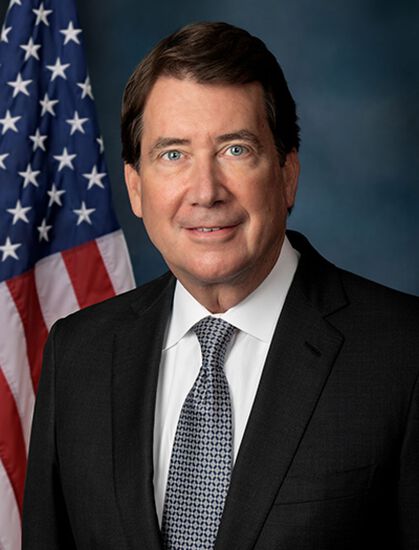
Sen. Bill Hagerty
Sponsored bills
Maddy summaryThe Homebuyers Privacy Protection Act (S 3502) limits how consumer credit reports can be shared during mortgage applications. It prevents credit reporting agencies from sending these reports to third parties solely based on a mortgage-related request, unless the third party has the homebuyer's explicit authorization or is directly involved in the loan (like the mortgage lender, loan servicer, or their bank holding the homebuyer's account). This directly affects homebuyers applying for residential mortgages by restricting unauthorized sharing of their credit data. The bill amends the Fair Credit Reporting Act to add these privacy protections without creating new government programs or altering existing mortgage processes.
Maddy summaryS 5542 prohibits the use of federal funds to remove the border wall along the U.S.-Mexico border or to sell/dispose of materials purchased for its construction. The bill specifically blocks funding for deconstructing any physical barrier segment or for auctioning, transferring, or disposing of government-acquired construction materials. This applies to all federal funds and directly affects federal agencies responsible for border infrastructure projects. The legislation focuses solely on restricting funding use, not on the border wall's purpose or policy merits.
Maddy summaryThe Forgotten Heroes of the Holocaust Congressional Gold Medal Act (S. 91) authorizes the award of a single Congressional Gold Medal to 60 diplomats who risked their careers and safety to save Jewish lives during the Holocaust. These diplomats, representing countries including Sweden, Switzerland, Spain, Portugal, and others, issued visas and provided safe passage to Jews fleeing Nazi persecution despite strict orders from their home governments. The medal will be presented collectively to the next of kin of each diplomat, along with representatives from their home countries, and then permanently displayed at the United States Holocaust Memorial Museum. The act recognizes these individuals' bravery without implying they represent all who performed similar humanitarian acts during the Holocaust. The medal serves as a permanent tribute to their sacrifice and will be available for public display and research.
Maddy summarySRES 925 is a Senate resolution honoring the late Senator Fred R. Harris of Oklahoma, who died on November 23, 2024, at age 94. The resolution expresses the Senate’s sorrow at his passing, requests that his family be notified, and directs the Senate to adjourn in his memory. It does not create new laws or affect any policies - it is a formal expression of respect for a former senator’s legacy.
Maddy summaryThis bill, the PURE Act (S 5461), removes the requirement to test methamphetamine purity in federal sentencing cases. It amends the Controlled Substances Act to eliminate purity thresholds for sentencing under Section 401, meaning prosecutors no longer need to prove the purity of seized methamphetamine to apply mandatory minimum sentences. The change directly affects federal drug prosecutions, crime labs, and sentencing guidelines by reducing a procedural burden. The bill also directs the Sentencing Commission to review guidelines, potentially adding enhancements for severe cases like those involving large victim counts or fatalities.
Maddy summarySRES 914 is a symbolic Senate resolution expressing support for National Adoption Day (November 23, 2024) and National Adoption Month (November 2024). It promotes public awareness of children awaiting adoption in foster care, celebrates adoption families, and encourages Americans to support child safety and permanency. The resolution does not create new policies or alter existing laws; it is a non-binding statement of support. It directly affects public awareness and national recognition of adoption efforts, not specific individuals or programs.
Maddy summarySRES 905 is a symbolic Senate resolution recognizing the Scarboro 85 - 85 African American students from Oak Ridge, Tennessee - who integrated public schools in the Southeast region following the *Brown v. Board of Education* Supreme Court ruling. It honors their peaceful enrollment at Oak Ridge High School and Robertsville Junior High in September 1955, making them the first in the Southeast to implement school desegregation. The resolution specifically lists all 85 students' names and acknowledges community support from local churches and staff. As a commemorative resolution, it has no policy impact or new requirements, solely serving to formally recognize this historical milestone.
Maddy summaryThis is a ceremonial Senate resolution (SRES 902) honoring the late Senator Timothy Peter Johnson of South Dakota, who died after a long career in public service. The resolution expresses the Senate's "profound sorrow" over his death, directs the Secretary of the Senate to share the resolution with the House and send a copy to his family, and calls for the Senate to adjourn in his memory. It does not create new laws or affect any policies, as it is purely a formal expression of respect for a former senator. The resolution commemorates his decades of service, including his time as Chairman of the Banking Committee and his return to work after a serious health setback.
Maddy summaryThis bill maintains the U.S. government's current policy requiring imported goods produced in the West Bank or Gaza to be labeled as "Made in the West Bank or Gaza" instead of "Made in Israel." It directly affects importers of such goods and U.S. agencies like Customs and Border Protection, which enforce the labeling rules. The key provision prohibits using federal funds to change or repeal this labeling policy, ensuring the 2020 requirement remains in effect. This is a concrete policy change that mandates specific product labeling for goods from these territories.