

Financial Integrity and Regulation Management Act or the FIRM Act This bill prohibits the consideration of reputational risk by federal banking agencies when regulating, examining, or supervising a depository institution or credit union. The bill defines reputational risk as the potential for negative publicity or public attention to decrease confidence in the institution, lead to litigation, reduce revenues, or result in other adverse impacts to the institution. Agencies must report on the implementation of this bill.
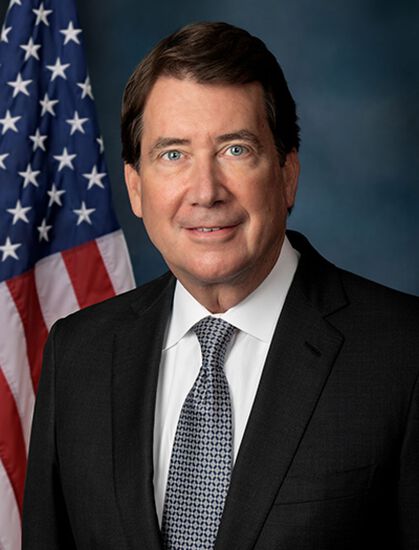
Sen. Bill Hagerty
Sponsored bills
Maddy summaryS 1079, the Restoring Law and Order Act of 2025, creates a federal grant program to provide state and local law enforcement agencies (including tribal entities) with funding to address specific crime priorities. The grants fund hiring officers, targeting vehicle thefts and carjackings, prosecuting violent crime (including repeat offenders), using bail/pretrial detention for dangerous offenders, combating drug/fentanyl crimes, processing evidence faster, and deporting criminal aliens. The $500 million appropriation for fiscal year 2026 (with funds available until 2030) comes from rescinded unobligated balances previously allocated for diversity initiatives. Agencies receiving grants must maintain audit records and allow oversight of fund usage by the Attorney General.
Maddy summaryThe FIGHT China Act of 2025 restricts U.S. investments in Chinese companies with ties to China's military or surveillance sectors. It prohibits U.S. persons from engaging in transactions involving "prohibited technologies" such as advanced semiconductors (with specific technical specifications), AI systems, quantum computing, and hypersonic weapons, while requiring notification for certain "notifiable technology" investments. The bill mandates that U.S. investors divest from companies on the Non-SDN Chinese Military-Industrial Complex Companies List within one year of enactment. It establishes a process for identifying Chinese entities subject to these restrictions, with annual reports to Congress required for seven years.
Maddy summaryThe FOCA Act (S 1064) requires federal agencies to ensure open competition on construction projects by prohibiting them from mandating or banning contractors from entering into labor agreements (like union contracts) or discriminating against contractors based on such agreements. It directly affects federal contractors, subcontractors, and agencies awarding construction contracts or grants for projects involving federal funds. Key provisions ban specific bid specifications or project documents from requiring labor affiliations, apply to all contracts after enactment, and mandate updates to federal procurement rules within 60 days. The bill aims to reduce taxpayer costs, expand opportunities for small businesses, and maintain federal neutrality in labor relations for construction projects.
This joint resolution nullifies the rule titled Gross Proceeds Reporting by Brokers That Regularly Provide Services Effectuating Digital Asset Sales and issued by the Internal Revenue Service (IRS) on December 30, 2024. The rule generally requires persons effectuating decentralized financial (DeFi) transactions to report certain information regarding digital asset sales to the IRS.
Maddy summaryThis bill prohibits U.S. energy, mining, and manufacturing companies deemed "integral to national interests" from complying with foreign environmental or social regulations (like the EU's Corporate Sustainability Due Diligence Directive). It specifically targets entities generating at least 25% of revenue from extractive activities (mining, fossil fuels) or manufacturing, blocking their adherence to foreign rules requiring impact assessments or reporting. Companies facing hardship can petition the President for exemptions within 30 days, considering economic impacts and national security. The law also prevents U.S. courts from enforcing foreign judgments against companies for non-compliance and allows civil lawsuits for adverse actions taken due to such regulations.
Maddy summaryThis joint resolution seeks to block a rule issued by the Consumer Financial Protection Bureau (CFPB) that would have prohibited creditors and credit reporting agencies from using medical debt in credit reports. The CFPB rule, published in January 2025, aimed to prevent medical information from affecting consumers' credit scores. If approved, this resolution would nullify the rule, meaning creditors and credit bureaus could continue using medical debt in credit decisions. The measure directly affects credit reporting practices and consumer credit evaluations.
Maddy summaryThis bill increases federal funding for projects improving safety for pedestrians and cyclists. It allows states and localities using federal highway funds to fully cover (100%) the costs of specific projects, such as connecting existing bike/pedestrian paths or reducing risks to vulnerable road users, if they use "Proven Safety Countermeasures" for cyclists/pedestrians as defined by the Federal Highway Administration. Projects must align with state safety plans or local safety plans like Complete Streets or Vision Zero plans. The bill directly affects states and local governments managing transportation infrastructure funded through federal highway programs.
Maddy summaryThis bill (S 952) creates a single uniform tariff subheading (2208.30.00) for all whiskies in the U.S. tariff schedule, replacing multiple existing subheadings. It sets a flat duty rate of $2.04 per liter for all whiskies under this new category and requires the U.S. International Trade Commission to add specific statistical suffixes to distinguish between whisky types (like Irish/Scotch, Bourbon, Rye) and container sizes. The change directly affects whisky importers and customs officials who process these goods, standardizing how whiskies are classified for duty calculation. The new system takes effect 15 days after the bill is enacted.
Maddy summaryThe Restore VA Accountability Act of 2025 establishes new rules for disciplining VA supervisors and management officials (excluding senior executives and political appointees) for poor performance or misconduct. It requires the VA Secretary to use specific, written criteria - like the offense's severity, the employee's role, and past record - when deciding on removal, demotion, or suspension, and mandates decisions within 15 business days. The bill creates an internal grievance process for affected employees and strengthens whistleblower protections by requiring Special Counsel approval before disciplining someone who disclosed wrongdoing. It also limits judicial review to cases of arbitrary or capricious decisions and explicitly prohibits courts from reducing penalties. The law applies to VA employees covered under the bill's definition, effective from the 2017 VA Accountability Act's enactment date.