

Maddy summaryThis bill (S 1519) designates approximately 1.56 million acres of the Arctic National Wildlife Refuge in Alaska as wilderness under federal law. It permanently protects this specific area from development like oil drilling or road construction by adding it to the National Wilderness Preservation System. The designation directly affects the refuge's management, ensuring this coastal plain ecosystem remains preserved in its natural state.
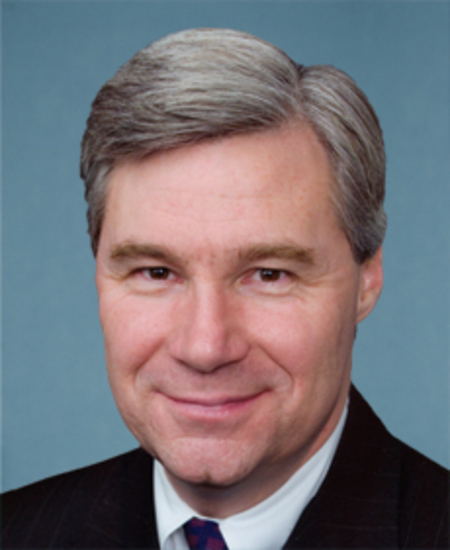
Sen. Sheldon Whitehouse
Sponsored bills
Maddy summaryThis bill requires most health insurance plans to cover diagnostic and supplemental breast examinations with no out-of-pocket costs (like deductibles or copays) for enrollees. It specifically covers medically necessary exams used to evaluate abnormalities (diagnostic) or for high-risk screening (supplemental), following national cancer guidelines. Insurance plans may still require prior authorization but cannot impose cost-sharing for these services. The rule applies to group and individual plans starting January 1, 2026, and does not override stricter state laws protecting coverage.
Maddy summaryThis resolution designates the week of April 19-27, 2025, as "National Park Week" in the U.S. Senate. It encourages the public to responsibly visit, experience, and support national parks across the United States. The resolution highlights the National Park System’s role in preserving natural and cultural resources while acknowledging its economic impact and recreational value. It does not create new laws or alter funding, focusing solely on recognition and public engagement.
Maddy summaryThis bill enhances the Child and Dependent Care Tax Credit to help more families afford childcare. It increases the credit percentage to 50% for lower-income families (up from 35%), raises the income threshold for full credit ($125,000 to $400,000 phaseout), and doubles the maximum credit amounts ($3,000/$6,000 to $8,000/$16,000 for one/two or more children). The credit becomes refundable for qualifying families, meaning those who owe little or no income tax can receive the full credit as a refund. It also includes annual inflation adjustments to maintain the credit's value over time.
Maddy summaryThis bill prohibits new oil and gas exploration, development, and production on the federal outer continental shelf off California, Oregon, and Washington. It amends the Outer Continental Shelf Lands Act to block the Secretary from issuing any new leases or authorizations in four specific planning areas: Washington/Oregon, Northern California, Central California, and Southern California. These areas are defined by the 2023 Bureau of Ocean Energy Management leasing program. The bill directly affects oil and gas companies seeking to operate in these coastal zones, preventing new federal leasing activities.
Maddy summaryThis bill increases the federal tax credit for rehabilitating historic buildings from 20% to 30% for projects under $3.75 million (or $5 million in rural areas), up from the current rate. It allows property owners to transfer unused credits to other taxpayers and expands eligibility to include more building types. The bill also removes certain tax adjustments for these projects and simplifies rules for tax-exempt properties. These changes primarily affect developers and owners of small historic properties, especially in rural communities seeking tax incentives for rehabilitation.
Maddy summaryThis bill extends Medicare payment incentives for healthcare providers using alternative payment models, directly affecting Medicare participating doctors and hospitals. It updates specific years in payment formulas from 2026 to 2027 and adjusts the 2027 incentive rate from 1.88% to 3.53%. The key mechanism modifies Medicare payment rules to maintain existing financial incentives through 2028, ensuring continuity for providers participating in these models. The changes are technical amendments to the Social Security Act's Medicare provisions.
Climate Change Financial Risk Act of 2025 This bill addresses climate change risk and its potential impact on the financial system. The Federal Reserve Board must develop financial risk analyses relating to climate change for certain large nonbank financial companies and bank holding companies. Specifically, these entities must be evaluated every two years on whether they have the capital necessary to absorb financial losses that would arise under several different climate change risk scenarios. In response to the results of the evaluation, entities must develop and submit for approval a climate risk resolution plan. The plan must include a capital policy with respect to climate risk planning and targets to remedy identified vulnerabilities. If the plan is not approved, the entity’s ability to make capital distributions is restricted. The bill also establishes the Climate Risk Scenario Technical Development Group to provide recommendations to the board regarding climate change risk scenarios, and determine the financial and economic risks of these scenarios. The board must develop a survey to assess (1) the ability of other large financial institutions to withstand each scenario, (2) which surveyed entities have activities in geographical areas or industries that are significantly exposed to the impacts of climate change, and (3) how these surveyed entities plan to adapt to risks presented in each scenario.
Maddy summaryThe New England Coastal Protection Act prohibits the federal government from issuing new leases for oil and gas exploration, development, or production in the Outer Continental Shelf off the coasts of Maine, New Hampshire, Massachusetts, Rhode Island, and Connecticut. This bill directly affects energy companies seeking offshore drilling permits and the federal government, which would no longer be allowed to grant such leases. The key mechanism amends the Outer Continental Shelf Lands Act to add a specific prohibition banning all new oil and gas leasing in the designated coastal states. The bill would prevent future oil and gas development in these waters but does not impact existing leases or operations.
Maddy summaryThe Clean Cloud Act of 2025 requires data centers and cryptocurrency mining facilities with more than 100 kilowatts of power to annually report their energy consumption and sources to the Environmental Protection Agency. The bill establishes regional greenhouse gas emissions baselines that decrease by 11% each year from 2026 through 2034, with fees assessed on facilities and utilities when their energy use exceeds these baselines. Fees start at $20 per kilowatt-hour above the baseline in 2026, increasing annually with inflation, and funds collected will support program administration, lower residential energy costs, and clean energy projects like zero-carbon power generation. This law directly affects data centers, cryptocurrency mining facilities, and the electric utilities that serve them, aiming to increase transparency about energy sources and reduce carbon emissions from these energy-intensive operations.