

Maddy summaryThis bill targets large-scale decentralized finance (DeFi) platforms and their key participants for national security compliance. It requires digital asset protocol backers (those holding governance tokens worth $25 million or more) and transaction facilitators to annually certify token valuations to the SEC and Treasury, and subjects them to sanctions penalties if they facilitate violations of U.S. sanctions. It also amends anti-money laundering rules to apply to DeFi actors and mandates that crypto kiosk operators verify consumer identities and report kiosk locations. These changes directly affect major DeFi platforms and crypto businesses meeting the financial thresholds, aligning their operations with existing sanctions and banking regulations.
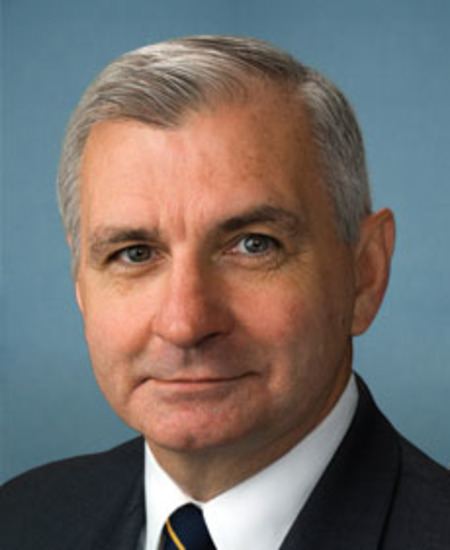
Sen. Jack Reed
Sponsored bills
Maddy summaryThis bill increases federal funding for Medicaid home and community-based services (HCBS) by raising the federal share (FMAP) by 10 percentage points for states during 2024-2025, capped at 95%. States must apply with plans to use these funds to increase wages and benefits for home care workers (like paid leave and hazard pay), reduce waiting lists for services, help people return from institutional settings, and cover related costs like equipment or training. Funds must supplement, not replace, existing state spending and be reported on by states by 2027. It directly affects states administering Medicaid HCBS programs, home care workers, and people receiving community-based care.
Maddy summaryThe PROTECT Act (S 3108) establishes a federal initiative to reduce youth and young adult e-cigarette use. It directs the CDC to conduct research on youth e-cigarette patterns, product characteristics, and access methods; develop health provider guidance; identify prevention strategies; and run public education campaigns about e-cigarette risks. The bill authorizes $100 million annually (2024-2028) to fund state health departments and tribal organizations implementing youth-focused prevention and cessation programs. This initiative affects youth and young adults directly by targeting e-cigarette access and use, while requiring CDC and health agencies to coordinate new research and outreach efforts.
Maddy summaryThe Court Legal Access and Student Support Act of 2023 (CLASS Act) prohibits higher education institutions from requiring students to agree to mandatory arbitration or other legal restrictions when pursuing claims against the school. It specifically bans clauses that limit students' choices of court, venue, or jury trials in lawsuits, applying to all enrollment agreements between students and institutions of higher education as defined by federal law. The bill amends the Higher Education Act to ensure students can seek legal remedies in court without pre-dispute restrictions. It will take effect one year after enactment.
Maddy summaryThe Safe Schools Improvement Act (S 3105) requires states receiving federal education funding to mandate public elementary and secondary schools to adopt comprehensive anti-bullying policies. These policies must prohibit bullying based on protected characteristics like race, gender identity, disability, or religion, include annual parent/student notices, establish complaint procedures, and collect anonymized data on incidents. Schools must publicly report annual data on bullying frequency at the school and district levels. The law also requires states to submit biennial reports on implementation and triggers a federal evaluation to assess the policy's impact on reducing bullying. It explicitly states the law supplements, but does not replace, existing civil rights protections like Title IX.
Maddy summaryS. RES. 420 designates Betty K. Koed as Historian Emerita of the U.S. Senate, effective October 21, 2023, honoring her 25-year career as the Senate's first female Historian (serving from 2015-2023 after roles as Assistant and Associate Historian). The resolution recognizes her work preserving Senate archives, producing historical publications, and supporting educational programs about Senate history. It is a ceremonial honor with no policy changes or direct impact on legislation or constituents.
This resolution states that the Senate stands with Israel as it defends itself, reaffirms Israel's right to self-defense, and calls on all countries to unequivocally condemn Hamas' war on Israel. The resolution also reaffirms the United States' commitment to Israel's security, supports emergency resupply and certain other types of assistance to Israel, and calls on the United States to lead an international effort to deprive Hamas of Iranian and other sources of funding and lethal assistance. Furthermore, the resolution states that nothing in it may be construed as a declaration of war or an authorization for the use of military force.
Maddy summaryThe Healthy Meals Help Kids Learn Act of 2023 increases federal funding for school meals by raising reimbursement rates for school food authorities. Starting July 1, 2024, schools serving lunches will receive an additional 45 cents per meal, and schools serving breakfasts will receive an additional 28 cents per meal (for free, reduced-price, and standard meals). These increased rates will adjust annually for inflation beginning July 1, 2025, as specified in the bill. The bill directly affects public school districts and other school food authorities participating in federal meal programs under the National School Lunch Act and Child Nutrition Act.
Maddy summarySRES 412 is a symbolic Senate resolution supporting approximately 150,000 United Auto Workers (UAW) members negotiating new contracts with General Motors, Ford, and Stellantis (the "Big Three" automakers"). It expresses the Senate's backing for UAW demands for fair wages, benefits, and working conditions, citing corporate profits and stagnant worker pay. The resolution specifically calls on the automakers to negotiate in good faith and offer a fair contract, without creating new legal requirements or funding. As a non-binding resolution, it serves as a statement of support rather than a policy change.
Maddy summaryS. Res. 406 is a Senate resolution honoring the late Richard Clarence Clark, a former U.S. Senator from Iowa (served 1973-1979), who died in 2023. The resolution expresses the Senate’s sorrow at his passing, requests that the House of Representatives and Clark’s family be informed, and directs the Senate to adjourn for the day as a mark of respect. This is a purely commemorative measure with no policy or legal effect, reflecting the Senate’s collective tribute to a former member.