

Maddy summaryThe Predatory Lending Elimination Act (S 3549) would extend the military lending rate cap - currently protecting service members and their families - to most consumer credit products, including credit cards, while exempting residential mortgages, car loans used solely for vehicle purchases, and Federal credit union loans. It sets a maximum interest rate and restricts certain fees on credit cards, such as those for credit insurance and ancillary products, to prevent hidden costs. States may enforce these rules through their attorneys general or regulators within three years of a violation, and the Consumer Financial Protection Bureau must issue implementing rules within one year that align with existing military lending protections. This bill directly affects creditors offering consumer credit and aims to limit predatory lending practices across most credit markets.
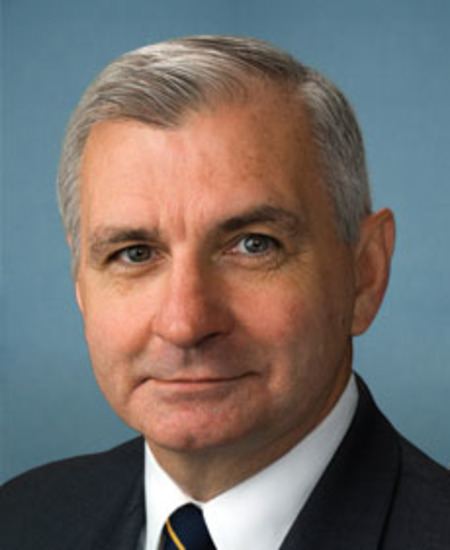
Sen. Jack Reed
Sponsored bills
Maddy summaryThe Kids Online Safety Act requires social media platforms and other online services used by minors to implement safety features protecting children under 17. It mandates default privacy controls, limits addictive features like automatic media playback, restricts advertising of harmful products (tobacco, gambling, alcohol) to minors, and requires annual transparency reports about online risks. Platforms with over 10 million monthly U.S. users must provide parental tools, conduct independent audits, and make de-identified data available for research on online harms. The bill focuses on preventing mental health disorders, bullying, sexual exploitation, and addictive behaviors through platform design changes.
Maddy summaryThis is a ceremonial Senate resolution (SRES 492) honoring the late First Lady Rosalynn Carter. It expresses the Senate's condolences for her passing and recognizes her lifetime of humanitarian work, including her advocacy for mental health care, founding of caregiver support programs, and service with The Carter Center. The resolution does not create new laws or policies; it is purely a commemorative statement. It was introduced by a bipartisan group of senators and adopted by the Senate on December 7, 2023.
Maddy summaryThe Student Loan Borrower Bill of Rights (S 3404) establishes new consumer protections for student loan borrowers by requiring lenders to provide clear, plain-language disclosures about loan terms, repayment options, and servicemember benefits. It mandates the creation of repayment specialists to assist borrowers at risk of default, requires removal of default records from credit history upon repayment, and establishes a centralized point of access for borrowers to manage their loans. The bill directly affects both federal and private student loan borrowers and the lenders and servicers who handle these loans. Specific requirements include clear disclosures about loan terms, limits on late fees (capped at 4% of the payment amount), and prohibitions against certain practices that could harm borrowers. The bill also creates an interagency working group to develop improved servicing standards for student loans.
Maddy summaryThe Billionaires Income Tax Act requires individuals with annual income over $100 million or assets over $1 billion to pay taxes annually on their wealth gains, rather than deferring taxes through strategies like "buy, borrow, die." It eliminates tax deferral by implementing mark-to-market taxation, requiring billionaires to pay tax on asset appreciation each year as if they had sold the assets. The bill closes loopholes that allow the ultra-wealthy to transfer assets tax-free to heirs, requiring heirs to pay tax on gains when they sell assets. This means billionaires would pay taxes on their income as it's earned, just like working people pay taxes on wages.
Maddy summaryThis Senate resolution designates November 2023 as "National Homeless Children and Youth Awareness Month" to highlight the issue of homelessness among children and youth. It cites statistics including 1.2 million homeless children identified in U.S. schools during the 2021-2022 school year and higher risks of health issues, school disruption, and suicide among homeless youth. The resolution encourages businesses, governments, schools, and organizations to raise awareness, share information about causes and solutions, and support efforts to prevent homelessness during that month. As a symbolic resolution, it does not create new laws or funding but aims to foster voluntary community action.
Ending the Carried Interest Loophole Act This bill revises the tax treatment of partnership interests received in connection with the performance of services. It eliminates the concept of carried interest, a form of compensation received by certain partners in private equity, real estate, or hedge funds for investment management services. Under current law, such compensation can be deferred from taxation until income is realized by the partnership. The bill requires partners to recognize deemed compensation received from a partnership annually, taxed at ordinary income tax rates and subject to self-employment taxation. The bill eliminates a partner's ability to defer tax on such compensation.
Maddy summaryThis Senate resolution allows the majority leader to group multiple military nominations together for consideration instead of handling them individually. It sets a 2-hour limit for debate on the grouped nominations and requires a single vote to confirm all at once, following a cloture motion. The rule applies to nominations pending on the Executive Calendar that have been favorably reported by the Armed Services Committee, excluding top leadership roles like Joint Chiefs or combatant commanders. This streamlines the confirmation process for military appointments without changing substantive requirements.
Maddy summaryThe Child Care Nutrition Enhancement Act of 2023 increases federal reimbursements for child care providers participating in the Child and Adult Care Food Program (CACFP). It adds a fixed 10-cent payment per meal or snack served, adjusted annually, to existing reimbursement rates for all CACFP providers, including child care centers and family day care homes. This change applies to all meals and supplements served under the program and takes effect in the first month after the bill is enacted. The amendment modifies multiple sections of the National School Lunch Act to incorporate this additional reimbursement into payment calculations.
Maddy summaryThe STAR Act (S 3275) modifies federal transit funding rules to allow public transit agencies to use capital funds for art installations. It removes a restriction in the existing law that previously prevented these funds from covering art projects. The bill amends two sections of the U.S. Code (49 U.S.C. § 5323(h) and § 5309) to enable transit agencies to allocate capital funds toward artistic elements in transit facilities. This change directly affects transit agencies receiving federal capital funds, permitting them to include art as part of their infrastructure projects. The bill does not create new funding but adjusts how existing funds can be used.