

Maddy summarySRES 545 designates December 6, 2025, as "National Miners Day" to honor miners' contributions to U.S. economic strength and safety efforts, while commemorating the 1907 Monongah mining disaster (the deadliest industrial accident in U.S. history). The resolution encourages public participation in local and national activities celebrating miners' sacrifices. It has no binding effect and serves as symbolic recognition, not a policy change. The bill directly affects miners and the public through this annual observance.
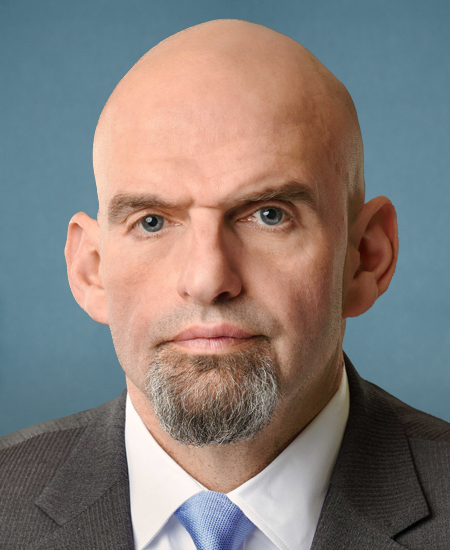
Sen. John Fetterman
Sponsored bills
Maddy summaryThe FAAN Act (S 3435) provides $1 billion in federal grants to nursing schools in underserved areas to address nursing workforce shortages. It directly affects nursing schools located in medically underserved regions, rural communities, or areas with health professional shortages, prioritizing institutions serving underrepresented racial/ethnic groups, low-income students, and rural populations. Key provisions require grantees to expand enrollment (especially for underrepresented students), modernize facilities with technology like simulation labs, strengthen clinical partnerships, and hire diverse faculty. Schools must report annually on outcomes, including student demographics and program impacts, with a comprehensive report to Congress after five years. The bill aims to strengthen nursing education capacity and emergency response readiness through these targeted funding mechanisms.
Maddy summaryThe Keeping All Students Safe Act prohibits inappropriate seclusion and restraint in schools, including mechanical, chemical, and certain physical restraints that pose safety risks. It requires schools to use less restrictive interventions first, train staff in crisis intervention, and notify parents within 24 hours of any restraint incident. The law mandates meetings between schools and parents after incidents to discuss prevention strategies and provides documentation requirements. It applies to all public schools receiving federal funding, with specific protections for students with disabilities. States must submit compliance plans and report on restraint use, including demographic data on affected students.
Maddy summaryThis bill modifies Social Security taxation and benefit calculations for high earners. It gradually reduces the percentage of wages above the Social Security tax cap that are subject to Social Security tax, from 80% in 2026 down to 0% by 2030. It increases the percentage used for the lowest earnings in benefit calculations from 90% to 95% and introduces "surplus earnings" into benefit determinations. The bill also changes cost-of-living adjustments to use a new Consumer Price Index specifically for elderly consumers. These changes would primarily affect high-earning workers and Social Security beneficiaries, particularly those becoming eligible for benefits after 2026.
Maddy summaryThis bill creates a new federal grant program to fund public transit improvements in cities. It provides 80% federal funding for urban transit systems to cover operating costs (like vehicle service), security enhancements (including personnel), and safety projects identified by safety committees. Recipients must certify they will maintain or increase their own funding levels for these services and cannot use funds to switch to third-party on-demand transit providers. The grants are allocated based on each city's reported transit operating expenses from the previous year.
Maddy summaryThe International Human Rights Defense Act of 2025 establishes a permanent U.S. Special Envoy for LGBTQI+ rights at the Department of State, with the authority to coordinate all federal government efforts addressing discrimination and violence against LGBTQI+ people globally. The bill requires the development of a U.S. global strategy to prevent and respond to criminalization, discrimination, and violence against LGBTQI+ individuals, along with annual briefings to Congress on progress. It mandates that the Department of State's Country Reports on Human Rights Practices include detailed information about laws criminalizing or discriminating against LGBTQI+ people in all countries. The legislation also requires all U.S. government-funded programs to adopt inclusive nondiscrimination policies covering sexual orientation, gender identity, and sex characteristics. These provisions aim to strengthen U.S. foreign policy efforts to protect LGBTQI+ rights worldwide through coordinated diplomatic, humanitarian, and development initiatives.
Maddy summaryS 3427, the Domestic Organic Investment Act of 2025, creates a new USDA grant program to strengthen the domestic organic supply chain. It provides federal funding for eligible entities - including organic farmers, cooperatives, and Tribal governments - to expand storage, processing, and distribution capacity, modernize tracking systems, and improve compliance with organic standards. Grants for facility projects (e.g., cold storage) can reach up to $2 million, requiring a 50% non-federal match, while equipment-only projects receive up to $100,000 with a 25% match. The program prioritizes projects addressing import reliance and supply chain bottlenecks, aiming to boost domestic organic markets and reduce dependence on imported products.
Maddy summaryThis bill (S 3405) requires the Securities and Exchange Commission (SEC) to study financial firms controlled by or organized under Chinese law that operate in the U.S. Specifically, it mandates a study of Chinese-controlled brokers/dealers registered with the SEC and Chinese-controlled investment advisers registered with the SEC, focusing on transparency and cooperation. The SEC must complete this study and submit a report to Congress within one year of the bill's enactment. The bill directly affects Chinese-controlled financial intermediaries operating under U.S. SEC registration, but does not impose new regulations or alter existing laws.
Sentencing Accountability For Exploitation Act or the SAFE Act This bill directs the U.S. Sentencing Commission to review and amend its guidelines and policy statements applicable to federal criminal offenses involving the production, receipt, transport, shipment, or distribution of child sexual abuse material to (1) account for the actual and potential harm from the offense and changes since the last amendments with respect to the typical offense behavior and modern technologies, and (2) better reflect the spectrum of offender culpability.
Maddy summaryThis bill establishes comprehensive labor protections for domestic workers, including house cleaners, nannies, personal care aides, and other employees working in private homes. It directly affects approximately 2.2 million domestic workers, predominantly women of color and immigrants who have historically been excluded from key labor protections. Key provisions include requiring written employment agreements outlining wages and hours, providing earned sick days for health and safety needs, establishing fair scheduling practices with advance notice requirements, protecting privacy rights, and prohibiting unfair wage deductions. The bill also extends civil rights protections under Title VII of the Civil Rights Act to domestic workers and creates a Domestic Employee Standards Board to recommend workplace standards.