

Alan Reinstein Ban Asbestos Now Act of 2025 This bill generally prohibits the manufacture, process, use, and distribution in commerce of commercial asbestos or any mixture or article containing commercial asbestos. The President may, on application, grant exemptions from the prohibition in situations where it is necessary to protect national security interests.
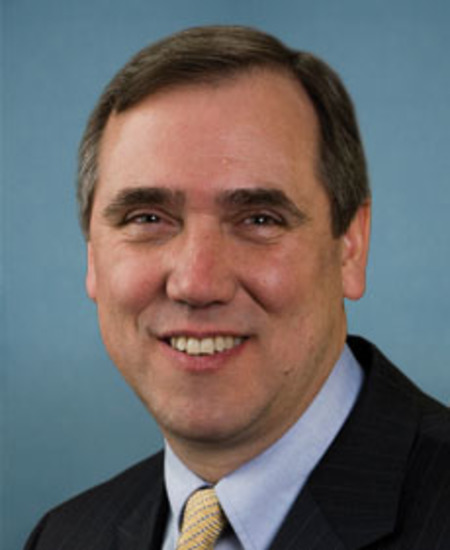
Sen. Jeff Merkley
Sponsored bills
Maddy summaryThe FAMILY Act (S 2823) would establish a federal paid family and medical leave insurance program that provides wage replacement benefits for eligible workers who need time off for family or medical reasons. It directly affects workers who need leave to care for a family member with a serious health condition, address their own serious health condition, or deal with family violence or other qualifying acts of violence. The program would pay a percentage of an individual's average earnings (up to 85% for lower earners), with maximum monthly benefits of $4,000 and minimum benefits of $580 in 2026, while requiring employers to maintain health coverage during leave. The Social Security Administration would administer the program through a new Office of Paid Family and Medical Leave, with benefits available starting 18 months after enactment.
Maddy summaryS 2818, the Tax Excessive CEO Pay Act of 2025, imposes a corporate tax penalty on large U.S. corporations with a CEO-to-worker pay ratio exceeding 50:1. The penalty increases the standard 21% corporate tax rate by 0.5% to 5% based on how high the ratio climbs (e.g., 0.5% for 50-100:1, up to 5% for ratios over 500:1). It directly affects corporations with average annual gross receipts over $100 million, requiring them to calculate a 5-year average pay ratio using SEC-mandated methodology. Smaller companies with under $100 million in average revenue are exempt from reporting requirements. The law takes effect for taxable years beginning after December 31, 2025, with regulations to prevent avoidance tactics like shifting to contractor labor.
Maddy summaryThe Head Start for America's Children Act authorizes $144.872 billion for Head Start in fiscal year 2026 with annual inflation adjustments, creating new funding streams for facility improvements, transportation, workforce development, and mental health services. It updates eligibility criteria to include children developing English proficiency and children with disabilities, while adding specific requirements for Native American and Native Hawaiian Head Start programs, including culturally responsive curricula and language preservation. The bill mandates that most Head Start agencies provide center-based services for at least 1,380 hours annually (with exemptions for Native American and migrant programs), and improves staff compensation standards to ensure parity with public school educators. These changes directly affect Head Start programs serving children from birth through age 5, particularly in underserved communities and Native American and Native Hawaiian populations.
Maddy summaryS 2798, the Equal Employment for All Act of 2025, prohibits most employers from using credit reports for hiring decisions or employment-related adverse actions. The bill amends the Fair Credit Reporting Act to ban employers from accessing or using credit history information (like credit scores or debt records) when making job offers, promotions, or other employment decisions, except for roles requiring national security clearances or when legally required. It also states that even if a job applicant consents to a credit check, employers cannot use it for hiring purposes. This directly affects most employers across all industries and job seekers who would otherwise face employment barriers due to credit history.
Maddy summaryThe Measuring the Cost of Disasters Act of 2025 requires the National Oceanic and Atmospheric Administration (NOAA) to create and maintain a public database and webpage tracking U.S. billion-dollar disasters. The database will include each disaster’s estimated total cost, type (e.g., hurricane, wildfire), location, dates, and visual maps showing trends over time - similar to a previously available NOAA tool. NOAA must update this resource twice yearly as new data becomes available, using existing federal and non-federal partnerships. This policy change makes historical disaster cost data publicly accessible for research and transparency, without altering disaster response or funding mechanisms.
Maddy summaryS 2784, the Congressional Tribute to Constance Baker Motley Act of 2025, is a commemorative resolution honoring civil rights pioneer Constance Baker Motley. It authorizes the posthumous presentation of a Congressional gold medal to her son, Joel Motley III, and niece, Constance Royster, recognizing her historic role as the first African-American woman on the LDF legal team for *Brown v. Board of Education*, her service as a federal judge, and her civil rights advocacy. The bill directs the Treasury Secretary to design and strike the medal, with proceeds from bronze duplicates covering costs. It does not create new laws or affect any policies, as it solely serves to commemorate Motley's legacy.
Maddy summaryThis bill would exclude certain union-provided payments to workers during strikes from taxable income. Specifically, it adds a new tax code section (139M) to exempt "qualified strike benefits" - payments from tax-exempt labor organizations (like unions) that replace lost wages during strikes, lockouts, or work stoppages arising from labor disputes - from gross income calculations. The change applies to compensation received after December 31, 2025, and also updates the Earned Income Tax Credit rules to include these excluded benefits. It directly affects union members who lose wages due to labor disputes and rely on union financial support during work stoppages.
Maddy summaryThis bill amends the Harmful Algal Bloom and Hypoxia Research and Control Act of 1998 to strengthen federal efforts addressing harmful algal blooms (HABs) and hypoxia across marine, estuarine, and freshwater systems. It establishes a new Task Force required to develop a comprehensive Action Strategy every five years, examining causes, ecological impacts, and economic consequences of HABs in diverse environments including the Great Lakes, coastal waters, and freshwater systems. The bill authorizes $19.5 million annually for NOAA and $8 million annually for the EPA (fiscal years 2026-2030) to implement these provisions, creates a national monitoring network for HABs, and establishes an incubator program to develop innovative prevention strategies. It mandates consultation with states, tribes, local governments, and affected industries like fisheries and agriculture to address HABs impacts on public health, ecosystems, and communities.
Maddy summaryS 2758 creates a 10% federal tax credit for businesses that modernize or replace qualified freight railcars, directly affecting railroad operators and freight railcar owners. The credit covers expenses for new railcars meeting specific performance standards (8% capacity increase or AAR/HM-251 safety standards) or modernizing existing cars, with a limit of 1,000 qualifying railcars per taxpayer annually. To qualify, railcars must replace two scrapped cars from the previous 48 months and be built in approved facilities. The credit applies only to railcars placed in service after December 2024, expiring three years after enactment, and requires annual reporting on credit usage and railcar replacement impacts.