

Access to Birth Control Act This bill requires pharmacies to comply with certain rules related to ensuring access to contraceptives. Specifically, pharmacies must provide without delay a customer with any contraceptive or related medication that is in stock. If the contraceptive is not in stock, the pharmacy must immediately inform the customer and either order the contraceptive or refer the customer to a pharmacy that has it in stock. Laws in some states provide pharmacists with the right to refuse to dispense contraceptive-related drugs on religious or conscience grounds. Pharmacies may refuse to provide a contraceptive to a customer (1) if the customer lacks a valid prescription for a prescription contraceptive or is unable to pay for the contraceptive, or (2) based on a pharmacy employee's professional clinical judgment. The bill also establishes a private cause of action and civil monetary penalties for violations of the bill.
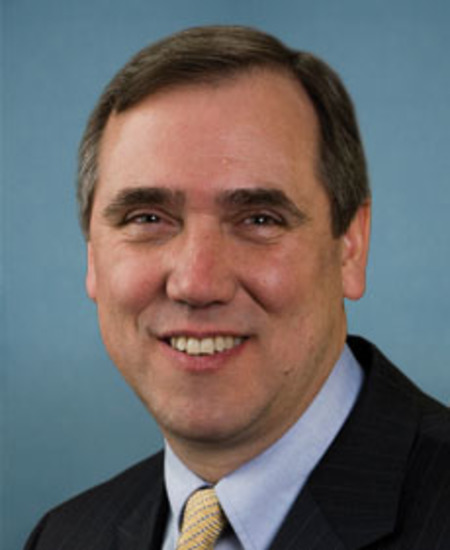
Sen. Jeff Merkley
Sponsored bills
Bringing an End to Harassment by Enhancing Accountability and Rejecting Discrimination in the Workplace Act or the BE HEARD in the Workplace Act This bill expands protections against discrimination and harassment in the workplace and raises the minimum wage for tipped employees. Specifically, the bill (1) makes it an unlawful employment practice to discriminate against an individual in the workplace based on sexual orientation, gender identity, pregnancy, childbirth, a medical condition related to pregnancy or childbirth, or a sex stereotype; and (2) provides a statutory definition for what constitutes workplace harassment. Further, these protections apply to all workplaces, regardless of size, and to all workers, including independent contractors, interns, volunteers, and trainees. The bill prohibits employers from entering into contracts or agreements with workers that contain certain nondisparagement or nondisclosure clauses and prohibits certain predispute arbitration agreements and postdispute agreements. It also establishes grant programs to (1) prevent and respond to workplace discrimination and harassment, (2) provide legal assistance for low-income workers, and (3) establish a system of legal advocacy in states to protect the rights of workers. The bill further provides employees the right to retain their tips and it increases, in specified annual increments, the minimum wage for tipped employees to match the federal minimum wage for nontipped employees. Additionally, the bill requires the Equal Employment Opportunity Commission to provide specified training and resource materials, establish and convene a harassment prevention task force, and establish an Office of Education and Outreach with regard to prohibited discrimination and harassment in employment. The bill also requires specified studies, reports, and research on prohibited workplace harassment.
Maddy summarySRES 451 is a commemorative Senate resolution honoring the late Senator Max Cleland (D-GA), who died November 9, 2021. The resolution recognizes his service as a Vietnam War veteran (losing both legs and an arm in combat), his 50+ years of public service including roles as Georgia State Senator, Secretary of State, U.S. Senator, and Administrator of the Veterans Administration, and his advocacy for veterans. It formally expresses the Senate’s "profound sorrow" and "deep regret" over his death, commemorates his legacy of service to Georgia and veterans, and requests the Secretary of the Senate transmit the resolution to his family. This is a ceremonial resolution with no policy changes or legal effect.
This resolution recognizes November 2021 as National Native American Heritage Month and the Friday after Thanksgiving as Native American Heritage Day.
Keep Food Containers Safe from PFAS Act of 2021 This bill prohibits food packaging that contains intentionally added PFAS (i.e., a perfluoroalkyl substance or a polyfluoroalkyl substance that is man-made with at least one fully fluorinated carbon atom).
Fossil Free Finance Act This bill requires large bank holding companies to set forth plans to reduce and ultimately eliminate the financing of activities that contribute to greenhouse gas emissions and deforestation. Specifically, the bill prohibits the financing of (1) new or expanded fossil fuel projects by 2023, (2) thermal coal by 2025, and (3) all fossil fuel projects by 2030. Further, the Financial Stability Oversight Council must consider the activities of certain bank holding companies and nonbank financial companies that contribute to emissions as part of the prudential supervision process. The Board of Governors of the Federal Reserve System must report on financed emissions in the financial system, the estimated emissions to meet science-based emissions targets, and recommendations for addressing regulatory gaps in reducing such emissions that cannot be addressed by the board.
National Commission on the COVID-19 Pandemic Act This bill temporarily establishes the National Commission on the COVID-19 Pandemic in the legislative branch to investigate the facts and circumstances regarding the emergence of, spread of, and response to COVID-19. The commission terminates 90 days after it submits a final report of its findings and recommendations.
United States-Taiwan Public Health Protection Act This bill requires the Department of State to establish an Infectious Disease Monitoring Center within the American Institute in Taipei, Taiwan. (The U.S.-Taiwan relationship is unofficial, and the American Institute in Taiwan office in Taipei performs many of the same functions as an embassy.) The center must seek to partner with the Taiwan Centers for Disease Control to monitor infectious diseases in the region, including by regularly monitoring, analyzing, and disseminating open-source material, such as viral strains and other pathogens, from countries in the region.
Rural Health Equity Act This bill establishes within the Office of the Director of the Centers for Disease Control and Prevention (CDC) the Office of Rural Health. The office must serve as the primary point of contact within the CDC on rural health matters, coordinate public health research on issues affecting rural populations, and carry out related activities.
John R. Lewis Voting Rights Advancement Act of 2021 This bill establishes new criteria for determining which states and political subdivisions must obtain preclearance before changes to voting practices may take effect. Preclearance is the process of receiving preapproval from the Department of Justice (DOJ) or the U.S. District Court for the District of Columbia before making legal changes that would affect voting rights. The bill also includes provisions related to federally protected activities at polling places and voting access on tribal lands. A state and all of its political subdivisions shall be subject to preclearance of voting practice changes for a 10-year period if 15 or more voting rights violations occurred in the state during the previous 25 years; or 10 or more violations occurred during the previous 25 years, at least 1 of which was committed by the state itself. A political subdivision as a separate unit shall also be subject to preclearance for a 10-year period if three or more voting rights violations occurred there during the previous 25 years. States and political subdivisions that meet certain thresholds regarding minority groups must preclear covered practices before implementation, such as changes to methods of election and redistricting. Further, states and political subdivisions must notify the public of changes to voting practices. Next, the bill authorizes DOJ to require states or political subdivisions to provide certain documents or answers to questions for enforcing voting rights. The bill also outlines factors courts must consider when hearing challenges to voting practices, such as the history of official voting discrimination in the state or political subdivision. In addition, the bill (1) includes certain protections for election workers, polling places, and election infrastructure; and (2) expands voting access on tribal lands.