

Federal Debt Emergency Control Act of 2021 This bill establishes various budget enforcement procedures to address the federal debt. The procedures established by the bill take effect during any fiscal year that follows a fiscal year in which the amount of federal debt exceeded the gross domestic product (GDP) for that fiscal year. During such a period, the bill rescinds unobligated balances of stimulus spending that was provided in specified bills that addressed the impact of COVID-19, establishes a point of order against legislation that increases spending, and requires Congress to consider certain deficit reduction measures using specified expedited legislative procedures. The expedited legislative procedures must be used for legislation that (1) would reduce the deficit by at least 5% during the 10-fiscal-year period following the current fiscal year, and (2) does not increase the rate of any federal tax or increase any fee paid to the federal government.
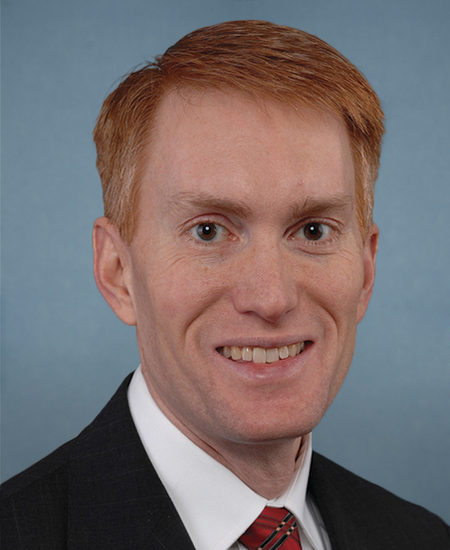
Sponsored bills
Li Wenliang Global Public Health Accountability Act of 2021 This bill authorizes the President to impose property- and visa-blocking sanctions on foreign individuals and entities involved in deliberate acts to conceal or distort information about a public health emergency of international concern, including COVID-19. Specifically, the President may impose sanctions on (1) a government official (or a senior associate of such an official) who is responsible for or complicit in deliberate acts to conceal or distort information about an international public health emergency, or who financially benefits from such acts; or (2) a foreign person or entity that has materially assisted or supported such acts.
This resolution offers the condolences of the Senate regarding the death of Senator John William Warner and expresses deep appreciation for his outstanding and important service to his country.
This resolution recognizes the 50th anniversary of the McClellan-Kerr Arkansas River Navigation System.
ATF Accountability Act of 2021 This bill establishes a federal statutory process for licensed gun dealers, importers, or manufacturers to appeal a ruling or determination by the Bureau of Alcohol, Tobacco, Firearms and Explosives.
Palestinian International Terrorism Support Prevention Act of 2021 This bill imposes sanctions targeting Hamas, the Palestinian Islamic Jihad, and any affiliate or successor groups. The President shall periodically report to Congress a list of each foreign person or instrumentality that knowingly assists, provides significant support or services to, or is involved in a significant transaction with a senior member or supporter of any of the targeted groups. The President shall impose two or more sanctions on the named persons. Specifically, the person may be (1) denied credit and services from the Export-Import Bank, (2) barred from purchasing certain controlled defense articles, (3) denied exports of items on the U.S. Munitions List, (4) prevented from receiving exports of certain goods or technology controlled for national security reasons, (5) prohibited from receiving financing of more than $10 million from any U.S. financial institution, or (6) subject to property-blocking restrictions. The President shall periodically report to Congress a list of foreign governments that have repeatedly provided material support for the targeted groups' terrorist activities. The President shall bar these governments from receiving for one year (1) U.S. assistance, or (2) exports of controlled munitions. The Department of Treasury shall instruct U.S. leadership of international financial institutions to oppose the provision of assistance to an identified government for one year. The bill provides for certain exceptions and waivers, such as for transactions that would serve U.S. national interests. The President shall report to Congress and periodically provide briefings on other specified topics related to the targeted groups, such as where these groups secure financing and surveillance equipment.
Iran Sanctions Preservation Act This bill restricts the authority of the President to waive U.S. sanctions on Iran. Specifically, the bill repeals the President's authority to waive sanctions on the purchase of Iranian petroleum or petroleum products or license otherwise sanctionable conduct concerning such purchases. Furthermore, the President may not remove any Iranian person (including a financial institution) from a list of persons, organizations, and entities that have U.S. sanctions levied against them without certifying to Congress that the person has not engaged in particular conduct, such as supporting terrorism or Iran's nuclear weapons program. In addition, the bill prohibits the removal of the Central Bank of Iran from this list unless there is a Senate-approved treaty between the United States and Iran that addresses Iran's nuclear proliferation, ballistic missile program, and support for terrorism. The President must also maintain Iran's designation as a jurisdiction of money laundering concern until certifying to Congress that Iran is not engaged in illicit financial activities, nuclear proliferation activities, or ballistic missile development. The provisions of this bill terminate on the date the Senate approves a treaty between the United States and Iran that addresses Iran's nuclear proliferation, ballistic missile program, and support for terrorism.
Trust in Public Service Act This bill incorporates customer experience as a central measure of performance for federal agencies. Specifically, the bill requires each agency to develop a high-quality customer experience by allocating sufficient resources to and prioritizing customer experience capabilities and initiatives, adapting government-wide and global good practices, streamlining the process for soliciting voluntary customer feedback and requiring limited internal review if the collection is within the scope of Office of Management and Budget (OMB) guidance, and using human-centered design practices. Each agency shall develop and use tools to experiment with different approaches to improve customer experience, ensure the privacy of federal customers, use the data collected to continually improve customer experience and agency performance, and share the data collected with research entities to permit external analysis. The bill sets forth agency communication responsibilities. In addition, the OMB must issue guidance for agencies in collaboration with specified entities. It may establish programs that annually recognize individuals and teams across the federal workforce meeting customer service-related goals. The bill (1) integrates customer experience provisions into the U.S. code and the Federal Citizen Services Fund, (2) directs the OMB to establish an Office of Customer Experience, and (3) integrates customer experience into the responsibilities of key agency officials. The OMB, in coordination with the Office of Customer Experience, must establish the Participatory Government and Civic Dialogue Advisory Council. The Government Accountability Office shall report to Congress, assessing agency efforts and examining best practices.
Medicare Multi-Cancer Early Detection Screening Coverage Act of 2021 This bill provides for Medicare coverage and payment for multi-cancer early detection screening tests that are approved by the Food and Drug Administration and that are used to screen for cancer across many cancer types. The Government Accountability Office must report on the resulting utilization and effectiveness of such tests.
Enhancing Emergency and Retirement Savings Act of 2021 This bill permits penalty-free distributions, up to $1,000, from tax-exempt retirement plans for emergency personal expenses, limited to one distribution in a calendar year. The bill allows repayment to plans of such distributions over a three-year period.