

Maddy summaryS 2703, the Protecting Older Americans Act of 2025, prevents employers from requiring workers aged 40 or older to use pre-employment arbitration agreements or joint-action waivers in age discrimination cases. The bill makes such agreements invalid and unenforceable for disputes alleging age discrimination under federal, tribal, or state law. This means workers can choose to pursue age discrimination claims in court instead of binding arbitration. The law applies to all claims arising on or after its enactment date and ensures courts - not arbitrators - decide if the provision applies to specific agreements.
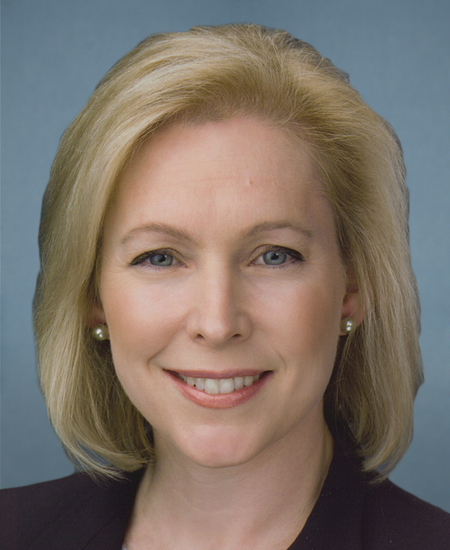
Sen. Kirsten E. Gillibrand
Sponsored bills
Maddy summaryS 1155 amends the Trafficking Victims Protection Act of 2000 to correct outdated reference numbers in Section 103. It updates two specific provisions (paragraphs 16 and 17) by replacing references to outdated subsections (9, 10) with current ones (11, 12). This technical correction ensures legal documents and enforcement actions accurately cite the correct sections of the law. The bill does not change protections or programs for trafficking survivors but maintains clarity in how the law is applied. It directly affects legal references within the TVPA framework and related government documents.
Maddy summaryThe Lowering Electric Bills Act extends federal tax credits for clean energy adoption through 2034, directly affecting homeowners installing solar panels or heat pumps and businesses producing clean electricity. It modifies three key tax provisions: (1) extends the residential clean energy credit deadline from 2025 to 2034, (2) adjusts the clean electricity production credit to expire based on U.S. emissions reaching 25% of 2022 levels or 2032 (whichever comes later), and (3) simplifies the clean electricity investment credit rules. These changes aim to maintain financial incentives for clean energy projects beyond current law, reducing administrative complexity. The bill does not create new programs but prolongs existing tax benefits to support ongoing adoption.
Maddy summaryThis bill amends the Foreign Assistance Act to require the U.S. Department of State to include detailed reporting on reproductive rights in its annual Country Reports on Human Rights Practices. Specifically, it mandates that reports describe each country’s policies on access to contraception, abortion services, and comprehensive reproductive health care, including rates of pregnancy-related deaths, discrimination against women/LGBTQI+ individuals, and disparities based on race, disability, or other factors. The bill also requires consultation with civil society organizations and experts during report preparation. This affects how the U.S. government documents and assesses reproductive rights policies in other countries, without altering domestic U.S. law or funding.
Maddy summaryThe West Bank Violence Prevention Act of 2025 imposes U.S. sanctions on foreign individuals or entities responsible for specific actions threatening peace in the West Bank. It targets those who commit violence against civilians, threaten violence to force relocation, destroy private property without consent, or engage in terrorism. Sanctions include freezing U.S. assets, banning visas, and restricting entry for designated individuals. Exceptions cover humanitarian aid (food, medicine, agricultural commodities) and activities required for U.S. intelligence or international obligations. The law requires regular reports to Congress on implementation and West Bank violence assessments.
Maddy summaryThe Access to Birth Control Act (S 2302) requires pharmacies to provide contraception without delay when available and to help customers obtain it if out of stock - either by referring to another pharmacy or expediting an order. It prohibits pharmacies from intimidating customers, misrepresenting availability, breaching confidentiality, or refusing to return valid prescriptions for contraception. Exceptions allow pharmacists to decline service only if a prescription is missing, the customer cannot pay, or they use professional clinical judgment. Violations may result in civil penalties of up to $1,000 per day or private lawsuits by affected individuals.
Maddy summaryS 2589, the Expanding the VOTE Act, strengthens language access in elections by updating the Voting Rights Act. It clarifies that "voting materials" include digital and printed content (like ballots and instructions) and requires states to provide these in minority languages when populations meet specific thresholds. The bill adds new notice requirements for states near language access thresholds and creates grants to help jurisdictions provide materials for languages not currently covered under Section 203, while establishing special provisions for American Indian and Alaska Native languages. It also directs a study on lowering language minority thresholds and expanding covered languages. This directly affects states, localities, and language minority communities participating in federal elections.
Maddy summaryThis bill reauthorizes funding for state-level maternal mortality review committees, which analyze pregnancy-related deaths to identify preventable causes. It requires the Health and Human Services Secretary to share annual best practices for preventing maternal mortality with hospitals, medical societies, and maternity care groups. The bill increases annual funding for these programs from $58 million to $100 million, extending support through fiscal years 2026-2030. These changes directly affect state health agencies, hospitals, and medical professionals working on maternal health. The focus is on improving death record accuracy and implementing proven prevention strategies.
Maddy summaryThe Financial Technology Protection Act of 2025 establishes an Independent Financial Technology Working Group to study how terrorists and criminals use digital assets (like cryptocurrency) to evade sanctions, launder money, or fund illicit activities. The group, composed of federal agencies (Treasury, Justice, FBI, etc.) and private-sector representatives from fintech, blockchain, financial institutions, and privacy organizations, will research these threats and develop new anti-money laundering proposals. It must submit annual reports to Congress for four years, including a final report before dissolving, and requires a separate strategy report on preventing foreign actors from exploiting digital tools to bypass U.S. sanctions. The bill directly affects government agencies, financial technology companies, and privacy-focused organizations through its research mandates and reporting requirements.
Maddy summaryThis bill amends a section of immigration law to update eligibility criteria for certain Native American and Indigenous individuals. It removes a requirement for "at least 50 percent blood quantum" and instead defines eligibility based on tribal membership: being a member (or eligible to join) of a federally recognized U.S. Indian Tribe, or holding Canadian Indian status under the Indian Act or membership in a Canadian self-governing First Nation. The change directly affects tribal members in the U.S. and Canadian First Nations members seeking specific immigration benefits. The key mechanism is replacing outdated language with current tribal recognition standards in the law.