Access to Baby Formula Act of 2022 This bill authorizes the Department of Agriculture (USDA) to take certain actions to address emergencies, disasters, and supply chain disruptions (particularly the shortage of infant formula in the United States) affecting participants of the Special Supplemental Nutrition Program for Women, Infants, and Children (WIC). For example, the bill directs USDA to require each infant formula cost containment contract to include remedies in the event of an infant formula recall, including how an infant formula manufacturer would protect against disruption to WIC participants in the state.
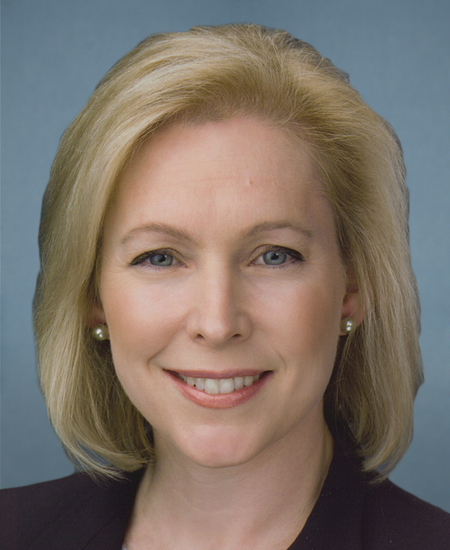
Sen. Kirsten E. Gillibrand
Sponsored bills
Protecting Infants from Formula Shortages Act of 2022 This bill imposes requirements on manufacturers of infant formula and medical foods for individuals with inborn errors of metabolism. A manufacturer of such a food must notify the Food and Drug Administration (FDA) of any circumstance that is likely to lead to a meaningful disruption of the U.S. supply of the food, including a discontinuance or interruption of manufacturing. The manufacturer must submit the notification at least six months prior to the cause of the disruption or, if that is not possible, as soon as practicable. The FDA must provide the Department of Agriculture and appropriate organizations information about the cause of the disruption. The FDA must inform a person (an individual or entity) of their failure to comply with these notification requirements. If the failure continues for a certain time period, the person shall be subject to fines, imprisonment, or both. During a public health emergency, the FDA may impose additional conditions for such notifications and designate additional categories of food that are subject to the notification requirements. The bill also requires each manufacturer of such a food to develop and maintain a redundancy risk management plan that identifies and evaluates risks for each manufacturing establishment for the food.
Domestic Terrorism Prevention Act of 2022 This bill establishes new requirements to expand the availability of information on domestic terrorism, as well as the relationship between domestic terrorism and hate crimes. It authorizes domestic terrorism components within the Department of Homeland Security (DHS), the Department of Justice (DOJ), and the Federal Bureau of Investigation (FBI) to monitor, analyze, investigate, and prosecute domestic terrorism. The domestic terrorism components of DHS, DOJ, and the FBI must jointly report on domestic terrorism, including white-supremacist-related incidents or attempted incidents. DHS, DOJ, and the FBI must review the anti-terrorism training and resource programs of their agencies that are provided to federal, state, local, and tribal law enforcement agencies. Additionally, DOJ must make training on prosecuting domestic terrorism available to its prosecutors and to assistant U.S. attorneys. It creates an interagency task force to analyze and combat white supremacist and neo-Nazi infiltration of the uniformed services and federal law enforcement agencies. Finally, it directs the FBI to assign a special agent or hate crimes liaison to each field office to investigate hate crimes incidents with a nexus to domestic terrorism.
Zero-Emission Homes Act of 2021 This bill directs the Department of Energy to establish a Zero-Emission Homes Program that provides rebates to homeowners and owners of multifamily buildings for qualified electrification projects (e.g., electric stoves or heat pumps).
Hadiya Pendleton and Nyasia Pryear-Yard Gun Trafficking and Crime Prevention Act of 2022 This bill makes trafficking in firearms a stand-alone criminal offense.
Greatest Generation Commemorative Coin Act This bill directs the Department of the Treasury to mint and issue up to 50,000 $5 coins, 400,000 $1 silver coins, and 750,000 half-dollar clad coins in commemoration of the National World War II Memorial in the District of Columbia. The design of the coins shall be emblematic of the memorial and the service and sacrifice of American soldiers and civilians during World War II. All surcharges received from the sale of such coins shall be paid to the Friends of the National World War II Memorial to support the National Park Service in maintaining and repairing the memorial, and for educational and commemorative programs.
Alzheimer's Accountability and Investment Act This bill requires the National Institutes of Health to annually submit, beginning in FY2024, an estimate of its budget and personnel needs for carrying out initiatives pursuant to the National Alzheimer's Project. This project supports coordination of federal planning, research, and other efforts to address Alzheimer's disease and related dementias.
Medicare for All Act of 2022 This bill establishes a national health insurance program that is administered by the Department of Health and Human Services (HHS). Among other requirements, the program must (1) cover all U.S. residents; (2) provide for automatic enrollment of individuals upon birth or residency in the United States; and (3) cover items and services that are medically necessary or appropriate to maintain health or to diagnose, treat, or rehabilitate a health condition, including hospital services, prescription drugs, mental health and substance abuse treatment, dental and vision services, and home- and community-based long-term care. The bill prohibits cost-sharing (e.g., deductibles, coinsurance, and copayments) and other charges for covered services, with the exception of prescription drugs. Additionally, private health insurers and employers may only offer coverage that is supplemental to, and not duplicative of, benefits provided under the program. Health insurance exchanges and specified federal health programs terminate upon program implementation. However, the program does not affect coverage provided through the Department of Veterans Affairs, TRICARE, or the Indian Health Service. Additionally, state Medicaid programs must cover certain institutional long-term care services. The bill also establishes a series of implementing provisions relating to (1) health care provider participation; (2) HHS administration; and (3) payments and costs, including the requirement that HHS negotiate prices for prescription drugs and establish a formulary. Individuals who are age 18 or younger may enroll in the program starting one year after enactment of this bill; other individuals may buy into a transitional plan or an expanded Medicare program at this time, depending on age. The bill's program must be fully implemented four years after enactment.

No Tax Breaks for Union Busting (NTBUB) Act This bill denies employers a tax deduction for any expenditures incurred for attempting to influence their employees with respect to labor organizations or labor organization activities, such as elections, labor disputes, and collective actions. The bill requires employers to report on their attempts to influence their employees with respect to labor organizations and their activities.
WWII Nurses Congressional Gold Medal Act This bill provides for the award of a Congressional Gold Medal to World War II Army and Navy Nurse Corps members in recognition of their critical military service and devotion to duty.