

Maddy summaryThe Enhancing First Response Act requires the Federal Communications Commission (FCC) to issue detailed reports after major disasters that activate the Disaster Information Reporting System for at least 7 days. These reports must track outages in broadband, mobile, and emergency communication services (including 911 systems), estimate affected users, and include public hearings with local officials, providers, and first responders within 8 months. The FCC must publish a final report within 12 months, containing outage data and recommendations to improve network resilience. This bill directly affects communication providers, public safety agencies, and disaster response systems by standardizing outage reporting and accountability.
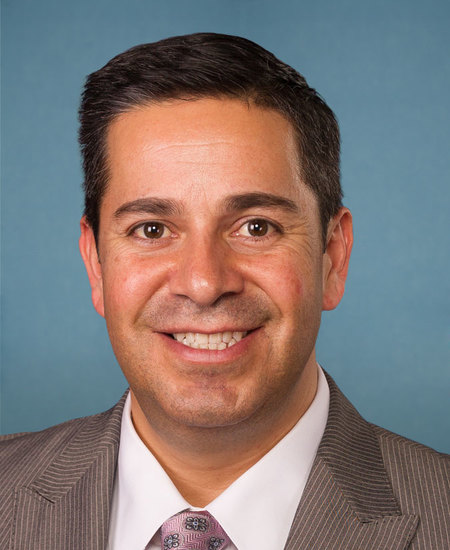
Sen. Ben Ray Luján
Sponsored bills
Maddy summaryThe Fire Ready Nation Act of 2025 establishes a coordinated fire weather services program within the National Oceanic and Atmospheric Administration (NOAA) to improve wildfire prediction, response, and community resilience. The program will develop advanced weather models, enhance data collection through technologies like uncrewed systems, and provide impact-based decision support services to emergency responders and communities. It specifically prioritizes improving access to these services for remote, rural, and isolated communities where residents often serve as first responders to wildfires. The bill authorizes $15 million for fiscal year 2026, increasing to $50 million by 2030, to fund these activities and support coordination with federal, state, tribal, and local partners.
Maddy summaryThis bill expands eligibility for family and medical leave under the FMLA for paraprofessionals and education support staff (ESP) in schools. It lowers the required work hours for eligibility from 1,250 hours per year to 60% of the expected monthly hours for their specific role (based on the previous school year’s schedule). Employers must document each employee’s expected monthly hours in a file for the Secretary’s review. The law specifically covers school staff providing services like clerical work, food services, custodial duties, or student health support, aligning with existing definitions from education law.
Maddy summaryS 2746, the "Produce Epstein Treasury Records Act," requires the U.S. Treasury Secretary to submit physical copies of financial transaction records related to Jeffrey Epstein and his associates within 30 days of the bill’s enactment. It mandates the Treasury to provide a list of financial institutions that filed these records, identify all individuals/entities involved in transactions with Epstein (including banks like JPMorgan and Deutsche Bank, and associates like Ghislaine Maxwell), and detail the total transaction value by institution. The bill also requires reports on Treasury investigations into financial institutions’ handling of Epstein-related accounts. These records and reports would be submitted to the Senate Committees on Finance and Banking. The legislation focuses on transparency around Epstein’s financial networks, not on legal outcomes.
Maddy summarySRES 374 is a non-binding Senate resolution expressing that Secretary of Health and Human Services Robert F. Kennedy Jr. lacks the confidence of the Senate and American people to serve in his role. The resolution cites specific actions including the termination of $11 billion in public health funding, mass firings of scientists (notably eliminating 8 Offices of Minority Health), replacing all 17 members of the vaccine advisory committee (ACIP) with critics of vaccines, and dismantling programs supporting maternal health, disability services, and chronic disease research. It alleges these actions violated federal law, undermined scientific integrity, and endangered public health during a measles outbreak. The resolution calls for the Secretary’s removal but has no legal effect, as it is a symbolic statement of disapproval.
Maddy summaryThis bill requires hospitals with approved medical residency programs to publicly report data on applicants and acceptances from both osteopathic (D.O.) and allopathic (M.D.) medical schools. Specifically, hospitals must submit annual data showing the number of applicants and accepted candidates from each school type, along with a written affirmation that they consider both equally and accept scores from either the COMLEX or USMLE exams. The data must be published online by the Health and Human Services Secretary starting in 2025. Hospitals failing to submit this information face a 2% annual reduction in Medicare payments beginning in 2026. The bill explicitly states it does not mandate specific acceptance rates or federalize medical education.
Maddy summaryThis bill expands the federal Water Source Protection Program to include new partners like acequia associations, land-grant mercedes, and entities managing water infrastructure. It requires projects on adjacent land to have express owner consent and prioritizes initiatives protecting water supply, forest health, and climate resilience - such as restoring wetlands or reducing wildfire risks. The program increases annual funding to $30 million (2025-2034) and mandates that projects include nature-based solutions and non-Federal partner contributions. It directly affects communities managing water systems, landowners adjacent to National Forests, and tribal or rural entities with water delivery authority. The bill does not alter land ownership or conflict with existing water laws.
Mitigating Automated Internet Networks for Event Ticketing Act or the MAIN Event Ticketing Act This bill expands measures to protect the security and integrity of online ticket sales. Specifically, the bill prohibits the use of applications that perform automated tasks to purchase event tickets from online ticket sellers in circumvention of the seller's posted ticket purchasing order rules. This includes using software applications that circumvent access control systems or security measures. In addition, online ticket sellers must establish, implement, and maintain reasonable administrative, technical, and physical safeguards to protect the security, confidentiality, integrity, or availability of the seller's website or service. Further, online ticket sellers must report known incidents of circumvention to the Federal Trade Commission and take reasonable steps to address any such incidents. The bill establishes civil penalties for violations of the provisions of this bill (and related prohibitions under current law) and authorizes the commission to bring civil actions for such violations. Federal, state, and local law enforcement agencies must coordinate as appropriate with the commission to share information about known instances of cyberattacks against the websites or online services used by ticket sellers. The commission must report to Congress on the status of enforcement actions taken under this bill.
Maddy summaryThe Lowering Electric Bills Act extends federal tax credits for clean energy adoption through 2034, directly affecting homeowners installing solar panels or heat pumps and businesses producing clean electricity. It modifies three key tax provisions: (1) extends the residential clean energy credit deadline from 2025 to 2034, (2) adjusts the clean electricity production credit to expire based on U.S. emissions reaching 25% of 2022 levels or 2032 (whichever comes later), and (3) simplifies the clean electricity investment credit rules. These changes aim to maintain financial incentives for clean energy projects beyond current law, reducing administrative complexity. The bill does not create new programs but prolongs existing tax benefits to support ongoing adoption.
Maddy summarySRES 340 designates July 30, 2025, as "National Whistleblower Appreciation Day" to honor individuals who report government waste, fraud, or misconduct. The resolution directs federal agencies to inform employees, contractors, and the public about their legal right to report wrongdoing and to recognize whistleblowers' contributions to saving taxpayer funds and upholding ethical standards. It commemorates the first U.S. whistleblower law passed on July 30, 1778, by the Continental Congress. This is a symbolic recognition measure with no new legal requirements or funding.