

Maddy summaryThe Ending the Carried Interest Loophole Act changes how the IRS treats partnership interests given to employees for their work, specifically targeting financial managers and investment professionals. Under the new rules, these individuals must pay ordinary income tax on the value of their partnership shares at the time they receive them, rather than waiting until they sell the shares to pay lower capital gains taxes. The law also establishes a 10-year window during which any future profits earned from these shares are taxed as ordinary income instead of capital gains. Additionally, the bill repeals an existing tax provision that previously allowed certain carried interest payments to be classified as capital gains.
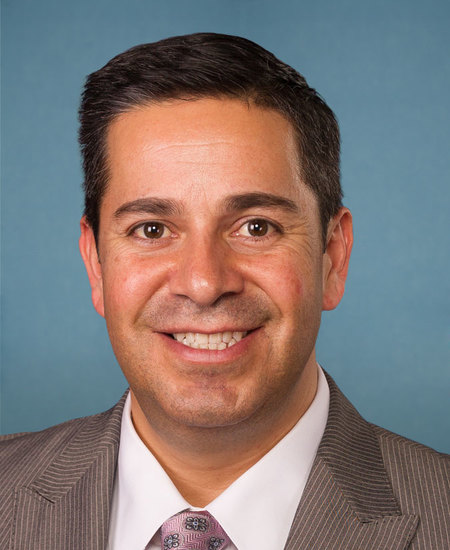
Sen. Ben Ray Luján
Sponsored bills
Maddy summaryThe FBI Hiring Review Act mandates a comprehensive review of hiring practices and training standards for the Federal Bureau of Investigation. It requires the Deputy Assistant Attorney General to audit hiring records for employees hired after a specific date and to cross-reference new hires against state-level misconduct files to ensure background checks were thorough. Additionally, the bill directs the Federal Law Enforcement Training Centers to certify that all FBI agents and officers have completed their required training within 180 days of the law's enactment. A Government Accountability Office report will be produced within a year to evaluate the findings from these audits and training assessments. These measures aim to increase transparency and accountability in FBI recruitment and personnel preparation.
Maddy summaryThe Federal Prosecutorial Accountability Act modifies existing Department of Justice rules to address misconduct by government attorneys. It mandates that any federal prosecutor sanctioned under Rule 11 of the Federal Rules of Civil Procedure will be barred from representing the government in court for one year. The Office of Professional Responsibility within the Department of Justice is tasked with enforcing this ban. This change directly affects attorneys working for the federal government who face specific legal penalties for improper litigation conduct.
Maddy summaryThe Communications, Video, and Technology Accessibility Act of 2026 expands accessibility requirements for video content, devices, and communication services to better serve people with disabilities. It mandates that online video programming and television shows include closed captions and audio description, while also requiring video players and customer service tools to support features like sign language interpretation and screen readers. The bill establishes an advisory committee to guide these rules and requires the Federal Communications Commission to report on accessibility progress and emerging technologies every few years.
Maddy summaryThe YouthBuild for the Future Act expands the YouthBuild program, which helps young people gain job skills through construction training and education, by directing a larger share of funding to rural areas and tribal communities. It updates program rules to better support participants by allowing grant funds to cover matching financial requirements, providing food assistance, and offering specific support services for individuals with disabilities. The bill also introduces new grants to help program partners form alliances with local employers to create more relevant job training opportunities and requires the government to consult regularly with program operators to set realistic performance goals. Additionally, the legislation increases the total amount of money available for the program over the next six years and establishes a new specific fund to support these employer partnerships.
Maddy summaryThe Consumer Protection Remedies Act of 2026 amends the Federal Trade Commission Act to expand the Commission's legal tools for addressing consumer violations. It allows the FTC to seek court orders for returning money to harmed consumers, canceling or fixing unfair contracts, and requiring companies to give up illegal profits gained from violations. These new remedies are limited to actions taken within the last 10 years, and time spent by the accused party outside the United States does not count toward this deadline. The changes apply to any legal case started on or after the bill becomes law.
Maddy summaryThe Millionaires Surtax Act introduces a new 10% tax on the portion of an individual's income that exceeds $2 million. This surcharge applies to high-income taxpayers starting with taxable years beginning after December 31, 2026, but the threshold is lowered to $1 million for those filing separately. The law includes specific adjustments for nonresident aliens, citizens living abroad, and charitable trusts, while explicitly excluding this new tax from calculations for other federal credits.
Maddy summaryThe Stop CHEATERS Act directs the Internal Revenue Service to increase its enforcement efforts against high-income individuals and large corporations while also expanding taxpayer support services. To achieve this, the bill appropriates billions of dollars over several years to fund IRS investigations, hire additional staff, purchase vehicles, and modernize outdated technology systems. Additionally, the legislation requires the IRS Commissioner to submit regular reports to Congress detailing plans to shift auditing resources toward wealthy taxpayers and analyzing collection gaps across different income levels.
Maddy summaryThis bill, titled the "Keep Public Funds in Public Schools Act," repeals two sections of the Internal Revenue Code. It eliminates Section 25F, which provides a tax credit for contributions made to scholarship granting organizations. Additionally, the bill repeals Section 139K, which allows certain educational assistance to be excluded from an individual's gross income. These changes primarily affect taxpayers who currently claim these credits or exclusions, and organizations involved in scholarship grants or providing educational assistance. The amendments generally take effect for taxable years ending after December 31, 2026.
Maddy summaryThe Combating Illicit Xylazine Act places xylazine - a veterinary sedative increasingly found in illicit drug mixtures - into Schedule III of the Controlled Substances Act, subjecting it to federal regulation as a controlled substance. It specifically allows veterinary use without requiring registration of the ultimate user (e.g., pet owners or veterinarians) if xylazine is dispensed by a registered veterinarian or pharmacy with a vet prescription and used for animals owned by the user, under their care, or in authorized animal programs. The bill provides a one-year delay for labeling and packaging requirements and a 60-day delay for registration and recordkeeping for veterinary use to ease implementation. Additionally, it adds xylazine to the Arcos tracking system for controlled substances and mandates two congressional reports on illicit use prevalence within 18 months and 4 years of enactment.