

Humanitarian Standards for Individuals in U.S. Customs and Border Protection Custody Act This bill imposes requirements and standards related to the care of aliens in U.S. Customs and Border Protection (CBP) custody. CBP must conduct an initial health screening of each individual in custody to identify those with acute conditions and high-risk vulnerabilities and to provide appropriate healthcare. CBP must conduct the screening within 12 hours of each individual's arrival at a CBP facility, and within 6 hours for certain priority individuals such as children and individuals with disabilities. The bill imposes various requirements related to providing such screenings, such as providing interpreters, chaperones, and mental health treatment when necessary. CBP must ensure detainees have access to drinking water, toilets, sanitation facilities, hygiene products, food, and shelter. The bill imposes certain standards relating to such requirements, such as the minimum amount of drinking water for each detainee and the acceptable temperature range of the shelters. The Department of Homeland Security (DHS) must enter into memoranda of understanding with various government agencies to address instances when surge capacity is necessary. The DHS Office of the Inspector General must conduct unannounced inspections of ports of entry, border patrol stations, and detention facilities and report the results to Congress. The Government Accountability Office must assess CBP's management of such facilities, whether CBP and DHS processes are in compliance with this bill's requirements, and the behavior of CBP personnel in carrying out this bill. DHS shall publicly release on its website, on a quarterly basis, aggregate data on complaints of sexual abuse at CBP facilities.
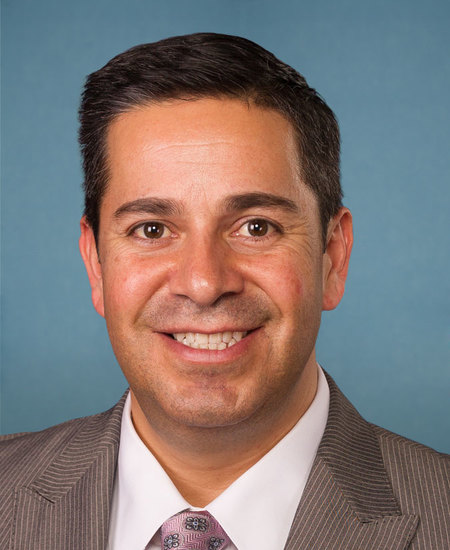
Sen. Ben Ray Luján
Sponsored bills
Leveraging our National Laboratories to Develop Tomorrow's Technology Leaders Act of 2022 This bill requires the Department of Energy to award grants to maintain a lab-embedded entrepreneurship program that provides entrepreneurial fellows with access to National Laboratory research facilities, expertise, and mentorship.
Clean Energy Minerals Reform Act of 2022 This bill modifies requirements related to the mining of hardrock minerals on federal land. For example, the bill prohibits the United States from issuing a patent for any mining claim, millsite, or tunnel site unless a patent application was filed with the Department of the Interior by September 30, 1994; subjects production of all locatable minerals from any mining claim to a reasonable royalty established by Interior; requires an exploration permit and mining operations permit for non-casual mining operations; establishes the Hardrock Minerals Reclamation Fund for responding to hazardous substance releases on abandoned hardrock mine land; requires consultation with Indian tribes prior to the undertaking or issuing of a permit for mineral activity that has tribal implications; and establishes civil penalties for violation of surface management or operation requirements and related regulations.
Lowering Federal Usage of Energy to Lessen Costs Act of 2022 or the Lowering FUEL Costs Act of 2022 This bill requires the Office of Management and Budget, the General Services Administration, and the Council on Environmental Quality to develop and publicly release short-term and long-term strategies to reduce the cost of transportation fuels for U.S. consumers through federal conservation. The short-term strategies must be implemented within three months of their public release.
Maddy summarySRES 593 is a Senate resolution honoring former U.S. Senator Kaneaster Hodges, Jr. of Arkansas, who served from 1977 to 1978. The resolution expresses the Senate’s "profound sorrow" at his death and directs the Secretary of the Senate to transmit an enrolled copy to his family. It also calls for the Senate to adjourn as a mark of respect. This is a ceremonial resolution with no policy provisions or direct impact on legislation or constituents.
Fair and Transparent Gas Prices Act of 2022 This bill requires the Federal Trade Commission to investigate anticompetitive, collusive, or other conduct related to oil and gas companies and markets.
This resolution designates April 16 through April 24, 2022, as National Park Week. The resolution also encourages the people of the United States and the world to responsibly visit, experience, recreate in, and support the treasured national parks of the United States.
This resolution expresses support for National Public Health Week and recognizes the role of public health in preventing infectious disease outbreaks such as COVID-19.
This resolution recognizes the accomplishments and example of Cesar Estrada Chavez. The resolution also encourages the people of the United States to commemorate his legacy and to always remember his rallying cry, "Si, se puede!" (which means "Yes, we can!").
Maddy summarySRES 565 is a ceremonial Senate resolution honoring the late Representative Don Young (R-AK), who served 49 years in the U.S. House of Representatives - the longest tenure of any Alaska representative and the 45th Dean of the House. The resolution commemorates his life, service, and legacy, including his work on landmark legislation like the Trans-Alaska Pipeline authorization and the Alaska Native Claims Settlement Act. It contains no policy changes or new laws; instead, it directs the Senate to mourn his passing, honor his bipartisan service, and transmit a copy to his family. This is a purely symbolic resolution with no direct impact on constituents or legislation.