This resolution expresses that the Senate has heard of the death of the Honorable Orrin G. Hatch, former U.S. Senator for the state of Utah. The resolution also expresses that the Senate honors the life and legacy of the late Senator Hatch for his unwavering dedication to Utah as a Senator and a public servant and accomplishments in legislating with principle and dedication for the good of the people of the United States. The resolution states when the Senate adjourns today, it stands adjourned as a further mark of respect to the memory of Senator Hatch.
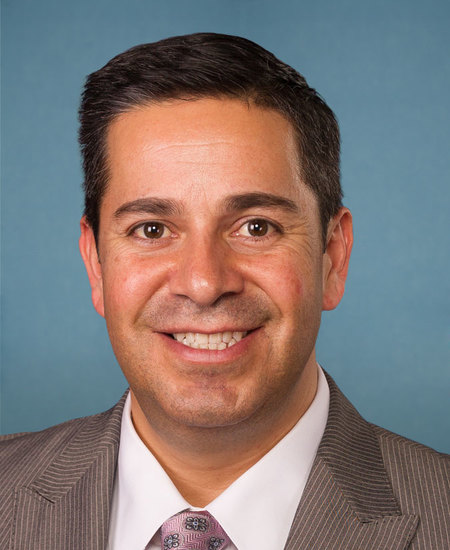
Sen. Ben Ray Luján
Sponsored bills
This resolution thanks the teachers of the United States and promotes the teaching profession by encouraging students, parents, school administrators, and public officials to recognize National Teacher Appreciation Week.
Maddy summaryThis resolution designates May 5, 2022, as the "National Day of Awareness for Missing and Murdered Native Women and Girls." It directly honors Native American, Alaska Native, and Native Hawaiian women and girls who are victims of violence or disappearance, referencing documented statistics showing they face disproportionately high rates of violent crime and homicide. The resolution calls on the public and organizations to commemorate these victims and show solidarity with affected families. As a symbolic measure with no binding policy changes, it aims to raise awareness about this issue without creating new legal requirements.
Pecos Watershed Protection Act This bill withdraws identified federal land in the Pecos River watershed in New Mexico from entry, appropriation, or disposal under the public land laws; location, entry, and patent under the mining laws; and disposition under all laws pertaining to mineral and geothermal leasing or mineral materials.
Maddy summaryThis resolution (SRES 603) recognizes April 2022 as National Sexual Assault Awareness and Prevention Month. It expresses the Senate's support for efforts to educate the public about sexual violence, improve treatment for survivors, and prosecute perpetrators. The resolution acknowledges the work of organizations like RAINN and the Department of Defense's Safe Helpline, but does not create new laws or funding. As a symbolic gesture, it has no direct policy impact on affected individuals or services.
Maddy summarySRES 600 is a Senate resolution supporting Workers' Memorial Day to honor workers killed or injured on the job. It cites statistics showing 4,764 workplace fatalities in 2020 and emphasizes the need to strengthen health and safety protections, particularly highlighting OSHA's limited resources (only inspecting workplaces once every 236 years). The resolution encourages OSHA, employers, and community organizations to increase awareness about preventing workplace injuries and illnesses. It does not create new laws but serves as a symbolic call to action for safer working conditions.
Chronic Wasting Disease Research and Management Act of 2022 This bill directs the Department of Agriculture (USDA) to address chronic wasting disease afflicting deer, elk, and moose populations. Specifically, the bill directs USDA to establish a program to research and manage the disease. Under the program, USDA must offer to enter into agreements with state or tribal wildlife agencies and departments of agriculture, institutions of higher education, and research centers to support research on the transmission of, resistance to, and diagnosis of the disease. In addition, USDA must offer to enter into agreements with such agencies and departments to support state and tribal efforts to develop and implement management strategies that address the disease. USDA must also develop and maintain materials to inform the public on chronic wasting disease and techniques to help prevent the spread of the disease. In addition, USDA must solicit public feedback on potential updates and improvements to standards of the chronic wasting disease herd certification program.
Spectrum Innovation Act of 2021 This bill specifies a process for auctioning a portion of the electromagnetic spectrum between 3100 megahertz (MHz) and 3540 MHz for nonfederal use, shared federal and nonfederal use, or a combination of those uses. Most wireless technologies (e.g., mobile communication) rely on the electromagnetic spectrum to transmit signals. Specifically, the Office of Management and Budget must transfer funding from the Spectrum Reallocation Fund to federal entities for planning related to the reallocation. The National Telecommunications and Information Administration (NTIA) and the Executive Office of the President must oversee the planning. Informed by the planning, the Department of Commerce must identify at least 200 MHz of spectrum for reallocation. In identifying the spectrum, Commerce must consult with the Department of Defense, the Office of National Science and Technology Policy, and the Federal Communications Commission (FCC). The FCC must (1) adopt rules authorizing the use of the identified spectrum in consultation with the NTIA, and (2) auction licenses for the identified spectrum within seven years of the bill's enactment. Additionally, the President must modify or withdraw (subject to certain limits) current federal assignments of the identified spectrum to increase nonfederal use. The FCC must allow for opportunistic uses (i.e., allow devices to opportunistically identify and transmit on unused spectrum without infringing on the rights of the spectrum license holder) of a withdrawn or modified assignment. An allowed opportunistic use must cease after the auction if the use is inconsistent with the rights of the licensee that obtains its license through the auction.

This resolution recognizes the Hispanic Association of Colleges and Universities National Internship Program for 30 years of providing internship opportunities to Hispanic and underrepresented students attending Hispanic-serving institutions and other institutions of higher education.
Maddy summarySRES 588 is a symbolic Senate resolution designating April 2022 as "Financial Literacy Month." It does not create new laws or policies but calls for public awareness about the importance of personal financial education. The resolution urges federal, state, local, school, nonprofit, and business entities to observe the month with activities highlighting financial education's role in helping individuals manage debt, build wealth, and make informed money decisions. It references statistics on financial challenges (like high credit card debt and low high school financial literacy requirements) but does not mandate any specific actions or funding. This is a procedural designation with no direct effect on individuals or new legislative requirements.