

Baby Food Safety Act of 2021 This bill imposes certain safety requirements on infant and toddler food. The bill establishes maximum levels of certain toxic elements (cadmium, and lead, mercury, and inorganic arsenic) allowable in infant and toddler food, defined as food intended to be sold for children up to 36 months old. The Food and Drug Administration (FDA) shall periodically review and, if necessary, further lower these levels. The FDA may also establish limits on other toxic elements upon review of relevant health and dietary data. Furthermore, facilities that manufacture, process, pack, or hold infant and toddler food must have certain controls and plans to ensure that their food complies with the limits on toxic elements established by this bill. Such facilities shall also make publicly available certain information, including results from tests for toxic elements in their infant and toddler foods. The bill also expands the FDA's authority to require a recall of adulterated or misbranded food to include infant and toddler food that exceeds limits on toxic elements. The Centers for Disease Control shall carry out a public awareness campaign about the risks of toxic elements in infant and toddler food. The FDA shall commission research on agricultural methods that minimize levels of toxic heavy metals in crops.
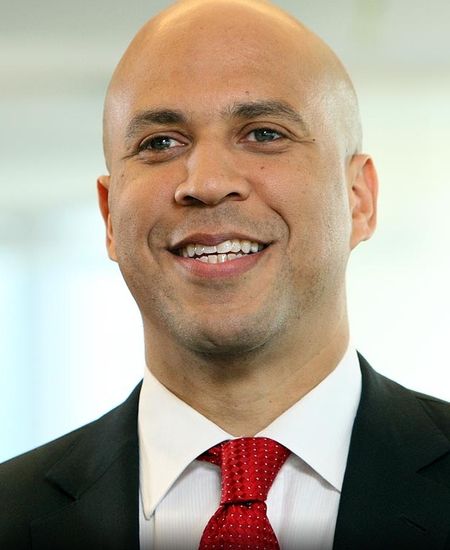
Sen. Cory A. Booker
Sponsored bills
This bill makes changes to facilitate data sharing between the Supplemental Nutrition Assistance Program (SNAP) and programs that subsidize communication services to verify eligibility for applicable programs. Specifically, the Federal Communications Commission (FCC) must award grants to states and tribes for establishing or modifying connections between databases with information regarding benefit programs (e.g., SNAP) and the National Lifeline Eligibility Verifier to verify eligibility for the Lifeline program (which subsidizes telephone and internet services for low-income individuals) and the Emergency Broadband Benefit Program (which subsidizes broadband services for those who suffered income loss during the COVID-19 pandemic and other eligible households). The bill also reauthorizes through FY2026 the fund that supports the Emergency Broadband Benefit Program. In addition, the FCC must establish an automated connection to share data between the National Lifeline Eligibility Verifier and the National Accuracy Clearinghouse for SNAP. The FCC must coordinate with the Department of Agriculture to establish the connection.
Increasing American Jobs Through Greater Exports to Africa Act of 2021 This bill requires the President and specified agencies to take certain actions to increase U.S. exports to Africa. Specifically, the bill directs the President to establish a comprehensive U.S. strategy for public and private investment, trade, and development in Africa. The focus of this strategy must include (1) increasing exports of U.S. goods and services to Africa by at least 200% in real dollar value within 10 years, (2) promoting the alignment of U.S. commercial interests with development priorities in Africa, and (3) improving the competitiveness of U.S. businesses in Africa. Additionally, the bill directs the President to designate a Special Africa Export Strategy Coordinator; develop a plan for standardized training of foreign service and economic officers; and explore opportunities to negotiate bilateral, subregional, and regional agreements to encourage trade and eliminate nontariff barriers to trade between countries. The bill requires the Department of Commerce to ensure specified levels of United States and Foreign Commercial Service officers in Africa. The bill directs the Export-Import Bank to increase the amount of financing for projects in Africa. The bank must also make capitalization available annually for loans that compete against certain foreign loans. The Small Business Administration's Office of International Trade must work closely with the Trade Promotion Coordinating Committee, among others, in maintaining a trade distribution network.
Gun Records Restoration and Preservation Act This bill amends several appropriations laws to remove limitations on the authority of the Bureau of Alcohol, Tobacco, Firearms and Explosives to conduct activities related to the administration of federal firearms laws. Specifically, the bill removes provisions that limit the use of firearms tracing data, limit the disclosure of data under the Freedom of Information Act, prohibit imposing a requirement that gun dealers conduct a physical inventory, prohibit consolidating or centralizing records maintained by federal firearm licensees (e.g., gun dealers), and require national instant criminal background check records to be destroyed within 24 hours.
Healthcare Workforce Resilience Act This bill makes previously unused immigrant visas available to nurses and physicians who petition for such a visa before the date that is 90 days after the end of the declared national emergency relating to the COVID-19 (i.e., coronavirus disease 2019) outbreak. The number of visas available shall be the total number of unused employment-based immigrant visas from FY1992-FY2020, up to 40,000. Of such visas, 25,000 shall be reserved for nurses and 15,000 for physicians. Certain family members may accompany the principal beneficiary of a visa provided under this bill, and visas for such family members shall (1) be made available from the unused visas from FY1992-FY2020, and (2) not be counted against the 40,000 cap. Visas provided under this bill shall be exempt from per-country limitations.
Kira Johnson Act This bill establishes grants to improve maternal health outcomes for racial and ethnic minority groups and other underserved populations. Specifically, the Department of Health and Human Services must award grants for community-based programs to improve maternal health outcomes for Black pregnant and postpartum individuals, as well as individuals in other underserved groups; training for health care providers and others who work in maternity care settings on reducing and preventing racism, bias, and discrimination; and respectful maternity care compliance programs in specified health care facilities. The National Academies of Sciences, Engineering, and Medicine must study issues related to the training programs, and the Government Accountability Office must study issues related to the compliance programs.
This resolution condemns and denounces all forms of anti-Asian sentiment, including those related to COVID-19 (i.e., coronavirus disease 2019), and calls on federal law enforcement officials, working with state and local agencies, to take specified steps. The resolution calls on federal officials to expeditiously investigate and document all credible reports of hate crimes, harassment, bullying, and threats against the Asian American and Pacific Islander communities; the Attorney General to work with state and local agencies and Asian American and Pacific Islander community-based organizations to prevent discrimination and to expand culturally competent and linguistically appropriate education campaigns on public reporting of hate crimes; and the Department of Health and Human Services to issue guidance describing best practices to mitigate racially discriminatory language in describing the pandemic. The resolution recommits the United States to serving as a model for the world in building a more inclusive, diverse, and tolerant society by (1) prioritizing language access and inclusivity in communication practices, and (2) combating misinformation and discrimination that puts Asian Americans and Pacific Islanders at risk.
This resolution celebrates the successes and contributions of Latinas in the United States and recognizes the changes still to be made to ensure that Latinas can realize their full potential as equal members of society.
This resolution observes the 10th anniversary of the Syrian uprising wherein hundreds of Syrians assembled to call on their leadership for democratic reforms and respect for their fundamental freedoms. Further, the resolution commends the bravery of Syrian human rights defenders, affirms U.S. policy with respect to Syria, and calls on the United States to reinvigorate diplomatic efforts to resolve the conflict in Syria and to expand humanitarian aid to the Syrian people.
No Junk Plans Act This bill nullifies a rule by the Department of Treasury, the Department of Labor, and the Department of Health and Human Services regarding short-term, limited-duration health insurance plans. Short-term, limited-duration health insurance plans are plans that may only offer coverage for a limited amount of time under law and that are exempt from the market requirements of the Patient Protection and Affordable Care Act (e.g., coverage of individuals with preexisting conditions). The rule increases the maximum authorized duration of such plans from less than 3 months (including renewals) to an initial maximum duration of less than 12 months (with a total duration of up to 36 months, including renewals). The rule took effect October 2, 2018.