

Equal Access to Justice for Victims of Gun Violence Act This bill removes limitations on the civil liability of gun manufacturers and the disclosure of gun trace data in civil actions. Specifically, the bill repeals the Protection of Lawful Commerce in Arms Act, which prohibits civil actions against a firearm or ammunition manufacturer, seller, importer, dealer, or trade association for damages resulting from the criminal or unlawful misuse of a firearm. Additionally, the bill states that firearms trace data maintained by the Bureau of Alcohol, Tobacco, Firearms and Explosives is not immune from legal process. Such data is subject to discovery; is admissible as evidence; and may be used, relied on, or disclosed in a civil action or administrative proceeding.
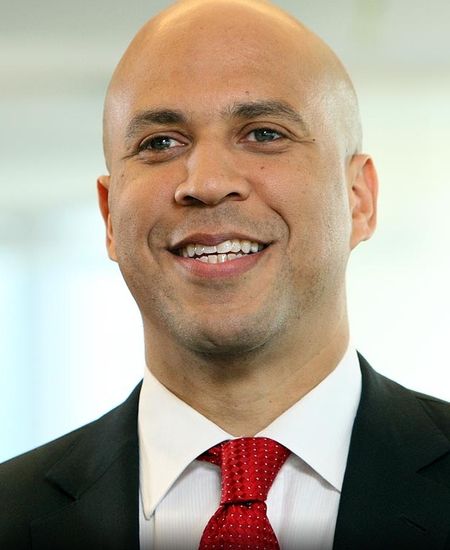
Sen. Cory A. Booker
Sponsored bills
Child Care for Working Families Act This bill provides funds and otherwise revises certain child care and early learning programs for low- to moderate-income families. Specifically, the bill provides funds for the Child Care and Development Block Grant program and reestablishes it as a child care and development assistance program. The bill also allocates program funds for states to provide services and supports to infants, toddlers, and children with disabilities. Further, the bill revises the program to require each state to create a tiered and transparent system for measuring the quality of child care providers, which must include evidence-based standards and payment rates that are based on a certain cost estimation model; ensure that copayments are based on a sliding scale and that no family receiving assistance pays more than 7% of its household income on child care; and use quality child care amounts for certain activities, such as increasing the supply of child care providers. The bill also provides funds and establishes grants for states to create preschool programs for low- to moderate-income children between the ages of three and five years. The Department of Health and Human Services (HHS) must make grants to Head Start agencies to provide children with access to full-school-year and full-school-day services, provide access to additional service hours for migrant and seasonal agencies, or enhance the quality of existing services. Finally, the bill requires, and provides funds for, HHS to assist Head Start agencies with ensuring their teachers and staff are paid a living wage.
Clean Energy for America Act This bill provides tax incentives for investment in clean electricity, clean transportation, clean fuel production, energy efficiency, and sets forth workforce development requirements for the energy sector. The bill also terminates certain fossil fuel provisions and requires contractors on federal energy projects to ensure that not less than 15% of total labor hours be performed by qualified apprentices.
This resolution recognizes the Senate's observation of Countering International Parental Child Abduction Month in April 2021. It also urges the United States to lead in raising awareness about the devastating impact of international child abduction.
This resolution extends condolences to the family and friends of former Vice President Walter Mondale. The resolution acknowledges Mondale's lifetime service to the United States, including as a U.S. Senator and as the first presidential candidate from a major party to select a woman, Geraldine Ferraro, as his running mate.
Debt-Free College Act of 2021 This bill establishes measures to cover the unmet financial need of students who are enrolled at certain institutions of higher education (IHEs). Unmet financial need refers to the difference between a student's cost of attendance and the student's expected family contribution, plus any federal, state, and local sources of grant aid. In addition, the bill makes certain Dreamer students (i.e., students who have been granted Deferred Action for Childhood Arrivals status) eligible for federal financial aid. First, the bill requires the Department of Education (ED) to award grants for state-federal partnerships with a goal of providing debt-free college for all eligible students at in-state public IHEs. Eligible student refers to an individual who (1) is enrolled or is eligible to enroll in an in-state public IHE, (2) completes a Free Application for Federal Student Aid or demonstrates eligibility for a Federal Pell Grant through institutional financial-aid eligibility forms, and (3) demonstrates satisfactory academic progress. Next, the bill requires ED to award grants to historically Black colleges and universities and minority-serving institutions to cover the unmet financial need of enrolled students. ED must establish an office to administer grants and provide oversight. In addition, the bill makes Dreamer students who entered the United States before the age of 16 and who meet certain educational criteria eligible for federal student aid.
Northern Rockies Ecosystem Protection Act This bill designates specified National Forest System lands, National Park System lands, and public lands in Idaho, Montana, Oregon, Washington, and Wyoming as wilderness and as components or additions to existing components of the National Wilderness Preservation System. The bill also designates specified federal lands as biological connecting corridors and as special corridor management areas. The Department of the Interior and the Department of Agriculture (USDA) shall accept the donation of valid existing permits or leases authorizing grazing on specified public lands or National Forest System lands. The bill designates segments of specified rivers and creeks in Idaho, Montana, and Wyoming as components of the National Wild and Scenic Rivers System. The bill designates specified areas as wildland recovery areas. USDA shall develop a wildland recovery plan for each recovery area. A panel of independent scientists shall study roadless lands greater than 1,000 acres that are within the National Forest System in the Wild Rockies bioregion in Idaho, Montana, Oregon, Washington, or Wyoming, but not designated as components of the National Wilderness Preservation System, for their role in maintaining biological diversity. The bill prohibits road construction, timber harvest, oil or gas leasing, mining, or other development that impairs the natural and roadless qualities of the land.
Fourth Amendment Is Not For Sale Act This bill generally prohibits law enforcement and intelligence agencies from obtaining U.S. customer or subscriber records or any illegitimately obtained information from a third party in exchange for anything of value (e.g., purchasing such information). Records or information obtained in violation of this bill are inadmissible as evidence in any trial, hearing, or other legal proceeding.
Medicare at 50 Act This bill establishes a Medicare buy-in option for certain qualifying individuals and also repeals restrictions relating to prescription drug prices under the Medicare prescription drug benefit. Specifically, the bill allows individuals aged 50 to 64 to enroll in Medicare if such individuals would otherwise qualify for Medicare at the age of 65. The Centers for Medicare & Medicaid Services (CMS) must determine enrollment periods and set premiums for the buy-in option established under the bill, in accordance with specified requirements. The CMS must also award grants to states and nonprofit organizations for outreach and enrollment activities relating to the buy-in option. The bill also repeals provisions that prohibit the CMS from negotiating the prices of prescription drugs or from establishing a formulary under the Medicare prescription drug benefit.
Access to Healthy Food for Young Children Act of 2021 This bill revises several provisions related to the Child and Adult Care Food Program. These revisions include increasing reimbursement rates; requiring reimbursements to be adjusted annually to reflect the Consumer Price Index for food away from home, rather than the Consumer Price Index for food at home used under current law; providing for an additional meal service to be served in child care settings with eight or more hours between the first meal service and the beginning of the fourth meal service; expanding geographical eligibility for tier I family or group day care homes; and requiring the Department of Agriculture to establish an advisory committee to examine the feasibility of reducing unnecessary or duplicative paperwork for those participating or seeking to participate in the program. The bill also provides funding to (1) provide nutrition training and technical assistance under the program, and (2) increase the participation of children from underserved communities.