This resolution (1) recognizes the importance of the Americans with Disabilities Act of 1990 in advancing independent living for individuals with disabilities; (2) pledges continued efforts to address remaining barriers for individuals with disabilities; and (3) calls on federal agencies to provide additional resources for individuals with disabilities with respect to economic self-sufficiency, community-based services, housing, and transportation.
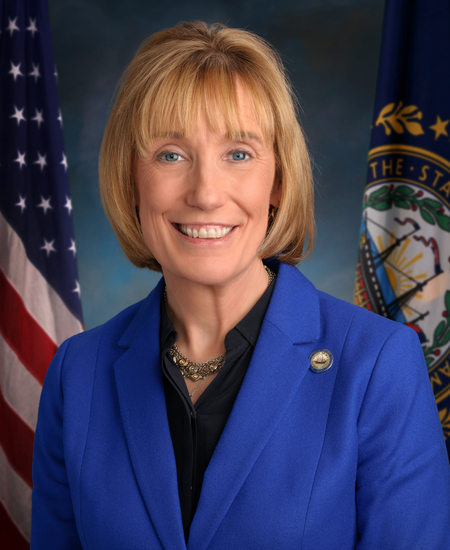
Sen. Margaret Wood Hassan
Sponsored bills
This resolution remembers former Prime Minister of Japan Shinzo Abe and his work to strengthen the alliance between the United States and Japan. It also extends condolences to his family and the people of Japan.
Expanding Access to Family Planning Act This bill provides, subject to specified conditions, funding through FY2032 for federally funded family planning services and clinics. In particular, the funds must be used for (1) grants and contracts that support the provision of family planning services, and (2) clinic infrastructure (e.g., construction and renovation of clinics). Clinics that receive funding to provide family planning services must offer each patient with a positive pregnancy test the opportunity for nondirective counseling on (1) prenatal care and delivery; (2) infant care, foster care, and adoption; and (3) pregnancy termination. This counseling must include referrals if requested by a patient. Additionally, if a funding recipient makes subawards for the provision of family planning services, the recipient may not prohibit an entity from participating in a subaward program for reasons other than the entity's inability to provide family planning services.
Democracy Is Strengthened by Casting Light On Spending in Elections Act of 2021 or the DISCLOSE Act of 2021 This bill addresses campaign finance, including by expanding the prohibition on campaign spending by foreign nationals, requiring additional disclosures of campaign expenditures, and requiring additional disclosures regarding certain political advertisements. First, the bill prohibits foreign nationals from participating in the decision-making process regarding an election expenditure. Additionally, the bill expands existing foreign money prohibitions to include disbursements for paid web-based or digital communications and federal judicial nomination communications. It also prohibits foreign nationals from contributing to campaigns related to ballot initiatives and referenda. The Federal Election Commission (FEC) must conduct an audit after each federal election cycle to determine the incidence of illicit foreign money. Next, the bill makes it unlawful to establish or use a corporation, company, or other entity with the intent to conceal an election contribution or donation by a foreign national. A violator is subject to criminal penalties—a fine, a prison term of up to five years, or both. Covered organizations (e.g., corporations, labor organizations, and political organizations) must, within 24 hours, file reports with the FEC to disclose campaign expenditures of more than $10,000 during an election cycle. Finally, the bill requires organizations to provide additional disclosures regarding political advertisements, including the donors who contributed the most money to that organization in the last year.

Federal Cybersecurity Workforce Expansion Act This bill establishes cybersecurity employment and training programs through the Department of Homeland Security (DHS) and Department of Veterans Affairs (VA). Specifically, DHS must establish an apprenticeship program that leads directly to employment in cybersecurity in federal agencies. Program participants must agree to a period of obligated service with a federal agency after completing the program. DHS must also coordinate with the VA to establish a pilot program to provide cybersecurity training for veterans, individuals approaching veteran status, and military spouses. The bill also extends through 2025 the requirement that federal agencies annually report critical cybersecurity workforce needs to the Office of Personnel Management.
Strengthening Community Business Development Act This bill expands the factors allowed to be considered by a supervising agency when evaluating a financial institution's compliance with community reinvestment standards. Specifically, the bill allows a supervising agency to consider the efforts of a financial institution that deny business loans to low- and moderate-income borrowers to refer these borrowers to community business development organizations or to provide these borrowers directly with business development resources.
This resolution recognizes the critical role the Equal Employment Opportunity Commission plays in addressing long-standing issues including the wage gap, combating workplace harassment, and ensuring all workers are treated with dignity and respect in the workplace.
Veterans Marriage Recognition Act of 2022 This bill revises the definition of a spouse and surviving spouse for purposes related to veterans' benefits, health care, and other matters. Specifically, the bill includes persons who are in same sex marriages as spouses and surviving spouses.
This bill addresses Department of Veterans Affairs (VA) benefits and care for covered children. Under the bill, a covered child is an individual, regardless of age or marital status, who is the natural child of a Vietnam veteran or a veteran of specified service in Korea or Thailand who was conceived after the date on which the veteran entered service in Vietnam, Korea, or Thailand. The bill requires the VA to establish an advisory council on health care and benefits for covered children. Additionally, the VA must establish care and coordination teams for covered children. At least every 180 days, the teams must conduct outreach to ensure the continued care of the children and assist with any necessary changes in care. The VA must report to Congress a list of conditions that will trigger outreach to covered children, and contact such children as soon as practicable after the identification of a condition. The bill requires the VA to provide a covered child with health care and benefits for the duration of the child's life, regardless of the death of a parent preceding the death of the child. The Veterans Benefits Administration and the Veterans Health Administration must enter into a memorandum of understanding to better assist covered children and establish conditions to be included in the report required by this bill.
This resolution designates June 2022 as National Post-Traumatic Stress Awareness Month and June 27, 2022, as National Post-Traumatic Stress Awareness Day. The resolution supports (1) the education of members of the Armed Forces, veterans, their families, and the public about post-traumatic stress; and (2) efforts by the Department of Veterans Affairs and the Department of Defense to foster cultural change around the issue of post-traumatic stress. The resolution also encourages the leadership of the Armed Forces to support treatment of members of the Armed Forces who suffer from post-traumatic stress.