

Maddy summaryThis bill requires the Secretary of the Army to create clear guidelines for reviewing applications to alter or use certain non-Federal hydropower projects. The new rules mandate a standardized checklist and specific criteria to determine if an application is complete, focusing only on whether required documents are present and formatted correctly. Under these procedures, reviewers are prohibited from conducting detailed technical analyses or evaluating the engineering design of the projects. The bill aims to streamline the administrative process by separating the initial completeness check from later technical evaluations.
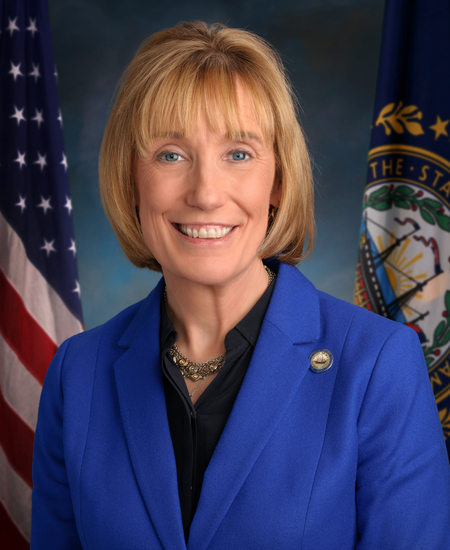
Sen. Margaret Wood Hassan
Sponsored bills
Maddy summaryThis Senate resolution honors the 27th anniversary of the Supreme Court's Olmstead v. L.C. decision, which established that states must offer community-based services to individuals with disabilities rather than forcing them into institutions. The bill affirms the legal requirement that people with disabilities should live in the most integrated settings possible and salutes those who have expanded home and community support services. It also condemns a recent Department of Justice opinion that challenges this integration mandate and calls on the department to rescind that opinion. Additionally, the resolution criticizes cuts to the Medicaid program and urges Congress to restore funding to protect the health and independence of people with disabilities.
Maddy summaryThis Senate resolution formally recognizes June 2026 as LGBTQ Pride Month to honor the history, contributions, and ongoing struggles of lesbian, gay, bisexual, transgender, and queer individuals in the United States. The document outlines the community's achievements in civil rights and public service while highlighting persistent challenges such as discrimination in employment and housing, as well as hate crimes. It also acknowledges the global context of LGBTQ rights, noting both international progress and the persecution faced by individuals in various countries. Ultimately, the resolution expresses support for equal treatment and encourages the public to use the month to learn about and celebrate the LGBTQ community.
Maddy summaryThe Modernizing Opioid Treatment Access Act 2.0 of 2026 allows licensed addiction medicine specialists to prescribe methadone for opioid use disorder to be dispensed directly through pharmacies, rather than requiring patients to visit traditional treatment clinics. Under this bill, these practitioners must use electronic prescribing and can only dispense liquid or dispersible tablet formulations, while pharmacies do not need separate registration to handle these prescriptions. The law also permits telemedicine for maintenance or detoxification treatment and requires doctors to obtain informed consent from patients regarding how privacy protections differ between clinic and pharmacy settings. Additionally, the Attorney General can revoke a doctor's registration if a state requests it, and the Drug Enforcement Administration must report annually on the number of registered providers and pharmacies involved in the program.
Maddy summaryThe Rural Hospital Emergency Room Guarantee Act creates a new funding program to support rural hospitals by establishing a dedicated Treasury fund that will provide annual payments to eligible facilities. To qualify for these funds, a hospital must be located in a rural area, participate in federal health programs, and operate a 24-hour emergency department, while also agreeing not to be owned by private equity or venture capital firms. The money received can only be used for normal operating expenses and staffing of the emergency department, with strict rules prohibiting transfers to other facilities or payments to executives. Additionally, the bill includes a special provision allowing for emergency payments of up to $250,000 if a hospital's emergency department is at risk of closing within two weeks.
Maddy summaryThe Turn the Tide Act primarily increases federal funding for substance use disorder treatment, prevention, and recovery services, directing billions of dollars to states, tribes, and local organizations starting in fiscal year 2027. It expands access to medication-assisted treatment by prohibiting insurance companies from imposing prior authorization requirements or cost-sharing fees for these drugs and mandates that health plans cover at least one formulation of opioid overdose reversal medications without deductibles. The legislation also establishes new programs and grants to support first responder training, recovery housing, mental health care for children exposed to trauma, and workforce development in areas with the highest overdose death rates. Additionally, the bill extends existing Medicaid waivers and creates a demonstration project to test whether providing recovery housing under Medicaid can reduce emergency room visits and hospitalizations for individuals with opioid use disorders.
Maddy summaryThe Supporting Our Direct Care Workforce and Family Caregivers Act establishes a national technical assistance center and provides $1 billion in grants to help recruit, train, and retain workers who assist older adults and people with disabilities. These funds will support projects run by states, community colleges, and other organizations to create career pathways, offer apprenticeships, and provide educational resources for both direct care professionals and family caregivers. A key requirement is that at least 30% of the funded projects must focus on advancing the careers of direct care workers through professional development and clear career ladders. The bill also mandates that grant recipients include people with disabilities, older individuals, and caregivers in planning and advisory roles to ensure programs meet community needs. Additionally, the legislation allocates $2 million annually for the technical assistance center to develop training curricula and address data gaps in the workforce.
Maddy summaryS 3799, the Healthy Start Reauthorization Act of 2026, extends annual funding for the Healthy Start Initiative through fiscal years 2026 to 2030. The bill amends existing law to specify $145 million in annual funding for this program, which provides prenatal and infant health services to at-risk communities. This reauthorization directly affects the Healthy Start Initiative programs nationwide, ensuring continued support for maternal and infant health services. The key provision is the fixed annual funding level, replacing prior language about appropriations.
Maddy summaryS 1782, the Charlotte Woodward Organ Transplant Discrimination Prevention Act, prohibits hospitals and transplant centers from denying organ transplants or related services solely because of a person’s disability. It requires these covered entities to make reasonable modifications to policies - such as considering a patient’s support network or providing communication aids - to ensure access for qualified individuals with disabilities who meet medical eligibility. The bill allows exceptions only if a physician determines a disability is medically significant to the transplant, but does not permit denial based on inability to independently manage care with available support. This applies to all stages, including evaluation, listing, and post-transplant care, while ensuring it doesn’t override stronger protections under existing disability laws like the ADA.
Maddy summaryThe Air Carrier Access Amendments Act updates the Air Carrier Access Act to better protect individuals with disabilities from discrimination when traveling by air. It specifically addresses issues such as damaged wheelchairs, physical harm to passengers, inadequate assistance, and mistreatment of service animals. The bill introduces new civil penalties for these violations and allows aggrieved individuals to file lawsuits directly in federal court without first exhausting administrative remedies. Additionally, it grants the Attorney General the authority to sue on behalf of victims and to seek damages in cases involving patterns of discrimination.