

Maddy summaryThis bill (S 3330) requires the Secretary of Labor to study whether pharmacy benefit managers (PBMs) should be treated as fiduciaries under federal retirement law. The study would examine the impacts of a policy change that would make PBMs legally responsible for acting in the best interest of health plans and their members, including restrictions on certain fees tied to drug prices. It would not change current law but would assess how such a policy might affect PBM fee structures and transparency. The study must be completed within two years of the bill's enactment and reported to Congress.
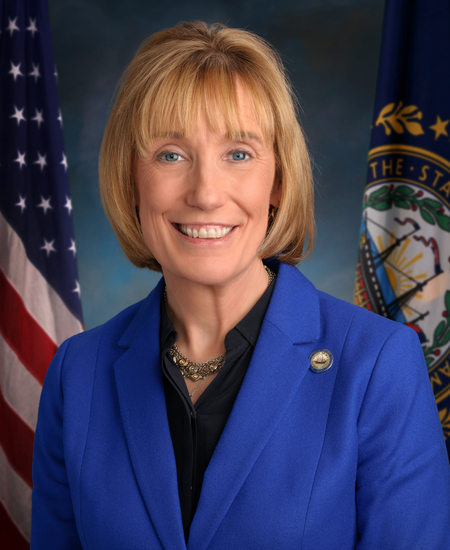
Sen. Margaret Wood Hassan
Sponsored bills
Maddy summaryThis bill (S 3324) increases penalties for violating the Telephone Consumer Protection Act of 1993. It adds criminal penalties for intentional telemarketing violations, including up to 1 year in prison for basic offenses and up to 3 years for aggravated cases (like making over 10 million calls yearly, causing $5,000+ in losses, or targeting felonies). It also raises civil penalties for false caller ID information from $10,000 to $20,000 per violation. The bill directly affects telemarketers, robocallers, and businesses making unsolicited calls, strengthening enforcement against abusive calling practices.
Maddy summaryThis bill establishes a $20 million trust fund to compensate specific living victims of the 1988 Pan Am Flight 103 bombing (Lockerbie attack). It defines eligible claimants as U.S. citizens who were Pan Am employees over age 45 on December 3, 1991, named in a 1994 lawsuit, and alive as of August 2008. The Foreign Claims Settlement Commission will process claims within 60 days of filing, certify eligible claimants, and determine the per-person payment amount by dividing $20 million by the total number of approved claims. Payments will be made directly to living claimants or their estates if deceased.
Maddy summaryS 3296, the Upskilling and Retraining Assistance Act, increases tax-free educational benefits for employees by raising the annual exclusion limit from $5,250 to $12,000 for tax years 2024-2025. It expands eligible expenses to include education-related tools and technology (like computers, software, internet access, and trade-specific equipment) required for job training, certification, or career advancement. The bill allows employees to retain these tools after completing training, and applies to employer-provided education assistance paid on or after the bill's enactment date. This directly affects workers in skilled trades and professions seeking certification or career progression through employer-supported programs.
Maddy summaryThis bill requires the Department of Veterans Affairs (VA) to create a digital portal allowing veterans and their families to access their military service records online. It establishes an advisory committee with military branch representatives, VA officials, and veterans' organizations to assess how to implement the portal, coordinate with the Defense Department, protect privacy, and address accessibility needs. The committee must report to Congress within 180 days of its first meeting, focusing on leveraging existing systems and resolving legal or technical barriers to record access. The goal is to replace current paper-based processes with a centralized digital platform for veterans' records.
Maddy summaryThis resolution (SRES 458) is a symbolic expression of Senate concern, not a binding law. It denounces China's economic and political engagement in Latin America, citing its growing trade ties, infrastructure investments, debt financing, and media activities. The resolution urges increased U.S. investment and diplomatic engagement in the region while condemning Chinese state media operations and supporting countries that maintain ties with Taiwan. It does not create new policies or affect specific groups directly but reflects the Senate’s position on U.S. strategic interests in Latin America.
Maddy summarySRES 408 is a non-binding Senate resolution condemning Hamas for its October 7, 2023, terrorist attacks on Israel, which killed over 1,400 Israelis and abducted nearly 200 hostages. The resolution demands Hamas immediately release all hostages, provide medical care, and cease using them as human shields, while calling on the U.S. to lead global efforts for their safe return. It specifically references Hamas's attacks on Israeli communities, the Nova music festival, and the execution of civilians, citing international law violations. As a symbolic resolution (not a law), it does not impose legal requirements or directly affect any individuals or policies.
Maddy summaryS 3260 establishes a federal Working Group on Unifying Loneliness Research to standardize how loneliness (a subjective feeling) and isolation (an objective lack of social contact) are measured across government and research. The Working Group, composed of senior officials from HHS, CDC, NIH, and other agencies plus state representatives based on mental health workforce needs, will develop consistent measurement tools and definitions for public health research and care. Its report, due within one year of enactment, aims to improve data quality for strategies addressing loneliness, with the law expiring at the end of 2026. This bill directly affects federal agencies, researchers, and healthcare providers by creating uniform standards for tracking these social health issues.
Maddy summaryThis bill reauthorizes the federal loan repayment program for healthcare professionals working in substance use disorder treatment. It directly affects clinicians and providers by making loan repayments tax-free under the Internal Revenue Code and increasing annual funding from $25 million to $50 million for fiscal years 2024-2028. Key provisions include adding a tax exemption for repayment amounts (amending Section 781(b)(3)) and extending the program with higher funding levels. The changes aim to support workforce retention in a critical healthcare sector by reducing financial barriers for treatment professionals.
Maddy summaryThis bill would change the federal budget process from an annual cycle to a biennial (every two years) cycle. It revises deadlines for key budget actions, requiring the President to submit a biennial budget by February 1st of odd-numbered years and Congress to complete budget resolutions by May 15th. The bill updates numerous references from "fiscal year" to "biennium" throughout budget-related laws, requiring budget resolutions and appropriations bills to cover two consecutive fiscal years. This change would directly affect the President, Congress, and federal agencies, which would need to adjust their budget planning and reporting processes to align with the new biennial cycle starting in 2026.