

Maddy summaryS 4160, the POSTAL Act, prohibits the U.S. Postal Service (USPS) from closing, consolidating, or otherwise eliminating processing and distribution centers in any state if the action would result in that state having no such facility or negatively impact mail delivery. This directly affects USPS operations and residents in states where mail processing centers might otherwise be closed or merged. The bill restricts the USPS from taking actions that would remove all processing centers from a state or disrupt local mail service delivery. It applies to specific facilities defined as central mail handling centers that distribute mail for designated service areas.
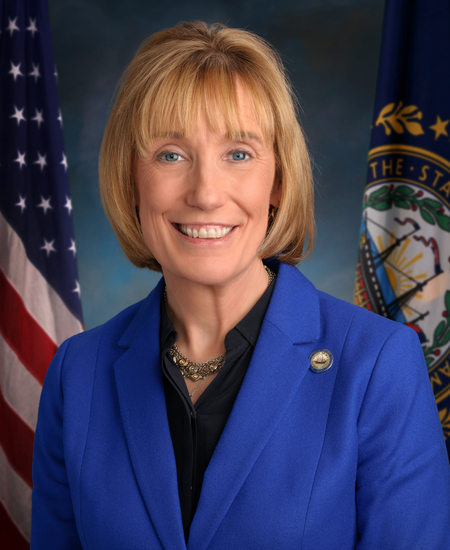
Sen. Margaret Wood Hassan
Sponsored bills
Maddy summarySRES 645 is a ceremonial Senate resolution designating April 20-28, 2024, as "National Park Week." It does not create new laws or affect any group directly; instead, it formally recognizes this week to highlight the National Park System. The resolution encourages the public to responsibly visit, experience, and support national parks, referencing the system’s history, visitor statistics (325 million visits in 2023), and economic impact ($50.3 billion in 2022). As a non-binding resolution, it has no legal effect but serves to promote awareness of national parks.
Maddy summaryThis bill directs the Department of Education to consider the International Holocaust Remembrance Alliance (IHRA) definition of antisemitism when investigating potential violations of Title VI of the Civil Rights Act of 1964. It specifically applies to cases involving discrimination based on actual or perceived Jewish ancestry or ethnic characteristics in schools and federally funded programs. The bill clarifies that this guidance does not expand the Department's authority, alter existing discrimination standards, or affect First Amendment rights. It aims to ensure consistent enforcement against antisemitism under existing civil rights law, as previously adopted by the Department of Education.
Maddy summaryThe Clergy Act (S 4126) allows ministers, members of religious orders, and Christian Science practitioners to revoke their existing exemption from Social Security taxes. It requires them to file a revocation application by the tax return deadline for the second year after 2025, with back payments due if filed late. Once revoked, they must pay Social Security taxes on their self-employment income starting from the specified year (either 2026 or 2027) for all future years, with no option to reapply for the exemption. The bill also mandates the IRS to create an outreach plan informing these religious workers about this new option within 90 days of enactment.
Maddy summaryThe Affordable Housing Credit Improvement Act of 2023 updates the federal Low-Income Housing Tax Credit program to create more affordable housing options. Key provisions include increasing state funding allocations through revised per capita and minimum amount calculations, modifying tenant eligibility rules to better protect vulnerable populations (including domestic violence victims), and expanding the program's reach to Native American communities and rural areas. The bill also changes the program's name from "Low-income Housing Credit" to "Affordable Housing Credit" and makes administrative improvements to enhance transparency and accountability. These changes aim to make it easier for developers to create and maintain affordable housing units for low- and moderate-income households.
Maddy summarySRES 640 is a non-binding Senate resolution commemorating April 14 as "World Quantum Day" each year, based on the first significant digits of the Planck constant (4.14). It supports raising public awareness about quantum science's role in everyday technologies like GPS and semiconductors. The resolution encourages schools and educators to observe the day with activities that introduce students to quantum physics and broader STEM education. It does not create new programs or requirements but formally recognizes the day to promote interest in science and technology fields.
Maddy summaryThis bill redefines "private duty nursing services" under Medicaid as "continuous skilled nursing services" for complex-care patients requiring over 2 hours of daily nursing care. It mandates that such services must be provided by licensed nurses (registered or practical) and requires states to update Medicaid programs to reflect this change within 18 months. The bill also establishes a working group to develop national quality standards for these services, which must be published within one year, and updates Medicaid waiver services and quality measures to include these standards. These changes directly affect Medicaid beneficiaries receiving complex nursing care and state Medicaid programs administering these services.
Maddy summaryThis bill authorizes a study to assess whether Canterbury Shaker Village in New Hampshire should be designated a National Heritage Area. The study, led by the Secretary of the Interior with input from state and local groups, will evaluate the site's suitability and feasibility as a National Heritage Area. The bill directly affects the Canterbury Shaker Village National Historic Landmark - covering 700 acres, 25 buildings, and significant historical resources - by initiating a formal review of its potential designation. It does not create the heritage area itself, only authorizes the study process. The focus is on evaluating the site's historical significance, educational value, and community impact.
Maddy summaryThis bill requires random assignment of certain civil cases challenging laws to a district court judge, rather than allowing parties to strategically choose courts. It directly affects individuals or groups filing lawsuits seeking nationwide challenges to federal laws or statewide challenges to state laws. The key provision mandates that cases asking courts to block, invalidate, or order enforcement of laws (including regulations or agency policies) must be randomly assigned to a judge in the filing district. This aims to prevent "judge shopping" by eliminating the ability to select a court based on perceived judicial bias. The rule applies to both federal and state law challenges filed in district courts.
Maddy summaryThe Export Controls Enforcement Improvement Act of 2024 establishes a new Export Enforcement Coordination Center within the Department of Homeland Security to improve federal coordination on export control enforcement. The Center will unite 9 federal agencies - including State, Defense, Commerce, and Justice - to resolve conflicts in investigations, share intelligence, and track enforcement data, with specific focus on preventing illegal exports of sensitive technologies (like semiconductors, AI, and quantum tech) to countries including China, Russia, Iran, and North Korea. It requires the Center to develop best practices for combating transshipment/diversion risks and issue two reports to Congress on foreign law enforcement postings and hosting international officials. The bill authorizes $25 million for the Center’s fiscal year 2025 operations.