

Maddy summaryThis bill expands access to career services by updating the Disabled Veterans' Outreach Program to include surviving spouses of service members who died while on active duty. It amends eligibility criteria to cover "eligible persons," defined as spouses of veterans who died in service (Gold Star spouses) or spouses of those who died while serving in the Armed Forces. The change ensures these surviving spouses can access job training, employment assistance, and career counseling previously available only to veterans themselves. This directly affects Gold Star families and surviving spouses of fallen service members seeking workforce support.
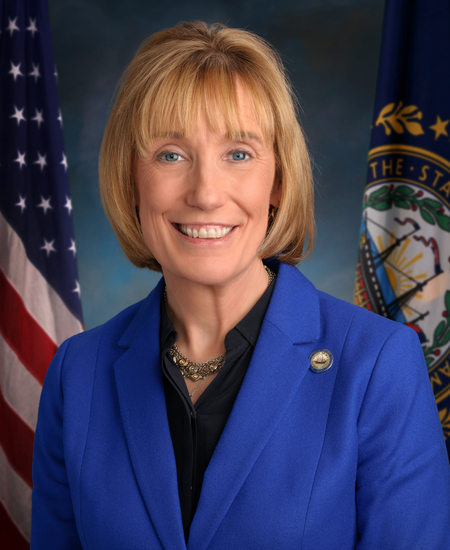
Sen. Margaret Wood Hassan
Sponsored bills
Maddy summaryThis bill requires the Department of Veterans Affairs (VA) to create a new project team within 180 days to overhaul how veterans schedule health care appointments. The team must develop a centralized system showing all available appointments across VA facilities and providers, a self-service online platform for veterans to book appointments (including referrals), and a phone-based scheduling option for veterans to book appointments directly. These changes must be completed within one year of the bill's enactment, with progress reports to Congress on costs, challenges, and metrics. The bill directly affects veterans seeking VA health care by aiming to make scheduling more efficient and accessible across all VA services.
Maddy summaryThe Closing the Contraception Coverage Gap Act requires Medicare Part B, Part C, and Part D to cover all FDA-approved contraceptive items and services at no cost-sharing starting January 1, 2027. This includes not just contraceptive methods themselves but also related clinical services like counseling, examinations, device insertion, and follow-up care. The bill ensures dual-eligible Medicare and Medicaid beneficiaries receive contraceptive coverage that matches Medicaid's comprehensiveness. It also mandates two studies on contraceptive coverage gaps, with reports to Congress within 1-2 years.
Secure Rural Schools Reauthorization Act of 2025 This act extends and modifies the Secure Rural Schools (SRS) program, under which states and counties containing certain federal land may receive payments from the Forest Service or the Bureau of Land Management (BLM) for schools, roads, and certain other municipal services. The act modifies the SRS program, including by extending payments made to states and counties containing federal land through FY2026, providing lapsed payments for FY2024 and FY2025, extending the authority of counties to initiate projects using such funds through FY2028, and extending the authority to initiate projects proposed by resource advisory committees through FY2028.
Maddy summaryThis bill reclassifies pharmacy benefit managers (PBMs) as fiduciaries under federal law, requiring them to act in the best interest of group health plans they serve. It mandates PBMs to disclose all compensation sources (including rebates and fees) and prohibits them from shielding themselves from liability for breaches of duty. The law directly affects PBMs, employers offering health plans, and health insurers that use PBM services. Key provisions include new transparency rules, clarifying that PBMs cannot be the "responsible fiduciary" for disclosure purposes, and banning contracts that exempt PBMs from accountability.
Maddy summaryThis bill requires states to cover medication-assisted treatment (MAT) for opioid use disorder under Medicaid without prior authorization or dosage limits for at least one formulation of each approved drug. It directly affects Medicaid patients with opioid use disorder and their healthcare providers, removing administrative barriers that previously required extra approvals or restricted dosing. The bill amends Medicaid law to mandate this coverage, while also requiring a federal report analyzing how current state policies (like dosing limits or counseling requirements) impact access to MAT. The changes apply starting one year after enactment, with states needing time to adjust if new state laws are required.
Maddy summaryThe Disclosing Foreign Influence in Lobbying Act amends the Lobbying Disclosure Act of 1995 to require lobbyists to disclose the names and addresses of foreign governments or political parties (other than the client) that direct, plan, supervise, or control their lobbying activities. This affects lobbyists representing clients with foreign influence, mandating new transparency in their registration filings. The bill adds a specific disclosure requirement to the existing registration process, ensuring foreign entities beyond the client are identified. This change increases public visibility into foreign involvement in U.S. lobbying efforts.
Maddy summaryThis bill modernizes how the FDA inspects facilities manufacturing biosimilar drugs (similar but not identical versions of biologic medicines) in the U.S. It requires the FDA to hold a public meeting and issue a report on expanding international inspection agreements, update inspection tools to increase remote assessments (like virtual site reviews), and develop a strategic plan within a year to address staffing and communication challenges specific to biosimilar facility inspections. The bill directly affects FDA inspectors, biosimilar drug manufacturers, and the FDA's inspection processes for domestic facilities. It focuses on improving inspection efficiency and communication without changing drug approval standards or safety requirements.
Maddy summaryThe National Strategy for School Security Act of 2025 requires the Department of Homeland Security, in coordination with the Department of Education and other federal agencies, to develop and annually update a national strategy for protecting elementary and secondary schools from terrorism. Within one year of enactment, the strategy must be submitted to specified congressional committees and updated annually until 2033, detailing existing federal security programs, funding, and identified school vulnerabilities. The strategy must outline concrete steps to address security gaps while avoiding duplication of existing efforts and building on current evaluations. This bill directs federal coordination but does not create new funding or impose direct requirements on schools.
Maddy summaryThis bill requires U.S. exporters to obtain a license before sending digital sequences of human- or AI-designed synthetic DNA or RNA to "foreign entities of concern" (such as entities tied to specific countries like China). It directly affects biotechnology companies, researchers, and academic institutions that export these digital genetic blueprints. The key mechanism is a new license requirement for exporting the digital files representing synthetic biological sequences, which are defined as binary files or digital representations of DNA/RNA molecules. This policy change aims to prevent foreign adversaries from accessing U.S. biotechnology research and intellectual property through export channels.