EAGLES Act of 2021 This bill reauthorizes the National Threat Assessment Center (NTAC) within the U.S. Secret Service. It reauthorizes the functions of NTAC through FY2025 and expands them to include the establishment of a national program on targeted school violence prevention.
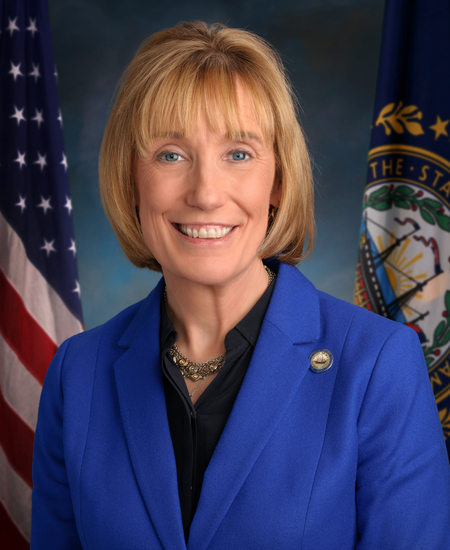
Sen. Margaret Wood Hassan
Sponsored bills
Equality Act This bill prohibits discrimination based on sex, sexual orientation, and gender identity in areas including public accommodations and facilities, education, federal funding, employment, housing, credit, and the jury system. Specifically, the bill defines and includes sex, sexual orientation, and gender identity among the prohibited categories of discrimination or segregation. The bill expands the definition of public accommodations to include places or establishments that provide (1) exhibitions, recreation, exercise, amusement, gatherings, or displays; (2) goods, services, or programs; and (3) transportation services. The bill allows the Department of Justice to intervene in equal protection actions in federal court on account of sexual orientation or gender identity. The bill prohibits an individual from being denied access to a shared facility, including a restroom, a locker room, and a dressing room, that is in accordance with the individual's gender identity.

Newborn Screening Saves Lives Reauthorization Act of 2021 This bill reauthorizes through FY2026 and revises several programs and activities relating to newborn screening for certain conditions and genetic, endocrine, and metabolic diseases. Among its changes, the bill reauthorizes and makes mandatory the Hunter Kelly Research Program at the National Institutes of Health, and national surveillance activities conducted by the Centers for Disease Control and Prevention. The bill also aligns statutory requirements for research on non-identified newborn blood spots with federal regulations governing research on human subjects. These blood spots are collected as part of newborn screening programs, and some states make them available for biomedical and public health research. Under current regulations, research on non-identified bio-specimens such as blood spots is not considered to be research on human subjects, to which additional protections apply.
COVID-19 Nursing Home Protection Act of 2021 This bill provides funds and establishes requirements for Medicare skilled nursing facilities (SNFs) and Medicaid nursing facilities (NFs) to address COVID-19 (i.e., coronavirus disease 2019). Specifically, the bill provides FY2021 funding for COVID-19 strike teams that can be deployed to these facilities to help with vaccinations, clinical care, infection control, or staffing. The amounts provided by the bill are designated as an emergency requirement pursuant to the Statutory Pay-As-You-Go Act of 2010 (PAYGO) and the Senate PAYGO rule. (This excludes the budget effects from being counted for the purposes of enforcing the PAYGO rules.) In addition, the bill requires the Centers for Medicare & Medicaid Services (CMS) to ensure that, during the public health emergency relating to COVID-19, at least one of its contracts with Medicare quality improvement organizations requires that the organization assist SNFs with COVID-19 infection control (e.g., training materials). Finally, the bill provides statutory authority for the requirement that SNFs and NFs report data regarding COVID-19 preparedness, testing, infections, and deaths. Additionally, the CMS must publish on the Nursing Home Compare website certain demographic information, aggregated by state, with respect to COVID-19 infections and deaths in such facilities.
Seniors Fraud Prevention Act of 20 21 This bill directs the Federal Trade Commission (FTC) to establish an office within the Bureau of Consumer Protection to advise the FTC on preventing fraud targeting seniors and to assist the FTC in monitoring the market for mail, television, internet, telemarketing, and recorded message telephone call (robocall) fraud targeting seniors. The office must (1) disseminate to seniors and their families and caregivers information about the most common fraud schemes, including methods of reporting complaints either to the FTC's national toll-free telephone number or to the FTC's Consumer Sentinel Network, where complaints become immediately available to the Federal Bureau of Investigation, state attorneys general, and other appropriate law enforcement agencies; (2) provide, in response to a specific request about a particular entity or individual, publicly available information regarding the FTC's enforcement action; and (3) maintain a website as a resource for information on fraud targeting seniors.
Officer Eugene Goodman Congressional Gold Medal Act This bill directs the Speaker of the House of Representatives and the President pro tempore of the Senate to arrange for the presentation of a Congressional Gold Medal to U.S. Capitol Police Officer Eugene Goodman for his actions to protect the Senate chamber during the security breach at the U.S. Capitol on January 6, 2021.
This resolution recognizes Black History Month as an opportunity to reflect on U.S. history and to commemorate the contributions of African Americans. It calls for the United States to (1) honor the contribution of pioneers who helped to ensure its legacy; and (2) move forward as a nation "indivisible, with liberty and justice for all."
Child and Dependent Care Tax Credit Enhancement Act of 2021 This bill modifies the tax credit for employment-related expenses incurred for the care of a taxpayer's dependent to (1) increase to $400,000, the adjusted gross income threshold level above which the credit is incrementally reduced; (2) increase the dollar limits on the allowable amount of the credit; (3) specify rules for married couples filing separate returns; (4) allow an inflation adjustment to the adjusted gross income threshold and the maximum credit amounts, beginning after 2022; and (5) make the credit refundable.
Family and Medical Insurance Leave Act or the FAMILY Act This bill entitles every employee to a family and medical leave insurance (FMLI) monthly benefit payment of two-thirds of the employee's regular pay, limited to a maximum of $4,000, for not more than 60 days of qualified caregiving. The bill establishes the Office of Paid Family and Medical Leave within the Social Security Administration to administer the FMLI program. An FMLI benefit payment must be coordinated with any periodic benefits received under a state or local temporary disability insurance or family leave program. The bill imposes a tax on employers, employees, and self-employed individuals to fund FMLI benefits. It also establishes the Federal Family and Medical Leave Insurance Trust Fund to hold tax revenues.
Emergency Family Stabilization Act This bill establishes a competitive grant program within the Administration for Children and Families (ACF) for family stabilization agencies to provide emergency relief to children, youth, and families experiencing homelessness. These agencies include current ACF grantees or subgrantees, Indian tribes, tribal organizations, Native Hawaiian organizations, and other organizations with expertise providing direct services to those experiencing homelessness. Recipients may use grant funds for, among other purposes, personnel costs, personal protective equipment, and other supplies to mitigate the spread of COVID-19 (i.e., coronavirus disease 2019), as well as payments for security deposits and other housing-related needs. Additionally, the ACF must award the grants based on factors including the need for the services in the area served by the agency and specified allocation and prioritization requirements.