

Pell Grant Preservation and Expansion Act of 2021 This bill makes various changes to the Federal Pell Grant program, including by expanding student eligibility for Pell Grants. The bill also revises student eligibility for federal student-aid programs. Specifically, the bill provides funding to increase the maximum Pell Grant award for each eligible student. Further, the bill requires the award amount to be adjusted for inflation. Next, the bill allows students who receive means-tested federal benefits (e.g., Medicaid) to automatically qualify for the maximum Pell Grant award plus an additional award amount. In addition, the bill moves the Iraq and Afghanistan Service Grant program into the Pell Grant program. Next, the bill raises from 12 to 18 the total number of semesters during which a student may receive a Pell Grant. The bill makes Dreamer students (i.e., students who have been granted Deferred Action for Childhood Arrivals status) who entered the United States before the age of 18 and who meet certain educational criteria eligible for federal financial aid. The bill also revises satisfactory academic progress requirements for federal student-aid programs, including by allowing a student who has not been enrolled in an institution of higher education for two years to regain eligibility for federal student aid.
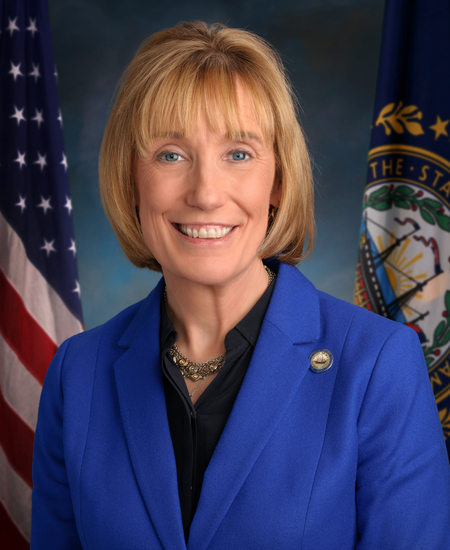
Sen. Margaret Wood Hassan
Sponsored bills
Restaurant Revitalization Fund Replenishment Act of 2021 This bill provides an additional $60 billion in FY2021 for the Restaurant Revitalization Fund, which was established to support restaurants and other food and beverage purveyors in response to COVID-19.
This resolution designates June 19, 2021, as Juneteenth Independence Day to commemorate the end of slavery in the United States.
This resolution condemns the recent rise in anti-Semitic violence and harassment targeting Jewish Americans. The resolution (1) recommits to combating anti-Semitism in all forms; and (2) calls on elected officials, faith leaders, and civil society leaders to denounce and combat all manifestations of anti-Semitism. The resolution urges the President to continue the leadership role of the United States in combating anti-Semitism internationally, advance accurate Holocaust education and counter Holocaust denial and distortion, ensure the physical security of Jewish institutions and organizations, and produce an analysis that accounts for the level and scope of the threat that anti-Semitism poses to the people of the United States. The resolution urges law enforcement agencies to fully participate in the data collection process of the Federal Bureau of Investigation to improve anti-Semitic hate crime data collection.
No PFAS in Cosmetics Act This bill requires the Department of Health and Human Services to issue and finalize a rule to ban the use of intentionally added perfluoroalkyl or polyfluoroalkyl substances in cosmetics.
COVID-19 Vaccine Developers Gold Medal Act This bill provides for the award of a Congressional Gold Medal to recognize all those whose efforts led to the development of COVID-19 vaccines that received emergency use authorizations.
Protecting Access to Ground Ambulance Medical Services Act of 2021 This bill modifies Medicare payment of ground ambulance services in rural areas. Specifically, the bill extends the specialized rate increase for such services for an additional five years (until January 1, 2028). The bill also requires the Centers for Medicare & Medicaid Services to (1) allow an area that has 1,000 or fewer individuals per square mile to retain its status as a rural area even if it would otherwise no longer qualify, and (2) establish an appeals process for providers to seek reconsideration of a change in an area's status.
Afghan Allies Protection Act of 2021 This bill modifies a program providing special immigrant visas to eligible citizens or nationals of Afghanistan who assisted U.S. efforts there and addresses related issues. The bill extends the program through 2023 and increases the number of visas available. An individual may become eligible for a visa after assisting U.S. efforts in Afghanistan for one year, whereas currently some individuals must have served for two years. Furthermore, for an applicant qualifying for a visa by performing duties with a NATO mission in Afghanistan, the bill eliminates a requirement that the duties performed qualify as sensitive and trusted duties. The bill removes a requirement that the individual has experienced or is facing an ongoing serious threat due to their assistance to the United States or NATO. The Department of State or the Department of Homeland Security may postpone the program's medical examination requirement. An individual who received a postponement must undergo a medical exam within 90 days of admission into the United States. The bill also expands surviving family member benefits for the Afghanistan program (and a similar program for Iraq) to a surviving spouse or child of an individual who submitted an application to the Chief of Mission that would have been approved but for the individual's death. Currently, such survivor benefits only apply if the deceased individual's petition was approved.
This bill revises requirements for the tax exclusion for contributions to the capital of a corporation. Specifically, the bill allows an exclusion for certain amounts received by a regulated public utility that provides water or sewerage disposal services.
Smart Intersections Act of 2021 This bill requires the Department of Transportation to award grants for improving the functioning of traffic signals through active management of traffic signal operations. State, tribal, and local government entities are eligible for these grants. Additionally, the Government Accountability Office must study the potential for reducing greenhouse gas emissions by improving the efficiency of traffic systems.