

Access Technology Affordability Act of 2021 This bill allows a refundable tax credit equal to the amounts paid for qualified access technology for use by a blind individual who is the taxpayer, the taxpayer's spouse, or a dependent of the taxpayer. Qualified access technology is hardware, software, or other information technology with the primary function of converting or adapting information that is visually represented into forms or formats useable by blind individuals. The credit is limited to (1) costs that are not compensated by insurance or otherwise, and (2) an aggregate amount of $2,000 per blind individual in any period of three consecutive taxable years. The credit must be adjusted for inflation after 2022 and terminates after 2026.
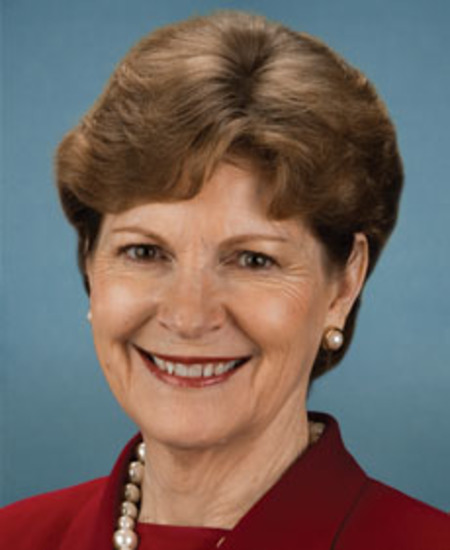
Sen. Jeanne Shaheen
Sponsored bills
Supporting Eating Disorders Recovery Through Vital Expansion Act or the SERVE Act This bill provides for inpatient and outpatient treatment of eating disorders under TRICARE for dependents of members of the uniformed services. Dependents are eligible for such care regardless of their age, except with respect to residential service. The bill also requires the Department of Defense (DOD) and the Department of Homeland Security (with respect to the Coast Guard) to identify, treat, and rehabilitate members of the armed forces who have an eating disorder. Finally, DOD and the Department of Veterans Affairs must jointly develop, publish, and disseminate clinical practice criteria and guidelines on the identification and treatment of eating disorders.
Ethan's Law This bill establishes a framework to regulate the storage of firearms on residential premises at the federal, state, and tribal levels. At the federal level, the bill establishes statutory requirements for firearms on residential premises to be safely stored if a minor is likely to gain access without permission or if a resident is ineligible to possess a firearm. An individual who violates the requirements is subject to criminal penalties. A firearm stored in violation of the requirements is subject to seizure and forfeiture. At the state and tribal levels, the bill requires the Department of Justice to award grants to implement functionally identical requirements for the safe storage of firearms.
COVID HCBS Relief Act of 2021 This bill temporarily increases the applicable Federal Medical Assistance Percentage (i.e., federal matching rate) under Medicaid for certain approved home- and community-based services that are provided between October 1, 2020, and September 30, 2022. As a condition for receiving the increased rate, a state must agree to undertake activities to improve the delivery of such services during and after the public health emergency relating to COVID-19 (i.e., coronavirus disease 2019), such as by providing additional benefits to home health workers and by helping individuals who were relocated to nursing facilities during the emergency move back to their homes.
End Taxpayer Subsidies for Drug Ads Act This bill prohibits a tax deduction for expenses relating to direct-to-consumer advertising of prescription drugs. Direct-to-consumer advertising is any dissemination, by or on behalf of a sponsor of a prescription drug product, of an advertisement that is in regard to the drug product and primarily targeted to the general public.
Reopen and Rebuild America's Schools Act of 2021 This bill provides support for long-term improvements to public elementary and secondary school facilities. First, the bill sets forth allocations to states and establishes a need-based grant program for local educational agencies (LEAs) to improve school facilities. Further, the bill specifies allowable uses of grant funds, including carrying out major repairs, improving indoor air quality, and making facilities accessible to disabled individuals. Additionally, the bill requires LEAs that receive funds for new construction, modernization, or renovation projects to comply with hazard-resistance building codes and performance criteria under the WaterSense program of the Environmental Protection Agency. Further, the bill requires LEAs to adopt certain green practices (environmental standards) and requires the use of iron, steel, and manufactured products that are made in the United States (Buy America). The bill restores school infrastructure tax credit bonds. The bill also sets forth reporting requirements, including annual reports on grant program projects and a report by the Government Accountability Office that requires a study of the geographic distribution of projects, the impact of projects on student and staff health and safety, and the accessibility of projects to high-poverty schools. Next, the bill extends through FY2026 the Impact Aid Construction program. Finally, the bill establishes a grant program to assist LEAs with repairing or replacing concrete foundations affected by pyrrhotite (an iron sulfide material linked to crumbling foundations).
Neighborhood Homes Investment Act This bill establishes a new business-related tax credit to finance home building and rehabilitation in neighborhoods that meet certain eligibility criteria relating to poverty rates, income, and home values. The credit is limited to 35% of the lesser of the qualified development cost (i.e., the cost of construction, substantial rehabilitation, demolition, and environmental remediation of residential properties) or 80% of the national median sale price for new homes. The credit applies to single family homes containing four or fewer residential units, condominiums, or houses or apartments owned by cooperative housing corporations.
Child Care Workforce and Facilities Act of 2021 This bill requires the Department of Health and Human Services to provide states and tribal entities with grants to increase access to licensed child care services. The grants may be used to develop and expand the child care workforce or child care facilities in locations with insufficient available child care. Specifically, grants cover 50% of the cost of programs to support the education and training of caregivers or projects to build, expand, or renovate child care facilities in these areas.
Build America's Libraries Act This bill establishes and provides funds through FY2024 for the Build America's Libraries Fund, from which the Institute of Museum and Library Services (IMLS) must allocate funding to states and, through them, need-based grants to libraries to make long-term improvements to library facilities. The IMLS must also award grants to Indian tribes and organizations that primarily serve and represent Native Hawaiians. Specifically, the bill requires each state that receives an allocation, and each library that receives a grant, to carry out certain activities to improve library facilities. These activities include constructing and renovating library facilities, investing in infrastructure projects to improve internet access and connectivity, improving indoor air quality, and making facilities accessible to individuals with disabilities. The bill also outlines administrative and oversight provisions, including by requiring library projects to use iron and steel products that are produced in the United States.
Primary Care Enhancement Act of 2021 This bill allows a medical expense tax deduction for direct primary care service arrangements and provides that participation in such arrangements does not disqualify patients from making tax deductible contributions to health savings accounts.