

Maddy summaryS 4958 requires the Department of Housing and Urban Development (HUD) and the Department of Agriculture (USDA) to withdraw a specific federal energy efficiency standard for new housing financed by these agencies (89 Fed. Reg. 33112). The bill mandates that these agencies revert to the previous energy efficiency standards and prohibits them from using federal funds to implement or enforce this withdrawn standard or any substantially similar rule. It also extends this prohibition to the Department of Veterans Affairs and the Federal Housing Finance Agency (FHFA), preventing them from finalizing or enforcing similar energy efficiency standards for housing. This bill directly affects federal housing programs and agencies that set energy efficiency requirements for new construction.
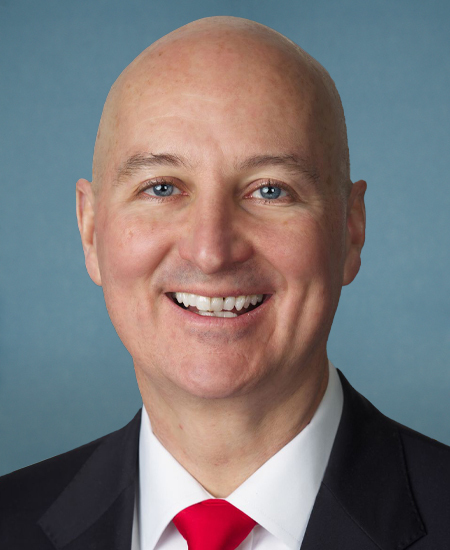
Sen. Pete Ricketts
Sponsored bills
Maddy summaryThe Freedom from Unfair Gun Taxes Act (S 4960) prohibits states and local governments from imposing excise taxes on the sale of firearms, ammunition, or firearm parts when the transaction occurs in interstate or foreign commerce. This directly affects state tax policies and firearm manufacturers or dealers conducting sales across state lines. The bill explicitly states it does not alter the federal Pittman-Robertson Wildlife Restoration Act tax, which remains unchanged. Its key mechanism bans state-level excise taxes for these items in interstate commerce, preventing potential tax barriers for cross-state firearm transactions.
Maddy summaryThis bill reauthorizes the Child Care and Development Block Grant program through fiscal year 2029, providing federal funding to help low-income working families access quality child care. It requires states to develop plans with input from parents, providers, and employers, and establishes new requirements for payment rates that reflect actual costs of child care services. The bill creates a new "Child Care Supply and Facilities Grants" program to help expand child care capacity, particularly in underserved areas, and provides grants for facility renovations and expansions. It also establishes a sliding fee scale for families receiving assistance and includes new provisions to support child care provider recruitment, training, and retention. The bill directly affects low-income working parents, their children, and child care providers across all 50 states.
Maddy summaryThis bill adds Czechia to the list of countries eligible for E-1 business visas under U.S. immigration law, but only if Czechia grants similar visa status to U.S. citizens. It directly affects Czech nationals seeking U.S. E-1 visas and U.S. citizens traveling to Czechia for business. The key provision requires reciprocal treatment: Czechia must provide equivalent nonimmigrant status to U.S. nationals for this change to take effect. The bill modifies existing law without creating new visa categories, solely adjusting eligibility based on bilateral reciprocity.
Maddy summarySJRES 104 is a joint resolution seeking congressional disapproval of a National Highway Traffic Safety Administration (NHTSA) rule that established new fuel efficiency standards for passenger cars (for model years 2027 and beyond) and heavy-duty trucks (for model years 2030 and beyond). The rule, published in the Federal Register on June 24, 2024, would have required automakers to meet stricter emissions targets. If passed, the resolution would block the rule from taking effect, preserving current fuel economy standards. Introduced by multiple senators on July 30, 2024, it follows the congressional review process under Title 5, U.S. Code.
Maddy summaryS 4832, "Lulu’s Law," requires the Federal Communications Commission (FCC) to amend regulations within 60 days of enactment to allow wireless emergency alerts about shark attacks. This change would directly affect residents and visitors in coastal areas where shark attacks are possible, enabling emergency alerts to be sent via phone. The bill’s key mechanism is updating FCC rules to explicitly include shark attacks as a category for emergency alerts under existing wireless notification systems.
Maddy summaryThe FREE Act requires federal agencies to evaluate their permitting systems and transition eligible ones to a "permit by rule" process, where applicants certify compliance with written standards instead of undergoing lengthy reviews. Under this system, permits are automatically granted after 30 days unless the agency issues a written denial with specific reasons, and agencies retain authority to audit compliance afterward. Applicants can appeal denials in federal court, where they may defend a reasonable interpretation of the standards without bearing attorney fees if they win. The bill prohibits agencies from entering settlements that avoid enforcing these new permitting rules, aiming to reduce delays and costs for both government and permit seekers.
Maddy summaryThis bill requires the U.S. President to impose sanctions on foreign individuals and entities that support the Palestinian Authority and Palestine Liberation Organization's system of paying terrorists and their families, which the bill states incentivizes terrorism. Sanctions include blocking U.S. property, denying visas, and restricting financial transactions with officials, organizations (like the Commission of Prisoners), or financial institutions facilitating these payments. The President must act within 90 days of enactment, and sanctions remain in effect until the Secretary of State certifies the payments have ceased. The bill builds on the 2018 Taylor Force Act, which previously tied U.S. aid to ending such payments.
Maddy summaryS 4770 prohibits federal agencies from entering contracts with companies that boycott Israel after January 1, 2024. It requires companies bidding on contracts over $100,000 for services or information technology to certify they are not boycotting Israel, and mandates that contracts include a prohibition on boycotts during their term. If a company violates this, agencies must notify them within 30 days and terminate the contract 30 days later unless the boycott ends. This directly affects businesses with federal contracts exceeding $100,000 for services or IT, with no impact on individual contractors or smaller contracts.
Maddy summaryThis joint resolution (SJRES 103) seeks to block a Federal Communications Commission (FCC) rule titled "Safeguarding and Securing the Open Internet; Restoring Internet Freedom" that was published in May 2024. It uses a specific congressional process under Title 5, U.S. Code, to formally disapprove the FCC rule, which would make the rule legally ineffective. The resolution directly affects the FCC’s regulatory authority over internet service providers and the implementation of net neutrality standards. If passed, it would prevent the FCC’s rule from taking effect, reverting to prior regulatory approaches for internet service. This is a procedural disapproval measure, not a new law.