

Maddy summaryThe STRATEGIC Act of 2024 establishes a comprehensive framework to counter the People's Republic of China's influence through expanded regulations, sanctions, and oversight measures. The bill directly affects U.S. institutions by prohibiting gifts and contracts from certain Chinese entities, requiring think tanks to disclose foreign funding, and restricting visa issuance for senior Chinese officials. Key mechanisms include amendments to the Foreign Agents Registration Act to strengthen enforcement, creation of new funds to counter Chinese influence, and requirements for reporting on climate cooperation and military installations. The legislation also establishes new oversight for science and technology agreements with China, creates a special envoy office for critical technologies, and implements sanctions against entities involved in South China Sea activities and intellectual property theft.
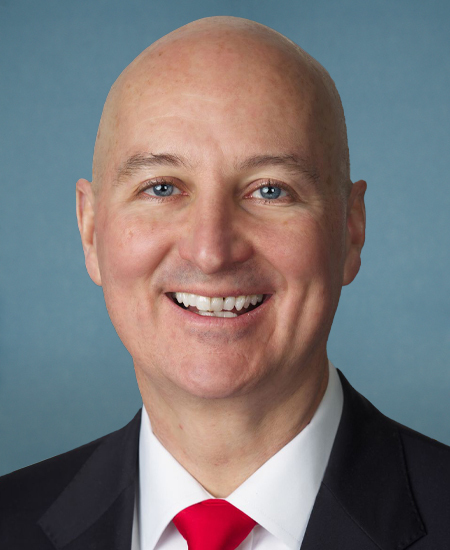
Sen. Pete Ricketts
Sponsored bills
Maddy summaryS 3187, the Southern Border Transparency Act of 2023, requires U.S. Customs and Border Protection (CBP) and the Department of Homeland Security (DHS) to publish detailed immigration data monthly and quarterly. It mandates CBP to post on its website the number of people granted parole at ports of entry, broken down by nationality, age group (like minors or families), and location. DHS must submit quarterly reports to Congress and post them online, detailing apprehensions, processing outcomes (such as parole, removal, or asylum screenings), and demographic breakdowns along the southern border. The bill also updates annual reporting requirements to track parolees' status, including employment authorization and whether their parole ended or was extended. These requirements directly affect CBP and DHS operations, aiming to increase public and congressional transparency about border processing.
Maddy summaryS 5074, the PRO Veterans Act of 2024, requires the Department of Veterans Affairs (VA) to provide quarterly briefings to Congress about its budget and any shortfalls for three years after enactment. It prohibits bonuses for senior VA and Office of Management and Budget employees during fiscal years when the VA requests additional funding outside standard budget processes, aiming to prevent spending during budget gaps. The bill also mandates a report to Congress detailing all VA positions created since October 2022, including job descriptions, pay, bonuses, and remote work policies. These provisions apply directly to VA and OMB senior leadership and end after three years.
Maddy summaryThis resolution (SRES 816) commemorates the 73rd anniversary of the U.S.-Philippines Mutual Defense Treaty, signed on August 30, 1951. It symbolically affirms the U.S. commitment to the Philippines' security alliance amid recent Chinese aggression in the South China Sea, including incidents like the August 2024 ramming of Philippine vessels. The resolution condemns China's "persistent and unprovoked aggression," reaffirms the treaty's relevance to attacks on Philippine military assets, and urges stronger U.S. support for Philippine defense. As a non-binding resolution, it does not create new policy but publicly reinforces the existing security partnership.
Maddy summaryThis bill repeals key provisions of the Clean Air Act that allow California to set its own vehicle emission standards and grants other states the ability to adopt those standards. It directly affects California's authority to enforce its stricter emissions rules for vehicles and prevents other states from using California's standards as a federal baseline. The bill eliminates all existing federal waivers for California's standards and blocks future applications for such waivers, effectively ending the federal approval process for California's vehicle regulations. This would remove the legal basis for California's unique vehicle emission standards to apply nationwide.
Maddy summaryThe Protecting American Agriculture from Foreign Adversaries Act of 2024 requires the Secretary of Agriculture to join the Committee on Foreign Investment in the United States (CFIUS) when reviewing transactions involving U.S. agricultural land, biotechnology, or agricultural industry sectors (including transportation, storage, and processing) with foreign entities from China, North Korea, Russia, or Iran. It mandates that the Secretary of Agriculture notify CFIUS about transactions where a foreign person from one of these "covered countries" is acquiring agricultural land, and CFIUS must then determine whether to initiate a review. This applies only to transactions already reportable under the 1978 Agricultural Foreign Investment Disclosure Act and expires for any covered country once it is removed from the official list of foreign adversaries. The law directly affects foreign investors from specified countries seeking to purchase U.S. agricultural assets and the federal review process for such transactions.
Maddy summarySRES 795 is a Senate resolution expressing strong disapproval of the Department of Education's delayed implementation of the FAFSA Simplification Act for the 2024-2025 academic year. The resolution cites specific issues, including the FAFSA application launching on December 31 (instead of the usual October 1), delayed data transmission to colleges until March, and resulting financial aid delays past National College Decision Day on May 1. This directly affected students - particularly those in foster care or experiencing homelessness - by reducing their time to compare college financial options. The resolution calls on the Department to address rollout problems for future cycles and testify to Congress, but it does not create new policy or funding changes.
Maddy summarySRES 800 is a symbolic Senate resolution introduced on August 1, 2024, by a bipartisan group of senators. It condemns the July 13, 2024, attempted assassination of Donald J. Trump at a Butler, Pennsylvania, rally and honors three individuals affected: Corey D. Comperatore (who died shielding his family), David Dutch (critically injured), and James Copenhaver (critically injured). The resolution calls for national unity and civility following the violent incident. As a non-binding resolution, it does not create new laws or policies but expresses the Senate's stance on the event.
Maddy summaryThe Renewable Chemicals Act of 2024 creates tax credits for U.S. manufacturers producing certified renewable chemicals and building related facilities. It provides a 15% production credit on sales of chemicals meeting strict criteria (95% biobased content, made from U.S. renewable biomass, not used for food/fuel, and USDA-certified), plus a 30% investment credit for facility construction. Credits are capped at $500 million nationally and $25 million per company, with allocations prioritizing job creation, reduced fossil fuel dependence, and lifecycle emissions reductions. The credits expire after five years and require specific certifications under USDA and IRS rules.
Maddy summaryThis bill temporarily halts U.S. funding for the World Health Organization (WHO) until the Senate approves any new international pandemic treaty. It prohibits the U.S. from joining or funding any WHO pandemic agreement unless it first receives Senate ratification as a treaty. The funding freeze begins when such an agreement is signed and ends only after the Senate approves the treaty. This directly affects WHO funding and the process for international pandemic cooperation.