

Maddy summaryS 199 would create special tax rules for "qualified residents of Taiwan" with income from U.S. sources. It would lower tax rates on interest, dividends, and royalties from 30% to 10% (15% for some dividends), provide tax relief for certain wages paid to Taiwan residents working in the U.S., and exempt income from entertainment or athletic activities up to $30,000. The bill establishes specific requirements for entities to qualify for these benefits, including ownership and income criteria. It also creates a process for the U.S. to negotiate a formal tax agreement with Taiwan to further address double taxation concerns.
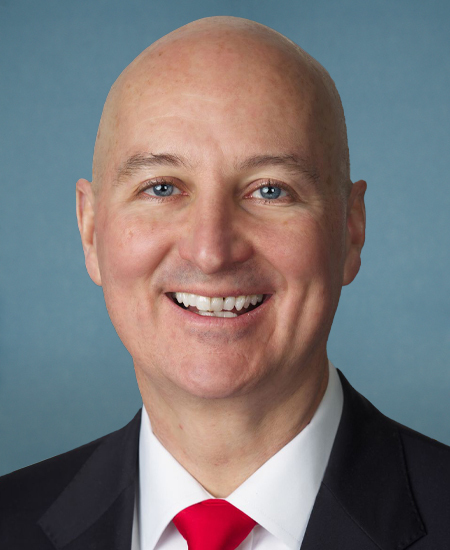
Sen. Pete Ricketts
Sponsored bills
Protecting Individuals with Down Syndrome Act This bill creates new federal crimes related to the performance of an abortion on an unborn child who has Down syndrome. It subjects a violator to criminal penalties—a fine, a prison term of up to five years, or both. It also authorizes civil remedies, including damages and injunctive relief. A woman who undergoes such an abortion may not be prosecuted or held civilly liable.
Maddy summaryThe Restoring Trade Fairness Act would suspend normal trade relations (NTR) status with China, requiring the U.S. to apply significantly higher tariffs to Chinese goods. It establishes minimum duty rates of 35% for most Chinese products (with a 100% minimum for specific items listed in Section 10), with these increases phased in over five years. The bill also creates a trust fund to compensate U.S. producers for losses resulting from Chinese retaliation against U.S. trade measures. These changes aim to address what Congress views as China's failure to comply with its WTO obligations and its "unfair trade practices" that have allegedly harmed U.S. manufacturing.
Maddy summaryThis bill allows ranchers with grazing permits or leases to temporarily use vacant public grazing land when their usual land becomes unusable due to disasters like droughts, wildfires, or extreme weather. The Secretary of Agriculture or Interior can make this temporary access available, subject to conditions ensuring it doesn’t alter the rancher’s original grazing rights or future allocations. Key provisions require the Secretary to consider ecological conditions, coordinate across agencies, and establish guidelines within one year to streamline this process. The temporary use is limited to the duration needed for the original land to recover, and it does not affect the rancher’s permanent access or terms to their original allotment.
Maddy summaryS 213, the Main Street Tax Certainty Act, makes the qualified business income deduction permanent for small business owners. It directly affects pass-through business owners (like sole proprietors and small partnerships) who currently benefit from this tax break. The bill removes the temporary expiration of Section 199A of the tax code, providing long-term certainty for these taxpayers by ensuring they can continue deducting up to 20% of their qualified business income.
Maddy summaryThe FREE Act (S 238) changes how federal agencies issue permits by replacing discretionary, lengthy reviews with a "permitting by rule" system. Agencies must first report on all permit types, then establish clear written standards applicants certify they meet - eliminating detailed agency reviews for qualifying permits. If applicants meet all standards, permits auto-approve after 180 days unless the agency disapproves with specific reasons. This directly affects federal agencies (like the EPA or Corps of Engineers) and permit applicants (e.g., businesses, developers), shifting oversight to post-approval audits instead of pre-approval gatekeeping.
Maddy summarySRES 30 is a ceremonial Senate resolution honoring Mississippi's Gestational Age Act, introduced by Senator Cindy Hyde-Smith and others on January 22, 2025. It expresses gratitude to Mississippi State Representative Becky Currie for introducing the 2018 law that banned abortions after 15 weeks gestation, which later became central to the Supreme Court's 2022 *Dobbs v. Jackson Women's Health* decision overturning *Roe v. Wade*. The resolution does not create new laws or alter abortion access but formally recognizes Mississippi's role in the legal shift. It is purely symbolic, with no policy impact, and acknowledges the state law as a catalyst for the Supreme Court's ruling.
Maddy summaryThe FARM Act (S 179) amends the Defense Production Act to require the Committee on Foreign Investment in the United States (CFIUS) to review foreign investments in U.S. agricultural businesses and supply chains. It explicitly adds agricultural supply chains to the definitions of "critical infrastructure" and "critical technologies," expanding CFIUS oversight to include transactions that could result in foreign control of U.S. agriculture operations. The bill mandates a report within one year to Congress analyzing foreign investments in U.S. agriculture, potential threats to supply chains, and espionage risks targeting agricultural research or data. This law directly affects U.S. agricultural businesses and foreign entities seeking to acquire or invest in U.S. agricultural assets.
Maddy summaryS 181 requires most federal agencies to submit zero-based budgets every six years, analyzing current operations, exploring alternatives, and ranking programs by importance. These budgets must cover the next fiscal year and the following four years, submitted to the Office of Management and Budget and congressional budget committees. Agencies (excluding Defense and the National Nuclear Security Administration) must also recommend specific program cuts totaling at least a 2% reduction in non-defense discretionary spending from the prior year. The bill directly affects how federal agencies plan and justify their funding, aiming to improve budget efficiency through systematic review.
Maddy summaryThis bill prohibits federal funds from being used for abortions or health plans covering abortion. It amends the Affordable Care Act to block premium tax credits and cost-sharing reductions for health plans that include abortion coverage (except for rape/incest cases or life-threatening conditions), and requires clear disclosure of abortion coverage and related surcharges in plan materials. The law explicitly exempts abortions performed due to rape, incest, or to preserve a mother's life, and allows separate abortion coverage using non-federal funds. It applies to all federal health programs and ACA marketplace plans, effective for plan years beginning after 2025.