Maddy summaryThis bill (S 345, the SHUSH Act) removes federal barriers to state regulation of firearm silencers. It preempts state laws that impose taxes, registration, or recordkeeping requirements on silencers, meaning states cannot enforce such rules. The bill also amends tax code to treat silencers like firearms for registration purposes and excludes silencers from federal consumer safety regulations. It directly affects silencer manufacturers, sellers, and users by preventing federal interference with state-level rules governing these devices. The key change is making state laws the sole regulatory framework for silencers, not federal requirements.
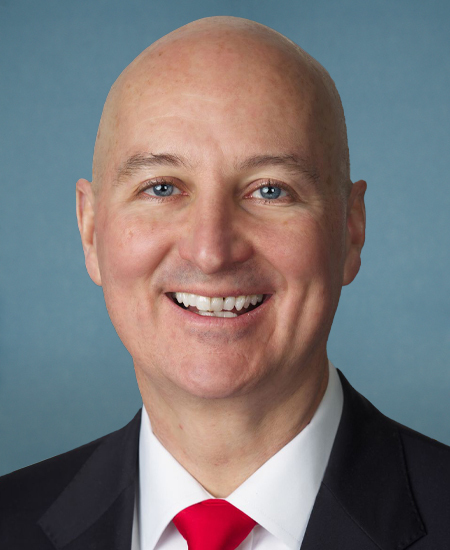
Sen. Pete Ricketts
Sponsored bills
Maddy summaryThis bill establishes tax credits for individuals and corporations who contribute to scholarship granting organizations that provide educational scholarships for eligible students. The individual tax credit is limited to 10% of adjusted gross income or $5,000, while corporate credits are capped at 5% of taxable income. The bill defines "eligible students" as those from households with income not exceeding 300% of the area median gross income, and specifies that scholarships can cover tuition, materials, tutoring, and educational therapies. The bill includes a $10 billion annual cap on tax credits, with a first-come, first-served allocation system, and requires scholarship organizations to meet specific financial and operational standards.
Maddy summaryS 304, the Birthright Citizenship Act of 2025, would amend U.S. immigration law to redefine who qualifies for automatic U.S. citizenship at birth under the 14th Amendment. It specifies that a child born in the U.S. gains citizenship only if one parent is a U.S. citizen, a lawful permanent resident living in the U.S., or a military service member in active duty. This change would exclude children born to undocumented immigrants from automatic birthright citizenship under this definition. The bill explicitly states it would not affect citizenship status for anyone born before its enactment date. The legislation focuses on clarifying the "subject to the jurisdiction" requirement in existing law, not creating new citizenship categories.
Maddy summaryThis bill, S 317 (Charitable Act), creates a new federal income tax deduction for charitable contributions for individuals who do not itemize deductions (the majority of taxpayers). It allows these taxpayers to deduct up to one-third of their standard deduction amount for charitable gifts in 2026 and 2027. The bill also eliminates penalties related to charitable deduction errors under tax code sections 6662 and 6664. The changes apply to tax returns filed for 2026 and 2027 tax years.
Laken Riley Act This act requires the Department of Homeland Security (DHS) to detain certain non-U.S. nationals ( aliens under federal law) who have been arrested for burglary, theft, larceny, shoplifting, assault of a law enforcement officer, or any crime that results in death or serious bodily injury to another person. The act also authorizes states to sue the federal government for decisions or alleged failures related to immigration enforcement. Under this act, DHS must detain an individual who (1) is unlawfully present in the United States or did not possess the necessary documents when applying for admission; and (2) has been charged with, arrested for, convicted of, or admits to having committed acts that constitute the essential elements of the above crimes. The act also authorizes state governments to sue for injunctive relief over certain immigration-related decisions or alleged failures by the federal government if the decision or failure caused the state or its residents harm, including financial harm of more than $100. Specifically, the state government may sue the federal government over a decision to release a non-U.S. national from custody; failure to fulfill requirements relating to inspecting individuals seeking admission into the United States, including requirements related to asylum interviews; failure to fulfill a requirement to stop issuing visas to nationals of a country that unreasonably denies or delays acceptance of nationals of that country; violation of limitations on immigration parole, such as the requirement that parole be granted only on a case-by-case basis; or failure to detain an individual who has been ordered removed from the United States.

Maddy summaryS 271, the "Stop Illegal Reentry Act," increases penalties for immigrants who re-enter the U.S. after being denied entry, deported, or removed without authorization. It directly affects individuals previously removed or excluded from the U.S. who return without prior consent from the Secretary of Homeland Security. Key provisions include raising maximum prison terms to 10 years for re-entry after prior removals linked to drug crimes, violent offenses, or multiple removals, and mandating a minimum 5-year sentence for those convicted twice of re-entry or of serious crimes before removal. The bill also clarifies that "removal" includes agreements made during criminal trials, expanding the scope of affected individuals.
Maddy summaryThis concurrent resolution expresses Congress's sense that tax-exempt fraternal benefit societies - organizations providing life, health, and accident benefits to members - have historically and continue to deliver significant community benefits through charitable programs, volunteer efforts, and mutual aid. It highlights their role in addressing unmet community needs, supporting financial security for members, and contributing an estimated $3.8 billion annually in social value. The resolution affirms that their tax-exempt status under section 501(c)(8) of the Internal Revenue Code is essential to sustaining these services. As a procedural resolution, it does not create new law but formally recognizes these societies' contributions.
Maddy summaryThis bill requires abortion providers to obtain patient consent for disposal of fetal tissue after an abortion, offering options to take the tissue or have the provider arrange interment or cremation within 7 days. It mandates providers to document consent, report annual abortion statistics and disposal methods to the Health Secretary, and face penalties including up to $50,000 fines or 5 years in prison for violations. The law directly affects abortion providers (clinics and doctors) and patients undergoing abortions, with no change to abortion access itself. Key provisions include standardized consent forms, disposal requirements aligned with state laws for human remains, and annual federal reporting on abortion procedures and tissue disposal.
Protecting Life in Foreign Assistance Act This bill prohibits the provision of funding for purposes outside the United States to certain foreign or domestic organizations that perform or promote abortions, furnish or develop items intended to procure abortions, or provide financial support for an entity that conducts such activities.
Maddy summaryThis Senate resolution (SRES 31) calls on Panama's government to end Chinese influence at key Panamanian ports, specifically demanding the termination of Chinese management at Balboa and Cristobal ports and the expulsion of Chinese officials from these facilities. It urges Panama to reaffirm the Panama Canal's neutrality under the 1977 Neutrality Treaty and reduce reliance on Chinese-affiliated entities. The resolution also directs the U.S. government to support Panama in transitioning away from Chinese infrastructure partnerships and to develop U.S.-led alternatives for canal operations. The resolution is non-binding but seeks to align Panama's infrastructure management with U.S. security interests and democratic values.