

Maddy summaryS 2911, the "Protecting the Right To Keep and Bear Arms Act of 2023," prevents federal officials from using emergency declarations to impose gun control. It bans the President from declaring emergencies under the National Emergencies Act or the Stafford Act for gun control purposes, and stops the Health and Human Services Secretary from declaring public health emergencies for the same reason. The bill also amends the Stafford Act to explicitly prohibit emergency declarations that would restrict firearm possession, sale, or transfer of firearms, ammunition, or related accessories. This directly affects how federal emergency powers can be used during crises, limiting actions that could impact gun rights under the Second Amendment.
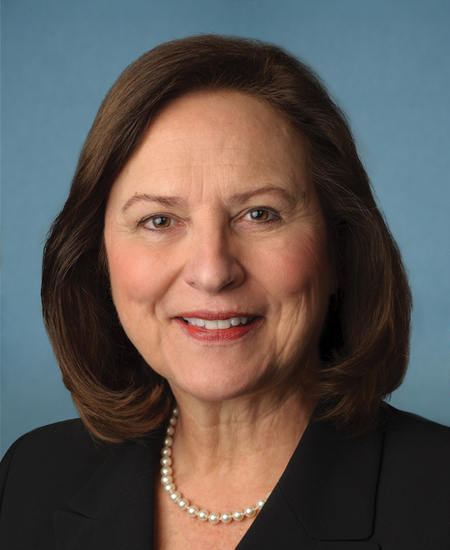
Sponsored bills
Maddy summaryThis bill requires the Secretary of State to notify Congress before entering, renewing, or extending any science and technology agreement with China. It mandates a 30-day waiting period after submitting detailed documentation to congressional committees, including the full agreement text, national security justification, risk assessments of technology transfer, human rights considerations, and monitoring plans. Existing agreements with China must be revoked unless the Secretary submits this notification within 60 days of the bill's enactment. The law directly affects U.S. diplomatic negotiations with China on scientific and technical collaborations.
Maddy summaryThis non-binding resolution expresses Congress's support for Israel by declaring it is not a racist or apartheid state, rejecting antisemitism and xenophobia, and affirming the U.S. as a steadfast partner. It serves as a symbolic statement of bipartisan backing without creating new laws, funding, or obligations. Introduced by Senators Cotton, Cruz, and others in July 2023, it reflects congressional sentiment rather than policy change.
Maddy summaryThis bill requires the Federal Aviation Administration (FAA) to hire the maximum number of new air traffic controllers each year from 2024 through 2028, based on the training capacity of the FAA Academy. It directly affects the FAA, which must set annual hiring targets aligned with its ability to train new controllers. The law does not change existing hiring rules but mandates that the FAA utilize its full training capacity each year for new controller hires during this period. It excludes certain individuals specified under federal law, but the core provision focuses on maximizing new controller recruitment within available training resources.
Maddy summaryThe Pay Our Military Act of 2023 ensures that military personnel, Defense Department civilians supporting them, and qualifying Defense contractors continue receiving pay during any funding gap in fiscal year 2024. It appropriates funds from the Treasury to cover military pay, allowances, and support staff salaries when regular budget legislation is delayed. The funding remains available until either a full budget is passed, a continuing resolution is enacted, or January 1, 2025, whichever occurs first. This bill directly affects active-duty service members, reserve components, Defense civilians, and contracted support staff by guaranteeing their compensation during fiscal uncertainty.
Maddy summaryThis bill requires the U.S. Fish and Wildlife Service (USFWS) and National Oceanic and Atmospheric Administration (NOAA) Fisheries to withdraw three specific proposed rules related to the Endangered Species Act. The rules would have changed how species are listed, habitats designated, and interagency cooperation is handled under the Act. The bill prohibits these agencies from finalizing, implementing, or enforcing the withdrawn proposals. It directly affects federal agencies' regulatory process for endangered species protection, halting these specific rulemaking efforts.
Maddy summaryS 2806, the Homeowner Energy Freedom Act, repeals three specific provisions from the Inflation Reduction Act that provided federal funding for home energy programs. It eliminates the high-efficiency electric home rebate program, state grants for contractor training, and assistance for adopting modern building energy codes. The bill also rescinds unobligated funds from these repealed programs and amends a related section to remove references to the repealed rebate program. This directly affects homeowners who would have accessed these energy efficiency programs and contractors who relied on the training grants. The bill makes no new program provisions but formally removes existing federal support for these specific home energy initiatives.
This resolution recognizes September 19, 2023, as National Voter Registration Day and encourages those eligible to vote to register, verify their personal information on record with local election officials, and vote.
Maddy summaryThis bill requires car manufacturers to include AM radio receivers as standard equipment in all new vehicles sold in the U.S., without additional cost to buyers. It mandates that AM radio controls be clearly visible on the dashboard for drivers. For vehicles sold before the rule takes effect, manufacturers must label them to disclose the absence of AM radio. The bill aims to maintain access to AM radio broadcasts, which are used for emergency alerts, but does not mandate new emergency systems.
Maddy summaryThis bill (S 2757) freezes current payment rates for veterans' transportation services provided through "special modes" (like non-emergency medical transport) starting January 1, 2023, preventing the VA from lowering these rates without strict conditions. It directly affects veterans relying on these transportation services and the contractors providing them. The key provision allows rate increases but requires the VA to conduct a detailed economic impact review, consult with veterans' groups and industry experts, and ensure new rates cover actual costs before any decrease can occur. This aims to protect veterans' access to care by preventing rate cuts that could disrupt transportation services.