

Maddy summaryThis bill requires the Federal Aviation Administration (FAA) to update regulations to encourage pilots and air traffic controllers to seek and disclose mental health care without fear of losing their medical certification. It mandates an annual review of the "special issuance" process (for medical certification) to consider new treatments, improve examiner training, and reduce backlogs, while allocating $15 million annually (2026-2029) to recruit more medical examiners and provide mental health training. Additionally, it funds a $1.5 million annual public campaign to destigmatize mental health care in aviation, improve trust with workers, and make resources easily accessible at aviation medical offices and training facilities. The FAA must consult with industry stakeholders and report progress to Congress on implementation.
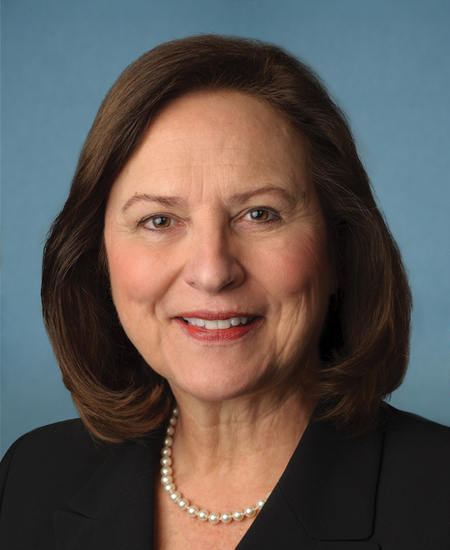
Sponsored bills
Secure Space Act of 2025 This bill prohibits the Federal Communications Commission (FCC) from granting satellite licenses or earth station authorizations, including U.S. market access for foreign-licensed satellites, to specified foreign entities of concern and their affiliates. (Earth stations, also commonly known as ground stations, are earth-based radio stations that communicate with satellites. A grant of U.S. market access permits one or more foreign-licensed satellites to communicate with one or more U.S.-licensed earth stations.) Specifically, the FCC may not grant a satellite license, an earth station authorization, or market access to any entity, or an affiliate thereof, that produces or provides communications equipment or services deemed to pose an unacceptable risk to the national security of the United States. (The FCC maintains a list of such equipment and services, known as the Covered List. Providers of such equipment and services include, for example, Huawei Technologies Company and ZTE Corporation.)
Maddy summaryThis resolution formally honors the life, service, and legacy of Jon Llewellyn Kyl, a former U.S. Senator from Arizona who passed away at age 84. It details his career highlights, including his time in the House of Representatives, his long tenure in the Senate, and his work on issues such as water policy, national security, and crime victims' rights. The bill directs the Secretary of the Senate to share this tribute with the House of Representatives and Kyl's family, while also ordering the Senate to adjourn for the day as a mark of respect.
Maddy summaryThe Connected Vehicle Security Act of 2026 restricts the importation, sale, and use of connected vehicles and related technology from China, Russia, Iran, and North Korea to protect national security. Starting in 2027, the bill generally bans these vehicles if they originate from or are controlled by these countries, with separate restrictions on software and hardware taking effect in 2030. The Secretary of Commerce is authorized to issue specific exemptions for items that do not pose a security risk and must publish a list of approved products. The law also requires companies to submit declarations confirming their vehicles comply with the rules and imposes heavy fines for violations.
Maddy summaryThe Terrorism Risk Insurance Program Reauthorization Act of 2026 extends the federal terrorism insurance program through 2034, ensuring continued government support for insurance companies facing large losses from terrorist attacks. The bill also updates the schedule for recouping federal funds, shifting the timeline for when insurers must repay taxpayer money to later dates ranging from 2029 to 2036. These changes directly affect insurance carriers and policyholders by maintaining the program's availability for a longer period and adjusting the financial obligations tied to it.
Maddy summaryThe VA Salary Cap Waiver Adjustment Act modifies federal law to extend the authority for the Department of Veterans Affairs Secretary to waive salary caps for critical health care personnel. This change directly affects VA employees in these roles by allowing them to receive compensation above standard limits for a longer period than previously authorized. The bill achieves this by removing an earlier expiration date and establishing a new deadline that is five years after the enactment of the act.
Maddy summaryThe Runway SAFE-T Act establishes a task force to study and recommend improvements for driver training programs at airports, ensuring that ground vehicle operators receive consistent and modern safety instruction. Additionally, the bill authorizes federal grants from 2027 to 2031 to help airports purchase advanced technologies, such as sensors and simulation systems, that enhance situational awareness and reduce vehicle-related safety incidents on airport runways and taxiways. These grants are intended to assist airport sponsors in overcoming barriers like cost and workforce availability while prioritizing projects tailored to specific airport layouts and safety needs.
Maddy summaryThis Senate resolution designates the first week of August 2026 as "National Community Health Center Week" to recognize the role these facilities play in providing affordable primary care across the United States. The bill highlights that community health centers serve a diverse range of populations, including those in rural and urban areas, by offering integrated services such as mental health, dental, and pharmacy care. It encourages the general public to participate in the observance by visiting local centers and celebrating the partnership between these organizations and their communities.
Maddy summaryThis resolution honors the 100th anniversary of the Golf Course Superintendents Association of America (GCSAA), recognizing its role in advancing the profession of golf course management since its founding in 1926. The bill highlights the organization’s contributions to environmental stewardship, workforce development, and educational programs that connect students with science and technology concepts. It also notes the significant economic impact of the golf industry and the GCSAA's efforts to promote sustainable practices across the United States.
Maddy summaryThe Keep Our Communities Safe Act of 2026 significantly expands the authority of the Secretary of Homeland Security to detain non-citizens who are facing removal from the United States. The bill removes time limits on detention during removal proceedings and allows for indefinite detention after a final order is issued if specific conditions, such as national security threats or public safety risks, are certified by government officials. It restricts access to bond hearings for many detainees, requiring them instead to prove they are not flight risks or community threats through clear and convincing evidence. Additionally, the legislation establishes administrative review processes that permit detention beyond standard removal periods if an individual fails to cooperate with deportation efforts or poses a continuing danger.