

Maddy summaryThe Stopping Political Discrimination in Disaster Assistance Act amends federal disaster aid law to prohibit discrimination based on political affiliation. This change adds "political affiliation" to the list of protected characteristics - alongside race, sex, religion, and economic status - in all disaster assistance programs under the Robert T. Stafford Disaster Relief Act. It ensures individuals cannot be denied or delayed in receiving federal aid (such as FEMA assistance after natural disasters) due to their political views, party membership, or voting history. The bill applies directly to federal agencies administering disaster relief, requiring them to evaluate eligibility solely based on non-discriminatory factors.
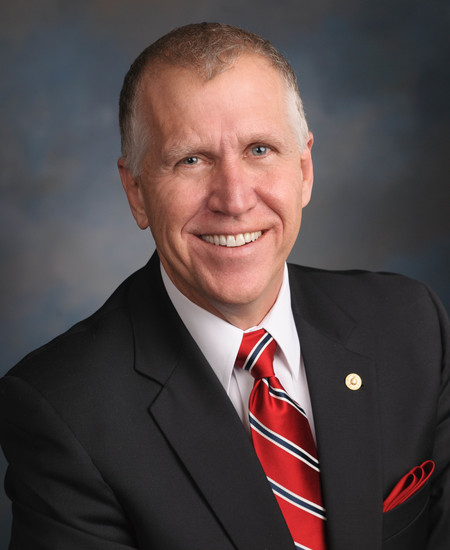
Sen. Thom Tillis
Sponsored bills
Maddy summaryThis bill changes Medicare reimbursement rules to support hospitals running nursing and allied health education programs. It allows hospitals to count more costs (including overhead and training expenses) for these programs in their Medicare cost reports, provided the programs are licensed or accredited by state or national bodies. The bill also prohibits Medicare from recouping past payments for these costs and requires refunds for any amounts recouped in the past six years. This directly affects hospitals and their affiliated health education programs participating in Medicare.
Maddy summaryThe SBA Disaster Transparency Act (S 5357) requires the Small Business Administration (SBA) to publish disaster assistance reports online. It amends existing law to mandate that the SBA post all required reports about disaster assistance on its public website, rather than only submitting them internally. This applies to reports on loan approvals, aid distribution, and other disaster-related assistance. The bill directly affects the SBA by changing how it shares information and makes the data accessible to the public without requiring new funding or altering disaster aid programs.
Maddy summaryThis bill establishes a Coordinator for Digital Freedom within the State Department to prioritize global digital freedom in U.S. foreign policy. The Coordinator will lead efforts to counter digital authoritarianism, protect information integrity, promote democratic AI governance, and advance digital inclusion internationally. It requires the State Department to submit annual reports to Congress analyzing global threats to digital freedom - including censorship, privacy risks, and AI governance challenges - and recommending diplomatic responses. The law directly affects U.S. diplomatic engagement, making digital freedom a central focus in international relations and requiring structured reporting on global digital rights trends.
Maddy summaryThe Protecting America's Children by Strengthening Families Act reauthorizes and enhances federal child welfare programs to better support children in foster care, their families, and tribal communities. Key provisions include expanding access to family preservation services, modernizing court processes to allow for remote hearings, increasing funding for programs addressing parental substance use disorder, and creating demonstration projects to improve relationships between incarcerated parents and children in foster care. The bill also streamlines funding for Indian tribes, strengthens support for youth aging out of foster care, and requires states to address poverty as a factor in neglect cases. These changes aim to improve child safety, permanency, and well-being while reducing administrative burdens on state agencies. The bill would take effect in October 2025, with funding authorized through 2029.
Maddy summaryThis bill provides $810 million in supplemental funding for the Small Business Administration's Disaster Loans Program (under Section 7(b) of the Small Business Act) to assist small businesses recovering from disasters. It directly affects small businesses seeking low-interest disaster loans by increasing available funds for direct loans, with $10 million allocated for audits and $250 million for administrative costs (excluding indirect expenses). Key provisions require the SBA Inspector General to review past funding shortfalls and report findings within 181 days, and mandate the SBA Administrator to submit reports detailing improvements to forecasting and budgeting within 30 days and every 90 days until corrections are implemented. The funds are designated as an emergency requirement under federal budget law and remain available until expended.
Maddy summaryThe IDEA Act requires the U.S. Patent and Trademark Office (USPTO) to collect voluntary demographic information (such as gender, race, and military status) from U.S. patent inventors during patent applications. This data must remain confidential, separate from patent reviews, and cannot influence patent examination. The USPTO must publish annual anonymized reports showing patent applications and grants disaggregated by demographic categories, technology fields, and state of residence. These reports will include data summaries and methodology, with biennial updates for Congress on the data collection process. The law aims to track patenting trends without affecting patent decisions or revealing individual inventors' identities.
Maddy summaryThis bill provides $810 million in direct funding for the Small Business Administration's disaster loan program for fiscal year 2025, specifically to support small businesses affected by disasters. It allocates $10 million for Inspector General audits of the program and $250 million for administrative costs to manage the loan program, while prohibiting use of funds for indirect administrative expenses. The bill requires the SBA's Inspector General to review past funding shortfalls related to disaster loans and submit findings to Congress within 180 days, along with specific reports detailing how the SBA will improve forecasting and budget accuracy. These changes directly affect small businesses seeking disaster loans and the Small Business Administration's operational procedures.
Maddy summaryS 5303, the Stand with Israel Act, prohibits U.S. federal funds from being used to support the United Nations or its entities if those entities restrict Israel's full participation as a member state. Specifically, it blocks funding for UN contributions when the UN expels, downgrades, or suspends Israel's membership or limits its ability to engage equally with other member states. This bill directly affects how U.S. taxpayer money is allocated to the UN, requiring the Department of State and other agencies to withhold funds under these circumstances. The law amends the United Nations Participation Act of 1945 to enforce this restriction.
Maddy summaryThis bill requires the National Institutes of Health (NIH) Director to submit an annual budget estimate for Alzheimer's research initiatives to the President for transmission to Congress, starting in fiscal year 2024. It specifically mandates including estimates of personnel needs alongside funding projections, based on recommendations from the National Alzheimer's Project Act. The law directly affects NIH operations by establishing a formal, recurring reporting requirement for Alzheimer's-related funding. This is not a new funding measure but a procedural change to improve transparency and accountability in budget planning for these initiatives. The bill amends Section 2 of the National Alzheimer's Project Act to add this annual reporting obligation.