

Maddy summaryThis bill closes a regulatory gap for "industrial banks" (entities offering banking services without full bank oversight, often called "shadow banks"). It requires these institutions to obtain FDIC deposit insurance approval by September 23, 2021, with stricter review for pending applications (90-day public comment, 2/3 board vote), and deems unapproved applications denied by September 30, 2024. The bill also gives the FDIC authority to examine and impose conditions on parent companies of these industrial banks, similar to how bank holding companies are regulated, tailored to the parent company's size and complexity. It directly affects industrial banks seeking deposit insurance and their parent companies, aiming to increase oversight of institutions operating outside standard banking rules.
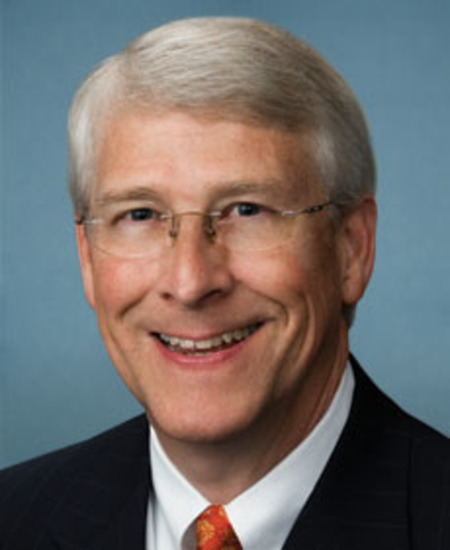
Sen. Roger F. Wicker
Sponsored bills
Maddy summaryThis bill makes AmeriCorps education awards tax-free for participants. It amends the tax code to exclude these awards from taxable income, meaning AmeriCorps members who receive education benefits for their service will no longer owe federal income tax on that money. The change directly affects AmeriCorps members who use their education awards toward tuition, books, or student loans. The policy provides immediate tax relief for individuals serving in national service programs under the National and Community Service Act of 1990.
Maddy summaryS 3488 creates a formal program allowing NASA to temporarily exchange employees with private sector companies for up to two years (renewable to a total of three years). It directly affects NASA civil servants and private sector workers in fields like technology or cybersecurity, requiring NASA employees to return to government service for twice the assignment duration. Key provisions include strict written agreements covering confidentiality, prohibitions on using government information for private gain, and limits (capping participation at 2% of NASA's workforce). The bill mandates annual reporting to Congress on participation numbers, assignment details, and workforce impacts, with a GAO review after three years.
Maddy summaryThe Kids Online Safety Act requires social media platforms and other online services used by minors to implement safety features protecting children under 17. It mandates default privacy controls, limits addictive features like automatic media playback, restricts advertising of harmful products (tobacco, gambling, alcohol) to minors, and requires annual transparency reports about online risks. Platforms with over 10 million monthly U.S. users must provide parental tools, conduct independent audits, and make de-identified data available for research on online harms. The bill focuses on preventing mental health disorders, bullying, sexual exploitation, and addictive behaviors through platform design changes.
Maddy summaryThe TORNADO Act (S 1284) establishes a new hazard risk communication office within NOAA to improve how the public receives and understands warnings for severe weather events like tornadoes, hurricanes, and flash floods. It requires simplifying warning terminology, developing communication methods based on social science research, and creating a pilot program specifically for tornado warnings. The bill also mandates improved post-storm assessments, updates to tornado rating systems, and prioritizes research funding for minority-serving institutions to study tornado forecasting and communication. These changes aim to make weather warnings clearer, more actionable, and better tailored to vulnerable populations, with the goal of saving lives and reducing property damage.
Maddy summaryThe Citizen Ballot Protection Act (S 3470) amends the National Voter Registration Act to allow states to require proof of U.S. citizenship when voters register by mail. It directly affects individuals who register to vote using state mail-in forms, specifically those seeking to vote in federal elections. The key provision adds a requirement for states to include a citizenship verification step on mail voter registration forms after federal elections, beyond existing rules. This change gives states the option to implement this proof requirement but does not mandate it nationwide. The bill does not alter in-person registration rules or voting procedures.
Maddy summaryThis bill requires natural gas and crude oil exporters to use U.S.-documented vessels built or retrofitted in the U.S. with key ship components manufactured domestically, gradually increasing the required percentage of such exports each year. For natural gas exports, the minimum percentage starts at 2% in the first 7 years and rises to 15% by the 22nd year; for crude oil, it starts at 3% and reaches 10% after 14 years. It directly affects exporters of these energy commodities, U.S. shipyards performing retrofits, and manufacturers of specified components like propulsion systems and valves. The bill also mandates training opportunities for U.S. mariners and allows waivers for cost or supply issues, while requiring the Energy Information Administration to track and publish export data.
Maddy summaryThis is a ceremonial Senate resolution (SRES 492) honoring the late First Lady Rosalynn Carter. It expresses the Senate's condolences for her passing and recognizes her lifetime of humanitarian work, including her advocacy for mental health care, founding of caregiver support programs, and service with The Carter Center. The resolution does not create new laws or policies; it is purely a commemorative statement. It was introduced by a bipartisan group of senators and adopted by the Senate on December 7, 2023.
Maddy summaryThe Fans First Act aims to improve transparency and fairness in the ticketing market by regulating how event tickets are sold and marketed. It requires sellers to clearly display the total ticket price (including all fees), disclose key details about ticket seating and refund policies, and prohibits deceptive practices like using artist names without permission or selling tickets a seller doesn't actually possess. The bill directly affects secondary ticketing platforms, resellers, and primary sellers by mandating clear disclosures, requiring proof of purchase for electronic tickets, and strengthening rules against automated ticket-buying systems. It creates new enforcement mechanisms through the Federal Trade Commission and state attorneys general, with civil penalties for violations. The legislation also mandates studies to assess ticket market practices, including how professional resellers obtain tickets and the prevalence of counterfeit tickets.
Maddy summaryThis bill, the Belarus Democracy, Human Rights, and Sovereignty Act of 2023, establishes a U.S. Special Envoy for Belarus to coordinate support for democracy and human rights, and recognizes Sviatlana Tsikhanouskaya as the legitimate leader of Belarus. It provides technical assistance for creating national identification documents for Belarusians living abroad, includes sanctions against Belarus for supporting Russia's invasion of Ukraine, and creates a pathway for Belarusian nationals in Ukraine to join the Uniting for Ukraine program. The bill requires annual reports on Belarus's human rights situation and its collaboration with Russia, and establishes a strategic dialogue with the Belarusian democratic movement to support a peaceful transition of power.